
Trump’s abrupt halt of US-South Korea drills forces Japan to confront its lack of a Plan B
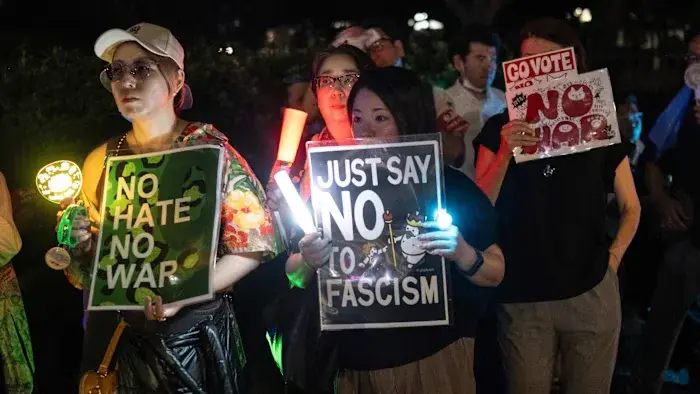
US President Donald Trump abruptly ordered a substantial reduction in joint military exercises with South Korea, citing his relationship with North Korea and costs. This move has shaken regional allies, particularly Japan, which relies heavily on US security guarantees. While South Korea faces immediate diplomatic fallout, Japan is now forced to confront the fragility of its own defense strategy, which has long relied on US protection rather than independent military capability.
Key points
- Trump ordered the Pentagon to 'substantially reduce' the annual Ulchi Freedom Shield exercises, involving 18,000 South Korean troops and 11 other nations, halting the drill halfway through.
- The decision was announced via Truth Social, with Trump citing the exercises as 'inappropriate and hostile' toward North Korea and linking them to South Korea’s refusal to join the US war in Iran.
- South Korean Foreign Minister Cho Hyun admitted officials were not informed in advance, though President Lee Jae Myung praised the move as a 'bold decision' for peace.
- Japan’s Prime Minister Sanae Takaichi faces intense domestic pressure, with protesters demanding adherence to the pacifist constitution, while analysts warn Japan lacks a viable 'Plan B' if US guarantees weaken.
- North Korea’s Kim Yo Jong dismissed the drill reduction as irrelevant, maintaining that Pyongyang will never give up its nuclear weapons, while North Korea continued missile tests near Japan.
Background
This development follows a summer of escalating regional tensions, including North Korea’s ballistic missile launches and Japan’s recent Defense of Japan white paper, which pledged to strengthen capabilities by fiscal 2027. Earlier in August, Japan’s Defence Minister visited the Yasukuni Shrine, drawing backlash from China and South Korea, while Trump had already signaled a shift in posture toward North Korea. The current crisis underscores the fragility of postwar alliances in the Asia-Pacific, particularly for Japan, which has historically relied on the 1951 US-Japan alliance as its primary security guarantee.
How outlets are covering it
The Financial Times emphasizes the long-term strategic jeopardy for Japan, arguing that while South Korea bears the immediate diplomatic brunt, Japan’s constitutional constraints and reliance on US protection leave it without a viable alternative if US guarantees erode. The BBC highlights the shock among allies, noting that South Korea’s Foreign Minister admitted officials were unaware of the decision, and frames the move as a potential precedent for further US withdrawal from regional commitments. The Atlantic focuses on the irrationality of Trump’s decision, suggesting it is driven by a desire to punish South Korea for its stance on Iran, thereby tempting US enemies to doubt America’s reliability. AP News, while largely obscured by technical code in the provided source, aligns with the narrative that North Korea is shrugging off the scaled-back drills, maintaining its hardline stance on nuclear weapons.
Why it matters
The abrupt reduction in joint military exercises signals a potential shift in US commitment to regional security, forcing Japan to reconsider its defense strategy. For South Korea, it raises questions about the reliability of the US alliance and may accelerate debates over independent nuclear deterrence. For Japan, it highlights the vulnerability of its pacifist constitution and the urgent need to develop a credible 'Plan B' in case US support wanes, potentially reshaping the security landscape in the Asia-Pacific.
What to watch
Japan is expected to accelerate its defense reforms, potentially moving closer to conventional rearmament or national service, as it seeks to reduce reliance on US guarantees. South Korea may face increased pressure to develop its own nuclear deterrent, despite government opposition. North Korea is likely to leverage the reduced drills to strengthen its position, potentially demanding concessions from the US. The US may face diplomatic backlash from allies, potentially leading to a reassessment of its regional security commitments.
- Trump’s South Korea defence flip reminds Japan that it has no Plan B Financial Times
- Trump’s Order to Cut Military Exercises With South Korea Carries Risks, Experts Say The New York Times
- Trump wants to be friends with Kim - but South Korea could pay the price BBC
- North Korea shrugs off Trump's scaled-back drills with South Korea, saying it changes nothing AP News
- Trump Will Make South Korea Pay for His Iran Humiliation The Atlantic
Want the full story? Read the original reporting
Read on Financial Times