
Ukraine Suspected of Striking Russian Military-Linked Ship in Gulf of Finland
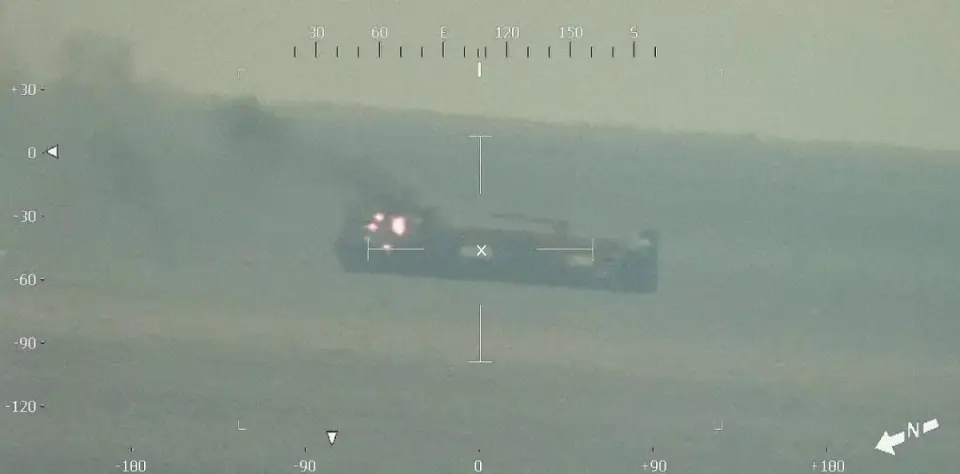
Finnish authorities confirmed that the Russian-flagged roll-on-roll-off ship Sparta II was struck by drones in the Gulf of Finland on November 21, 2026. The vessel, which has links to Russian armed forces, was hit in international waters near the Russian border before drifting into Finnish territorial waters. Finnish Prime Minister Petteri Orpo stated that Ukraine likely carried out the attack, asserting Kyiv’s right to fight back against Russia. A fire remains on board, and the 16-member crew is being evacuated. Finland detected a Russian helicopter violating its airspace by 4.1 km, possibly for rescue purposes. The incident highlights growing risks to Baltic shipping lanes, though no immediate threat to civilian traffic or environmental disaster has been confirmed.
Key points
- The Sparta II, a 2000-built roll-on-roll-off ship, was hit by two drones in international waters west of Gogland Island on November 21, 2026.
- Finnish Defence Forces and Border Guard confirmed the attack, with Prime Minister Petteri Orpo attributing it to Ukraine, while Russian officials confirmed the strike but did not name the attacker.
- The ship has known links to Russian armed forces; Finnish authorities could not confirm if military materiel was on board, though it was bound for the Kaliningrad exclave.
- A fire is burning on the ship, and the 16 crew members are being evacuated into life rafts and rescue boats; Finnish and Russian rescue vessels are coordinating operations.
- A Russian helicopter violated Finnish airspace by 4.1 km around noon, which Finnish Defence Minister Antti Häkkänen said was likely related to rescue or tracking operations.
- Finnish authorities imposed temporary air and sea traffic restrictions in the eastern Gulf of Finland to ensure safety and manage potential environmental risks.
Background
This incident follows a series of drone strikes on Russian naval and energy infrastructure in the Baltic Sea. In early November 2026, Ukraine’s Security Service claimed responsibility for striking the Russian corvette Naro-Fominsk in the Gulf of Finland, marking the first known attack on a Russian warship in civilian Baltic waters. That strike coincided with attacks on the Ust-Luga oil export terminal. Finland had previously raised concerns with Kyiv about strikes in the area, emphasizing the need to minimize risks to civilian maritime traffic in the crowded Baltic shipping lanes.
How outlets are covering it
Finnish authorities, including Prime Minister Petteri Orpo and Defence Minister Antti Häkkänen, explicitly attributed the attack to Ukraine, framing it as a legitimate act of self-defense against Russian aggression. Finnish officials emphasized that the ship had links to Russian armed forces and that the strike occurred in international waters before the vessel drifted into Finnish territory. Russian officials, including Leningrad Region Governor Alexander Drozdenko and Kaliningrad Governor Alexey Besprozvannykh, confirmed the attack by two drones but did not attribute it to Ukraine, focusing instead on the damage assessment and the safety of supplies to Kaliningrad. Russian state media Tass claimed the ship was carrying paints and coatings, though Finnish authorities could not confirm the cargo. Ukrainian media, citing Finnish sources, confirmed the attack and noted that the Sparta II has been used for military operations, including transporting weapons from Syria. Experts like Robin Haggblom noted that while collateral damage is a risk, Ukraine appears to be targeting specific vessels to minimize harm to civilian shipping.
Why it matters
The incident underscores the escalating risks to Baltic Sea shipping lanes, which are among the most crowded in the world. The attack on a vessel with military links near the Russian border highlights the potential for the war to spill over into NATO-adjacent waters. It also raises concerns about environmental damage if the ship sinks or leaks, particularly given the poor condition of some Russian 'Shadow Fleet' tankers. The incident may influence NATO and EU discussions on maritime security and the protection of critical shipping routes in the Baltic Sea.
What to watch
Finnish and Russian rescue vessels are expected to continue coordinating the evacuation of the 16 crew members and firefighting efforts. Finnish authorities will monitor the situation for potential environmental consequences, especially if the fire continues to burn uncontrollably. The Finnish Border Guard is investigating the suspected airspace violation by the Russian helicopter. Further updates on the cargo and the extent of damage to the Sparta II are expected as rescue operations progress.
- Rescue efforts under way as drones hit Russian ship off Finland coast Al Jazeera
- Cargo ship bound for Russia's Kaliningrad hit by drones, Finland tightens security Reuters
- Russia Says Cargo Ship Attacked By Drones in Gulf of Finland Bloomberg.com
- Russian ship damaged by drone attack in Gulf of Finland, Helsinki and Moscow say POLITICO.eu
- Finland confirms Ukraine attacked ship linked to Russian military Українська правда
Want the full story? Read the original reporting
Read on Al Jazeera