
Guterres Warns Successor on Climate Priority as Cop31 Negotiations Stall
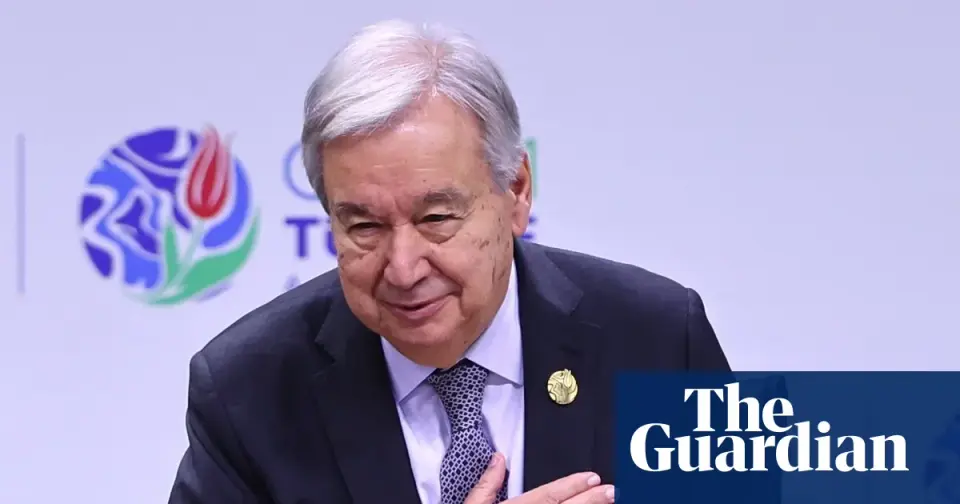
Outgoing UN Secretary-General António Guterres delivered an emotional farewell address at Cop31 in Antalya, Turkey, arguing that climate action is central to global peace and poverty reduction. As world leaders departed, negotiators focused on electrification targets and fossil fuel phase-outs, while Brazilian President Luiz Inácio Lula da Silva received significant diplomatic attention following his reelection.
Key points
- Guterres stated that climate change drives instability and wipes out development gains, urging his successor to keep the issue at the forefront of the UN agenda.
- The Australian co-presidency issued a 'reflections' document outlining proposals for a 35% global electricity target by 2035 and methane emission cuts, though it is not a binding negotiating text.
- More than 100 fossil fuel-linked companies were present at the summit, drawing criticism from civil society groups regarding their disproportionate access compared to developing nations.
- Brazilian President Lula da Silva received enthusiastic support from delegates, with UK Foreign Secretary Ed Miliband describing the event as a victory party for the Brazilian leader.
Background
Cop31 is being held in Antalya, Turkey, with Australia sharing the co-presidency. Previous archive coverage noted concerns over the breach of the 1.5-degree warming threshold and calls for policy stability in the transition to net zero. Guterres leaves office at the end of December, with his successor yet to be determined amid political interference from the United States.
How outlets are covering it
The Guardian emphasizes the diplomatic and procedural challenges, highlighting Guterres' warning to his successor and the difficulty of reaching a final agreement before the summit ends. It also notes the presence of fossil fuel lobbyists. In contrast, Politico focuses on the political dynamics, arguing that the Brazilian election result is the dominant story at Cop31, overshadowing other geopolitical events like the US midterms. While the Guardian views the summit through the lens of institutional continuity and climate urgency, Politico frames it through the rise of Lula da Silva as a key climate leader.
Why it matters
The outcome of Cop31 will set the trajectory for global decarbonization efforts, including the electrification of the global economy and the phase-out of fossil fuels. Guterres' departure marks a potential shift in UN climate leadership, raising concerns that future leadership may deprioritize the crisis. Additionally, the strong support for Lula da Silva signals a potential shift in global climate diplomacy toward more assertive leadership from the Global South.
What to watch
Negotiators have until Saturday to respond to the 'reflections' document, with an official draft cover decision expected early next week. The summit is scheduled to conclude next Friday, with the final 'cover decision' likely to be the central outcome. The identity of the next UN Secretary-General remains unknown, with widespread fears that the new incumbent may downplay the climate crisis.
- ‘You cannot build peace on a burning planet,’ UN chief tells Cop31 in farewell speech The Guardian
- UN climate chief urges speed as COP31 confronts fossil fuel divide Reuters
- COP31: Protesters, UN urge swift climate deal DW.com
- The election climate diplomats can’t stop talking about. It's not the midterms. Politico
- The Climate Summit Wants Electrification. The AI Boom Wants Every Electron It Can Get. Forbes
Want the full story? Read the original reporting
Read on The Guardian