
Houthis seize Perim Island, closing final Red Sea chokepoint
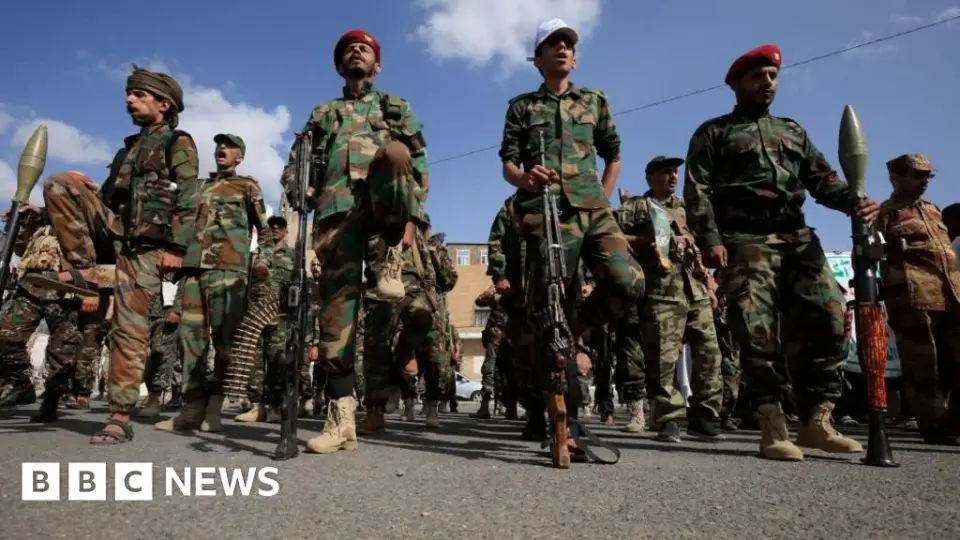
Iran-backed Houthis have captured Perim Island and the port of Mokha, securing control of the Bab al-Mandab Strait. This move threatens global shipping and has pushed oil prices to $100 a barrel, prompting Saudi Arabia to close its east-west pipeline as a precaution. While the US offers intelligence support, it has declined direct military intervention, and the humanitarian crisis in Yemen has displaced over 46,000 people.
Key points
- Houthis seized Perim Island at the mouth of the Bab al-Mandab Strait, consolidating control over the entire western Red Sea coastline.
- The group captured the strategic port city of Mokha from Saudi-backed forces, a move confirmed by military sources and witnesses.
- Saudi Arabia closed its east-west oil pipeline as a precautionary measure after multiple attacks on facilities in the Riyadh and Medina regions.
- Brent crude oil prices reached $100 per barrel for the first time since July, driven by disruptions to shipping routes and US strikes on Iranian tankers.
- The International Organization for Migration reports that 46,000 people have been displaced in Yemen since the offensive began, with numbers rising rapidly.
- US President Donald Trump has declined to deploy military forces directly, offering instead intelligence and targeting support to Saudi Arabia and the Yemeni government.
Background
The Houthis ousted the internationally recognized government in 2015, leading to a Saudi-led intervention. A truce held for over four years but collapsed in July 2026. Recent archive coverage from September 11, 2026, noted the initial seizure of Perim Island and the tightening of the Red Sea chokepoint, which preceded the broader coastal takeover reported in the current sources.
How outlets are covering it
BBC and AP News emphasize the military consolidation of the Bab al-Mandab Strait and the resulting threat to international shipping, noting that the Houthis claim navigation is safe for all except Saudi vessels. The Atlantic frames the event as a strategic failure for the US, arguing that the loss of the Red Sea chokepoint leaves the US without control of either major Middle Eastern strait, complicating its leverage over Iran. CNN highlights the broader economic jeopardy to the global economy, linking the Houthi advance to the effective closure of the Strait of Hormuz. While BBC and AP focus on the immediate battlefield gains and humanitarian toll, The Atlantic and CNN analyze the long-term geopolitical and economic implications for US-Saudi-Iran dynamics.
Why it matters
The Houthi control of the Bab al-Mandab Strait threatens a critical global shipping lane, potentially disrupting energy supplies and trade routes. This has already triggered a spike in oil prices to $100 a barrel and forced Saudi Arabia to alter its logistics by closing its east-west pipeline. The escalation also exacerbates a severe humanitarian crisis in Yemen, with tens of thousands displaced, and complicates US efforts to manage the broader conflict with Iran by removing a key diplomatic lever.
What to watch
Saudi Arabia has vowed to respond to the attacks on its cities and energy facilities, though it has not publicly commented on the latest territorial losses. The US is in continuous dialogue with Saudi Arabia and the Yemeni government regarding regional stability but has not committed to direct military action. The humanitarian situation in Yemen is expected to worsen as displacement numbers rise, and oil prices may remain volatile depending on further Houthi actions and Saudi countermeasures.
- Houthis claim major advance in Yemen and tighten grip on Red Sea shipping lane BBC
- Houthis seize an island, opening a new front in the Iran war, as Saudi Arabia shuts down a pipeline AP News
- The Houthi advance in Yemen raises concerns about a key shipping choke point Dallas News
- Trump Loses the Other Strait The Atlantic
- The Bab al-Mandeb Strait, a lifeline for the global economy, is in jeopardy cnn.com
Want the full story? Read the original reporting
Read on BBC