
Kabul Faces 'Day Zero' Water Crisis by 2030 Amid Drought and Aid Freeze
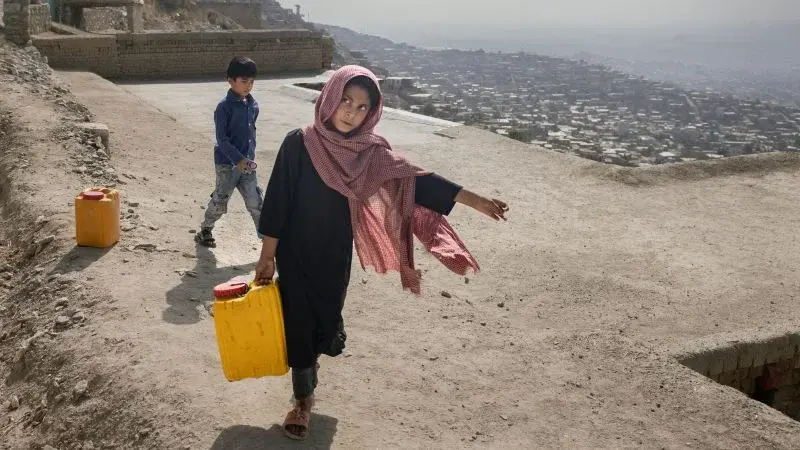
Kabul is projected to become the first modern city to run out of water by 2030, according to a report by nonprofit Prosper Global. While the city sits in a valley fed by the Hindu Kush mountains, groundwater levels have dropped nearly 100 feet in a decade, with half of all boreholes drying up. Only 20% of residents have access to piped water, forcing many to rely on expensive private tankers or walk long distances to hand pumps. The crisis is exacerbated by six consecutive years of drought, a 25-year low in snowfall, and a population that has surged from 1 million in 2001 to 6 million today. International aid has dried up since the Taliban's return to power in 2021, leaving the government with limited capacity to address the 'water bankruptcy' described by experts.
Key points
- Groundwater levels in Kabul have plummeted by nearly 100 feet over the past decade, creating an annual shortfall of more than 1.55 billion cubic feet.
- Approximately 50% of the city's boreholes have dried up, and up to 80% of the remaining groundwater is contaminated by sewage or natural substances like arsenic.
- Poorer residents are spending up to 30% of their income on water, far exceeding the UN's affordability threshold of 3% of household income.
- The Shahtoot Dam project, funded by India, has stalled since 2021 due to the Taliban's return to power and opposition from Pakistan, which fears reduced water flow.
- A proposed 124-mile pipeline from the Panjshir River remains in the design stage, with no construction having begun.
Background
This crisis follows a broader global trend of urban water stress, as seen in recent drought measures in Denver and boil-water advisories in Kalamazoo. While those events involved temporary contamination or usage bans, Kabul faces a structural depletion of its aquifers. The situation mirrors earlier warnings about resource limits in other contexts, such as lunar settlement feasibility, where water recycling is critical, but in Kabul, the issue is the irreversible extraction of finite groundwater resources.
How outlets are covering it
CNN and The Economic Times emphasize the immediate humanitarian impact, highlighting the 'day zero' scenario and the economic burden on residents who must buy water from private tankers at inflated prices. The Economic Times specifically notes the frozen international aid and the stalled Shahtoot Dam project as critical barriers. 8AM Media focuses on the broader climate vulnerability, citing UN statements that Afghanistan is among the most climate-vulnerable countries, with drought and extreme weather threatening livelihoods and stability. While CNN and The Economic Times detail the technical failure of the aquifer system, 8AM Media frames the issue within the context of regional cooperation and climate security, suggesting that cross-border risks require international collaboration that is currently absent due to political isolation.
Why it matters
Kabul's water crisis serves as a stark preview of what may happen to other rapidly growing cities facing climate change and infrastructure deficits. The collapse of water services in a capital city of 6 million people could trigger mass displacement, disease outbreaks, and social unrest. The lack of international aid and the political isolation of the Taliban government mean that the 'window of time' to prevent a human catastrophe is closing, with experts warning that the world is watching the crisis unfold rather than intervening to prevent it.
What to watch
The Afghan Ministry of Energy and Water claims to be constructing dams and wells to recharge groundwater, but these measures require significant time and resources that are currently unavailable. The Shahtoot Dam and Panjshir pipeline projects remain stalled or in early design phases. Without immediate international support and effective infrastructure development, residents will continue to rely on unsustainable private water sources, potentially leading to further displacement and health crises as the city approaches its projected 'day zero' by 2030.
Want the full story? Read the original reporting
Read on CNN