
Europe’s Youth Uprising: From Paris Riots to Serbia’s Electoral Breakthrough
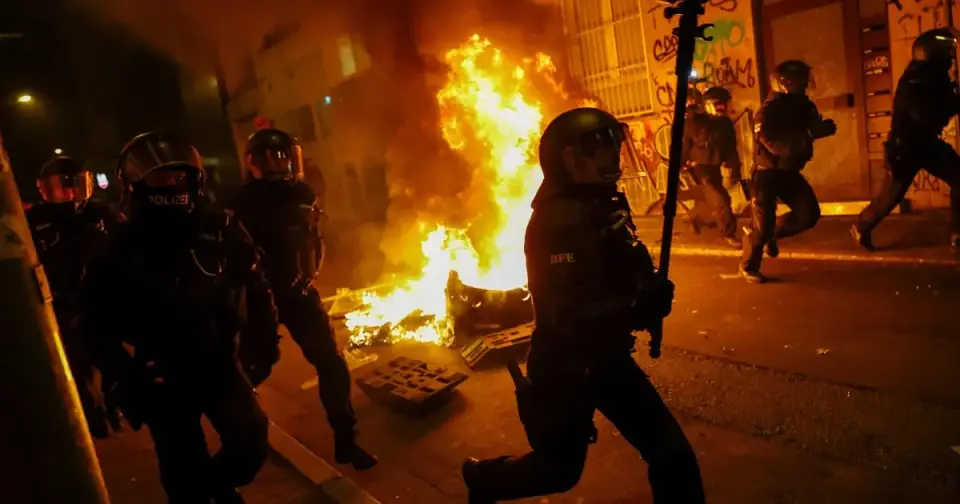
A transnational wave of youth-led protests has swept across Europe, driven by housing crises, job insecurity, and perceived generational neglect. While demonstrations in France, Germany, and Italy have turned violent or massive, Serbia has seen a unique political shift as student-led candidates won parliamentary seats. The unrest, fueled by social media and fiscal austerity, has prompted governments to address moderation and funding, marking the largest student mobilization in decades.
Key points
- Violent clashes in German cities involved looting and police confrontations, while France saw its third weekend of large-scale protests, including 550,000 participants on October 17.
- Serbia’s 'Student List' secured a parliamentary mandate and is poised to form a new government, utilizing crowdsourced funding and open assemblies to select candidates.
- Protests have spread to Italy, Belgium, Albania, Greece, and Spain, with grievances centering on housing costs, education funding, and climate inaction.
- The French Élysée Palace held a meeting with tech platforms in October to demand tighter moderation, citing the 'TikTokization' of protest movements.
- UK graduate job postings have dropped from 180,000 to 50,000 in four years, with AI cited as a factor in rising youth unemployment.
Background
This unrest follows a pattern of youth mobilization in 2024 and 2025 across Kenya, Nepal, and Indonesia. Recent archive coverage highlights concurrent instability in Europe, including a second wave of cyberattacks targeting supermarket refrigeration systems in seven nations on November 2, 2026, which may have exacerbated public frustration regarding infrastructure reliability and food security.
How outlets are covering it
Semafor emphasizes the violent nature of the unrest, noting looting in Germany and the French government’s attempt to control the narrative through platform moderation. The Guardian, via Gordon Brown, frames the events as a historic 'youthquake' comparable to 1968, highlighting the political success in Serbia and the structural failure of intergenerational justice. Yahoo/AFP focuses on the socioeconomic drivers, such as housing and 'uncertainty,' noting that the movement has attracted broader support from yellow vests and farmers in Italy. While Semafor highlights the 'tribal' sorting of crises via algorithms, The Guardian points to the 'contagion effect' of images spreading across borders, and Yahoo notes the 'sacrificed generation' narrative resonating with the wider public.
Why it matters
The protests represent a fundamental challenge to liberal democracy and current fiscal policies. With young people facing AI-driven unemployment and a housing crisis, the unrest threatens to destabilize upcoming elections in France, Italy, and Spain. The Serbian outcome, where students won seats, suggests that traditional political structures may be displaced by new, direct-democracy models, potentially reshaping the European political landscape.
What to watch
Major student demonstrations are planned for Australia on November 12 and a joint UK-Italy day of action on November 20. In Serbia, the Student List is expected to form a new administration. European governments are likely to face increased pressure to address education funding and housing, while tech platforms may face stricter regulatory demands regarding the amplification of protest content.
- Wave of discontent sweeps Europe Semafor
- A global youthquake is happening. Promises we made young people have been broken – and they know it The Guardian
- Youths Protest in Europe JW.ORG
- Living costs, housing, job uncertainty fuel European youth anger Yahoo
- Opinion | Europe Is Aflame, and It’s Not Going to Stop The New York Times
Want the full story? Read the original reporting
Read on Semafor