
South Korea Launches First Commercial Arctic Container Voyage Amid Middle East Disruptions
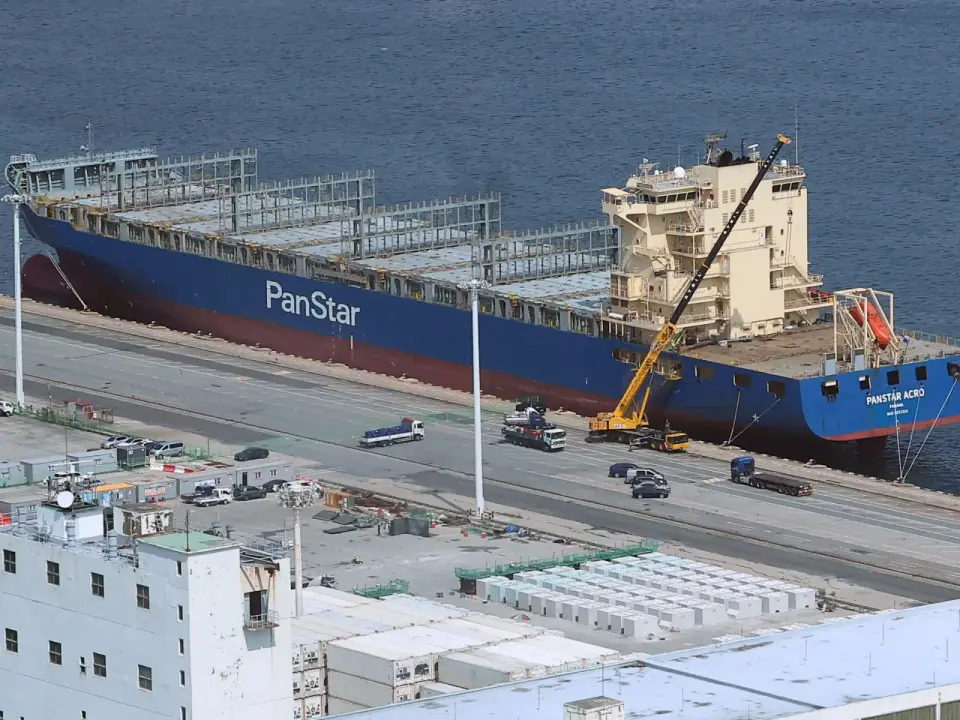
South Korea’s PanStar Acro departed Busan on August 22, 2026, for Europe via the Arctic Northern Sea Route, marking the nation’s first commercial trial of the corridor. The 40-to-45-day voyage aims to test viability as an alternative to the Suez Canal amid Middle East conflicts, though it faces environmental and geopolitical scrutiny.
Key points
- The 2,758 TEU vessel PanStar Acro, operated by South Korea’s PanStar, departed Busan New Port on August 22, 2026, at 9:30 pm local time.
- The ship carries 837 TEU of cargo, including car parts, chemicals, and empty containers, on a government-backed trial voyage.
- The route hugs Russia’s Kamchatka Peninsula, crosses the Bering Sea, and uses the Northern Sea Route to reach Felixstowe (UK), Rotterdam (Netherlands), and Gdansk (Poland).
- President Lee Jae Myung prioritizes Arctic shipping to transform Busan into a global maritime hub and establish the route as a regular trade corridor by 2030.
- The Arctic route cuts the Asia-Europe journey by approximately 7,000 kilometers and 10 days compared to the Suez Canal route.
- Major carriers like CMA CGM, MSC, and Hapag-Lloyd have pledged to avoid Arctic routes due to environmental pressure, while environmental groups warn increased shipping accelerates polar ice melt.
Background
Recent disruptions in the Middle East, including tensions in the Strait of Hormuz and Red Sea, have prompted nations to seek alternative shipping corridors. China has already tested Arctic routes as a hedge against Hormuz disruptions, while South Korea’s move follows earlier archival reports of its first container voyage through the Arctic. The Northern Sea Route’s viability is expanding due to Arctic warming, though it remains seasonally limited and requires ice-class vessels.
Why it matters
This voyage tests whether the Arctic can serve as a reliable alternative to traditional shipping lanes amid geopolitical instability. Success could reshape global trade logistics, but it risks escalating tensions with Western allies over Russia’s role and exacerbating climate change through increased polar traffic.
What to watch
The PanStar Acro is expected to complete its 40-to-45-day journey, providing data on commercial feasibility. South Korea aims to regularize Arctic trade by 2030, while environmental and geopolitical debates over the route’s long-term viability will intensify.
Want the full story? Read the original reporting
Read on Al Jazeera