
Singapore’s Aging Population Finds New Life Through Parkour Training
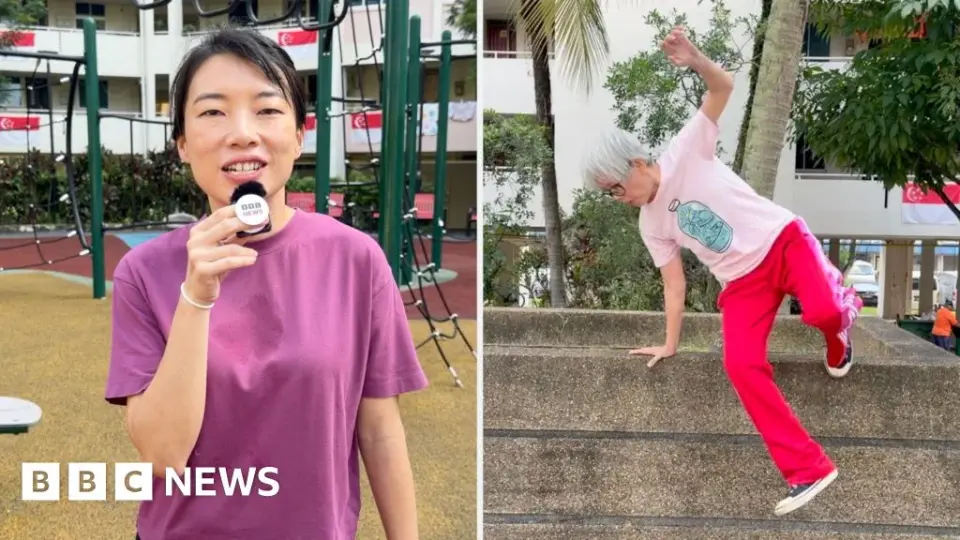
In Singapore, a nation facing rapid demographic shifts, a group of seniors is adopting parkour as a method to maintain physical health and social connection. Coach Tan Shie Boon leads these sessions in local playgrounds, focusing on injury prevention and confidence building. Participants report that the activity not only improves their mobility but also strengthens community bonds, offering a creative alternative to traditional senior fitness programs.
Key points
- Singapore is identified as one of the world's fastest-aging countries, creating a pressing need for innovative health strategies among its elderly population.
- A specific group of seniors has begun practicing parkour, a discipline typically associated with youth, to enhance their physical capabilities and prevent injuries.
- Coach Tan Shie Boon, who leads the training sessions, emphasizes that the sport significantly boosts the participants' confidence and physical resilience.
- The training takes place in playgrounds, utilizing the environment to challenge the seniors' balance and coordination in a controlled manner.
- Beyond physical benefits, the participants highlight the social aspect, noting that the group activities foster a strong sense of community and mutual support.
Background
Singapore has long been recognized for its advanced aging population, prompting the government and community organizations to explore diverse methods for maintaining senior health. While traditional approaches often focus on low-impact exercises like tai chi or walking, this initiative represents a shift toward high-energy, skill-based activities. The BBC's recent coverage highlights this as a novel trend, contrasting with earlier reports that focused primarily on medical interventions or standard gym-based fitness for the elderly. This development suggests a growing acceptance of unconventional sports as viable tools for geriatric health management.
Why it matters
This trend offers a scalable model for addressing the health challenges of aging societies. By integrating high-intensity, skill-based activities like parkour into senior fitness, communities can potentially reduce the burden on healthcare systems through proactive injury prevention. Furthermore, it challenges the stereotype that aging equates to physical decline, demonstrating that older adults can engage in dynamic, confidence-building activities. This approach may inspire similar initiatives in other rapidly aging nations, providing a template for combining physical health with social cohesion to improve overall quality of life for the elderly.
What to watch
The immediate focus will likely be on expanding these training sessions to include more seniors and potentially integrating them into public health programs. There may be further research into the long-term physical and mental health outcomes of such activities. Additionally, other aging societies may look to Singapore's model as a case study for adapting unconventional sports to geriatric fitness, potentially leading to the development of specialized 'senior parkour' curricula that prioritize safety and accessibility.
Want the full story? Read the original reporting
Read on BBC