
Study Links Nullarbor Plain Trenches to Collapsing Underground Caves
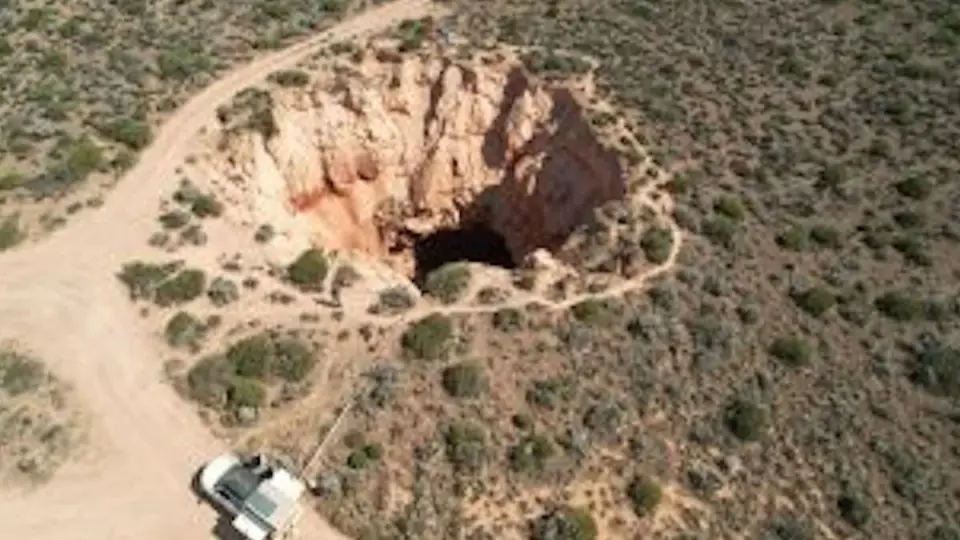
A new study reveals that mysterious trenches on Australia's Nullarbor Plain are surface scars from slowly collapsing underground cave systems, offering a method to detect similar hidden structures on Mars.
Key points
- Researchers identified five shallow trenches on the Nullarbor Plain, measuring between 100 and 500 meters in length, which lack the drainage networks typical of river channels.
- Using electrical resistivity tomography and drone photography, scientists found that these surface depressions align with deep zones of fractured rock and known cave systems.
- The study suggests that limestone caves in the region have undergone a progressive collapse over millions of years, creating the visible surface features rather than sudden sinkholes.
- The findings provide a potential method for identifying hidden cave systems on Mars, which could preserve traces of ancient microbial life or serve as future habitats for human explorers.
Background
The Nullarbor Plain, covering approximately 200,000 square kilometers, is the world's largest single exposure of limestone bedrock. It formed as an ancient shallow sea retreated around 14 million years ago. While recent news has highlighted underground discoveries in Istanbul and Mexico, this study focuses on the geological processes shaping Australia's flat terrain.
How outlets are covering it
Gizmodo emphasizes the geological mechanism of progressive collapse and the potential for finding life on Mars. Science Daily, citing the original authors, highlights the practical implications for engineering and groundwater management, as well as the scientific value of caves as archives for ancient environments and isolated life forms.
Why it matters
Understanding how caves collapse can help locate hidden subsurface structures, which is critical for geological hazard mitigation, infrastructure planning, and the search for extraterrestrial life in protected subsurface environments.
What to watch
Researchers may apply the techniques used in this study to identify similar hidden cave systems in other karst landscapes on Earth and Mars, potentially leading to new discoveries in astrobiology and geology.
Want the full story? Read the original reporting
Read on Gizmodo