
Parent of child with rare 'butterfly skin' disorder demands UK government increase research funding
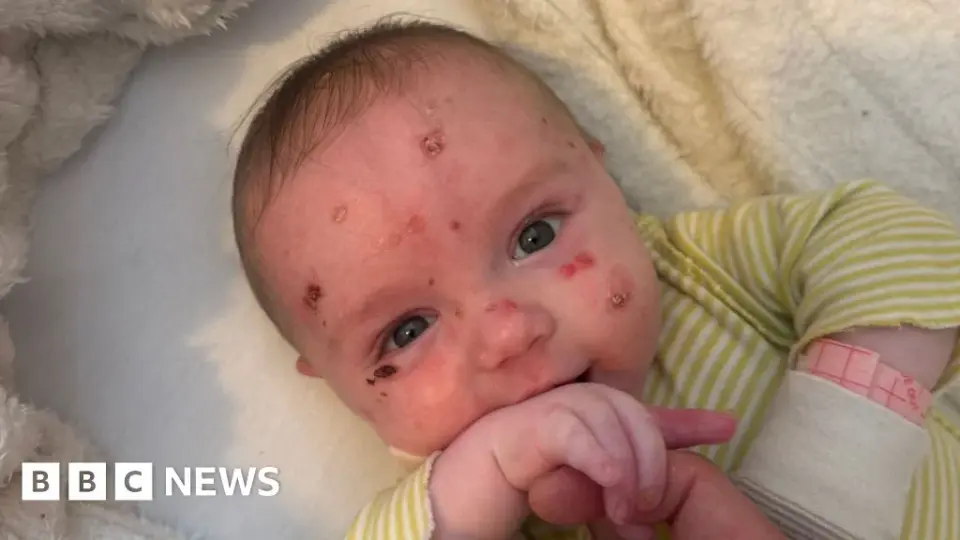
A mother in Bedfordshire is campaigning for increased government funding for junctional epidermolysis bullosa, a rare genetic condition that leaves infants with skin as fragile as glass. Her six-month-old son, Ralph, was diagnosed days after birth with severe blistering and missing skin on his hands and feet. While doctors at Great Ormond Street Hospital taught the parents how to manage the condition, there is currently no cure. The mother has launched a petition that gathered 10,000 signatures, prompting a response from the Department of Health and Social Care, which cited existing funding of £1.075 million over five years. Despite this, advocates argue that rare conditions are often overlooked in research priorities, and families must tirelessly campaign for basic care improvements.
Key points
- Ralph, a six-month-old boy from Arlesey, Bedfordshire, was diagnosed with junctional epidermolysis bullosa (JEB) shortly after birth, a condition characterized by skin that blisters or tears at the slightest touch.
- The condition, often called 'butterfly skin,' is caused by a gene mutation resulting in faulty proteins that fail to connect the epidermis to the dermis, leading to extensive blistering, pain, and itching.
- Ralph’s parents, Ciara and Lewis, had to learn specialized care techniques from Great Ormond Street Hospital, including greasing bottle teats to protect his mouth and turning baby clothes inside out to avoid friction from seams.
- Ciara Gordon-Farleigh launched a petition demanding more research and funding for rare skin conditions, which reached 10,000 signatures and received a response from the Department of Health and Social Care.
- The Department of Health and Social Care stated it has committed £1.075 million over five years for projects related to epidermolysis bullosa, covering advanced treatments and symptom management, but critics argue this is insufficient for rare conditions.
- Tony Byrne, CEO of DEBRA UK, emphasized that ring-fenced government investment is crucial to move promising discoveries into clinical trials and ensure rare conditions are not overlooked in research priorities.
Background
This story highlights the ongoing challenges faced by families dealing with rare genetic disorders in the UK, where limited treatment options and fragmented research funding often force parents to become their own advocates. While previous archive articles focused on technology and privacy issues, this piece shifts focus to the human impact of rare diseases and the gap between existing government commitments and the urgent needs of affected families. The lack of a cure for junctional epidermolysis bullosa underscores the need for sustained, targeted investment in pediatric research and care coordination.
Why it matters
The case of Ralph and his family illustrates the critical gap between existing government funding and the urgent needs of families affected by rare diseases. Without increased, ring-fenced investment, rare conditions like junctional epidermolysis bullosa risk being overlooked in research priorities, leaving families to manage devastating conditions with limited support. This story underscores the importance of advocacy and the need for systemic changes in how rare diseases are funded and treated in the UK.
What to watch
The Department of Health and Social Care will likely review the petition’s demands, but no immediate policy changes have been announced. Families and advocacy groups like DEBRA UK will continue to push for increased funding and better care coordination. The focus will remain on whether existing commitments can be expanded to ensure rare conditions are not left behind in research and treatment efforts.
Want the full story? Read the original reporting
Read on BBC