
Finland’s Record-Breaking Viking Hoard: A 'Double Deposit' Rewrites Silver Economy History
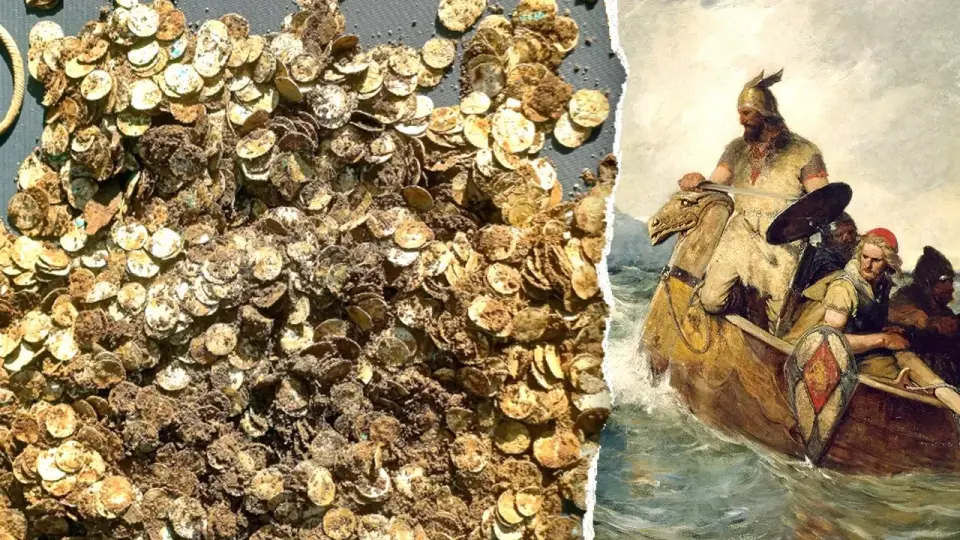
A metal detectorist in Finland uncovered a massive Viking Age silver hoard near Sysmä, containing over 4,000 coins and weighing approximately 10 pounds. This discovery, the largest of its kind in Finnish history, features a rare 'double hoard' structure with two deposits 39 feet apart. The find, dating to 1000–1050 AD, includes coins from Sweden, Britain, Germany, and the Islamic world, offering new insights into regional trade networks.
Key points
- Kalle Lappinen discovered the hoard on September 3, 2026, near Sysmä, 105 miles northeast of Helsinki.
- The find includes over 4,000 coins, hack silver, a bracelet, a mount, and a bead, totaling about 10 pounds.
- It is the largest Viking Age coin hoard in Finland, surpassing the 1895 Nousiainen find of 1,700 coins.
- The hoard consists of two separate deposits 39 feet apart, a 'double hoard' structure not previously known.
- Coins originate from Sweden, Britain, Germany, and the Islamic world (Turkey/Iran), indicating extensive trade.
- Archaeologists from Lahti Museums began recovery on September 4; dating is preliminary (1000–1050 AD).
Background
This discovery follows a surge in Viking Age finds across Scandinavia in 2026. In May, a Norwegian detectorist found over 3,150 coins near Rena. In September, a homeowner in Rebild, Denmark, uncovered 18.5 kg of silver, the largest hoard in Danish history. Finland’s known Viking Age coin count has doubled from 7,000 to 14,000 in the past 25 years, largely due to hobbyist metal detecting.
How outlets are covering it
Fox News and CPG Click Oil and Gas emphasize the record-breaking size and the 'double hoard' aspect, highlighting its uniqueness. Popular Science and news24.com.au focus on the broader Scandinavian trend, comparing the Finnish find to the Danish and Norwegian discoveries. Frida Ehrnsten (National Museum of Finland) stresses the economic implications, while Esko Tikkala (Lahti Museums) notes the preliminary nature of the dating and the mystery of the owner. All sources agree on the hoard’s significance but differ in emphasis: some focus on the archaeological novelty, others on the trade networks or the legal/financial aspects for the finder.
Why it matters
The Sysmä hoard reshapes understanding of Finland’s role in the Viking Age economy, suggesting Sysmä was a significant trade hub rather than a peripheral area. The 'double hoard' structure provides new data on how silver was stored and managed. It also underscores the impact of hobbyist metal detecting on archaeological discoveries, with Finland’s known Viking Age coin count doubling in 25 years. The find may influence future research on silver circulation and trade routes in Northern Europe.
What to watch
Lahti Museums will clean and analyze the coins to refine the dating and identify origins. The Finnish Heritage Agency will process the finder’s redemption claim, which may take up to three years. Researchers will study the 'double hoard' structure to understand burial practices. The hoard may eventually be displayed at the National Museum of Finland, similar to the 2018 Ihananiemi find.
- Man searching with metal detector unearths massive Viking Age fortune, shattering records Fox News
- Gardener finds 40 pounds of Viking silver in his backyard Popular Science
- Puzzling sound in backyard leads homeowner to huge 1,000-year-old treasure news24.com.au
- Record Viking Age coin discovery reveals 'double hoard' unlike known finds yahoo.com
- A Metal Detectorist Dug Up 10 Pounds of Viking Silver in a Finnish Field, and Finland's Law Decides Exactly How Much of It He Gets to Keep CPG Click Oil and Gas
Want the full story? Read the original reporting
Read on Fox News