Tag

Viking Age

All articles tagged with #viking age

Finland’s Record-Breaking Viking Hoard: A 'Double Deposit' Rewrites Silver Economy History
history-and-archaeology25 days ago

Finland’s Record-Breaking Viking Hoard: A 'Double Deposit' Rewrites Silver Economy History

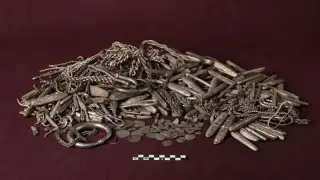
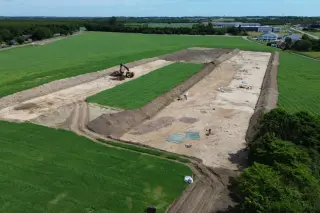
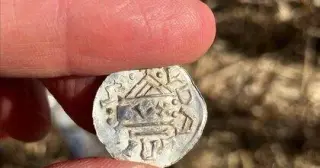
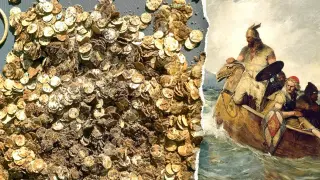
A metal detectorist in Finland uncovered a massive Viking Age silver hoard near Sysmä, containing over 4,000 coins and weighing approximately 10 pounds. This discovery, the largest of its kind in Finnish history, features a rare 'double hoard' structure with two deposits 39 feet apart. The find, dating to 1000–1050 AD, includes coins from Sweden, Britain, Germany, and the Islamic world, offering new insights into regional trade networks.
Backyard Dig Unearths 18.5kg Viking Silver Hoard in Denmark
archaeology1 month ago

Backyard Dig Unearths 18.5kg Viking Silver Hoard in Denmark

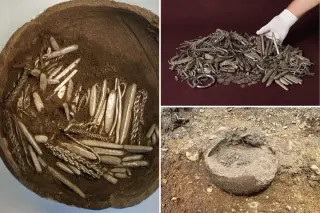
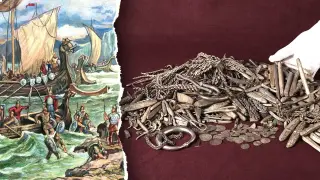
A homeowner in Rebild, Denmark, discovered the country’s largest Viking Age silver hoard while preparing a garden for a new terrace. The find, weighing 18.5 kilograms, includes approximately 700 items such as coins, jewelry, and silver bars. Archaeologists describe it as a 'safe from the Viking Age' that reveals extensive trade connections with England and the Islamic world. The treasure is now under assessment at Denmark’s National Museum, with plans for a permanent display at the Fyrkat Viking Museum.

Metal-detecting mistake uncovers rare 900-year-old Magnus Barefoot coin in Norway
archaeology3 months ago

Metal-detecting mistake uncovers rare 900-year-old Magnus Barefoot coin in Norway

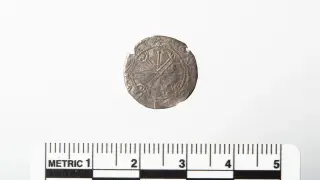
A Norwegian metal detectorist mistook a 900-year-old silver coin for a button, only for researchers to confirm it as a rare Magnus Barefoot-era artifact (1093–1103). Found near Utstein Monastery, the coin’s copper-backed side was turned into jewelry, and X-rays revealed a griffin paired with a cross-over-cross motif—one of only four known examples of this design. The find, one of about 100 coins from Barefoot’s reign, sheds new light on late Viking-Age minting and Barefoot’s high-silver standard before his death in 1103.

Viking textile hub uncovered in Denmark reveals a sophisticated economy
culture3 months ago

Viking textile hub uncovered in Denmark reveals a sophisticated economy

Archaeologists near Aarhus, Denmark, uncovered 82 pit houses forming a large, specialized Viking textile workshop complex dating to the 7th–10th centuries, with a complete production chain and finds (loom weights, spindle whorls, beads, internationally circulated coins) indicating extensive trade networks and a highly developed economy beyond warfare.

Norway Uncovers Massive Viking-Age Coin Hoard, Largest in History
world5 months ago

Norway Uncovers Massive Viking-Age Coin Hoard, Largest in History

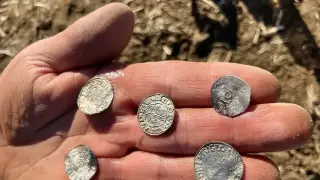
Two private metal detectorists in Østerdalen, Norway uncovered 2,970 silver coins dating to around 1047—the largest Viking Age coin hoard found in Norwegian history. The coins include pieces minted under Cnut the Great, Æthelred II, Otto III and Harald Hardrada, and researchers say the stash likely reflects iron-production trade in the region. Excavations continue with restricted access, and the hoard will be transported to the Museum of Cultural History’s Coin Cabinet for cataloguing and study.

Norway Uncovers Record Viking Coin Hoard
world5 months ago

Norway Uncovers Record Viking Coin Hoard

Metal detectorists in Innlandet near the village of Rena uncovered Norway’s largest Viking Age coin hoard, a find that dwarfs previous discoveries with more than 3,150 coins recovered and counting; the trove, dating to the late 10th to early 11th centuries and minted across England, Germany, Denmark, and Norway, emerged after two private citizens found a smaller batch of 19 coins on April 10, prompting a broader archaeological probe. Researchers say the coins shed new light on the era’s economy amid political upheaval and foreign wealth, with coins tied to rulers like Cnut the Great, Ethelred II, Otto III, and Harald Hardrada; the search for more treasure continues, and officials call the discovery historic.

"Historians Claim Cerne Abbas Giant Represents Hercules and Served as Military Rallying Site"
history-and-archaeology2 years ago

"Historians Claim Cerne Abbas Giant Represents Hercules and Served as Military Rallying Site"

New research from the University of Oxford suggests that the Cerne Abbas giant, a large hill figure in Dorset, England, represents Hercules and may have served as a muster station for West Saxon armies during Viking invasions in the 10th century. Historians Helen Gittos and Tom Morcom argue that the figure's location and characteristics align with those of a "hanging promontory" site, ideal for army gatherings. This recontextualizes the giant from a mysterious figure to a significant cultural and historical symbol in the local landscape.

"Lost Earring Leads to Ancient Viking Treasure Unearthed by Norwegian Family"
archaeology3 years ago

"Lost Earring Leads to Ancient Viking Treasure Unearthed by Norwegian Family"

A Norwegian family searching for a lost earring in their yard using a metal detector stumbled upon a Viking treasure buried beneath a large tree. The relics, believed to be from the Viking Age, include two bronze ornaments that were once covered in gold. The discovery confirms that people lived on the remote island of Jomfruland during that time. Archaeologists suspect that more artifacts and a Viking grave may still be buried nearby. The artifacts will be assessed for preservation, and if deemed safe, they may be left in situ rather than excavated.

Reconsidering Viking Age Shields: Ceremonial or Combat Ready?
archaeology3 years ago

Reconsidering Viking Age Shields: Ceremonial or Combat Ready?

Rolf Fabricius Warming, a Swedish archaeologist, has re-examined the 64 round shields found in a Viking Age longship burial mound in Norway. While the original assessment considered them to be constructed for a burial rite ceremony, Warming's research suggests that they were combat-ready shields with small holes around the circumference for attaching thin, parchment-like rawhide covers. The shields were ultimately used in a ceremonial burial rite, but their construction and previous uses were not as straightforward as originally reported. Warming's analysis demonstrates the importance of re-examining artifacts with new knowledge and analysis techniques.