
Westminster Abbey’s 150-Year-Old Sarcophagus Mystery Solved: Skeleton Identified as 11th-Century Abbot
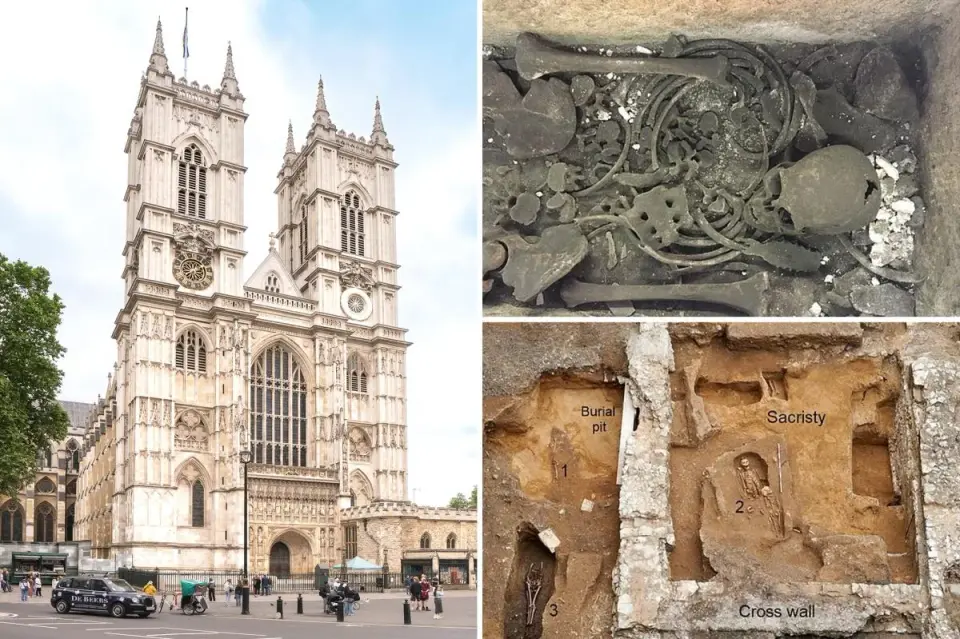
A 150-year-old mystery regarding a skeleton found in a Roman-era sarcophagus at Westminster Abbey has been resolved. Professor Warwick Rodwell identified the remains as belonging to either Abbot Ælfwig or Abbot Wulfnoth, both of whom served in the 11th century. The discovery, initially made in 1820 but not fully analyzed until 2016, confirms the repurposing of a Roman tomb for a high-ranking medieval religious figure, ending decades of speculation about the occupant's identity.
Key points
- The skeleton was discovered in 1820 but not officially recorded until 1869, when workers repaired the sarcophagus lid and noticed a Roman inscription.
- In 2016, the sarcophagus was opened for conservation, revealing the remains of a middle-aged male with signs of gout and osteoarthritis.
- Carbon dating placed the individual's life between 987 and 1052, confirming the Roman sarcophagus was repurposed for a medieval burial.
- Professor Warwick Rodwell narrowed the identity to two candidates: Abbot Ælfwig (served 993–1020) and Abbot Wulfnoth (served 1020–1049).
- The use of a Roman sarcophagus for a medieval abbot is considered highly unorthodox, with no comparable cases documented in archaeological records.
Background
This story builds on the long-standing archaeological interest in Westminster Abbey's grounds, where various historical layers have been uncovered over centuries. The 1820 discovery was initially dismissed as empty due to looting, but recent conservation efforts in 2016 and 2018 provided the physical evidence needed to solve the mystery. The archive does not contain relevant background for this specific archaeological story, as the provided archive entry concerns a fictional Marvel series.
How outlets are covering it
The New York Post and Live Science emphasize the finality of the identification, highlighting the two viable candidates and the unorthodox nature of the burial. The Guardian provides additional detail on the physical evidence, noting the presence of powdered lime and a wooden coffin inside the sarcophagus, which suggests a more complex burial process than previously thought. While all sources agree on the two potential abbots, The Guardian notes that Rodwell favors Ælfwig due to his prior status as a monk at Westminster, whereas the New York Post presents the two candidates as equally likely based on tenure dates.
Why it matters
This discovery resolves a significant historical puzzle that has persisted for over 150 years, providing insight into medieval burial practices and the repurposing of Roman artifacts. It also sheds light on the lives of 11th-century abbots, offering a rare physical connection to the early history of Westminster Abbey. The case highlights the importance of modern conservation techniques in uncovering historical truths that were previously obscured by time and damage.
What to watch
Researchers will likely continue to analyze the sarcophagus and the remains for further clues about the identity of the abbot and the circumstances of his burial. The sarcophagus may be displayed in the Queen’s Diamond Jubilee Galleries, as mentioned in The Guardian, allowing the public to view the artifact and learn about its history. Further studies may also explore the inscription of Valerius Amandinus to determine if he was an early Christian figure in Roman London.
- New clues in Westminster Abbey mystery: Medieval skeleton buried in Roman-era sarcophagus finally identified New York Post
- Mystery of Roman sarcophagus unearthed at Westminster Abbey solved at last, expert says The Guardian
- Skeleton in Roman sarcophagus at Westminster Abbey may be medieval monk Yahoo
- Mystery of Skeleton Found in Roman Coffin at Westminster Abbey May Be Solved 150 Years Later People.com
- Case of mysterious medieval skeleton buried in Roman-era sarcophagus at Westminster Abbey finally solved Live Science
Want the full story? Read the original reporting
Read on New York Post