Tag

Medieval History

All articles tagged with #medieval history

Russian Archaeologists Unearth 11th-Century Bread Peel with Carved Game Board
archaeology2 hours ago

Russian Archaeologists Unearth 11th-Century Bread Peel with Carved Game Board

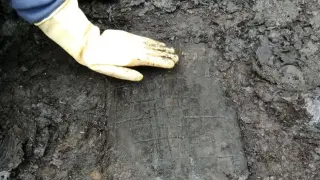
Archaeologists in Staraya Russa, Russia, have discovered an 11th-century wooden bread peel that also served as a board game surface. The artifact, measuring approximately 30 by 40 centimeters, features a flat side for baking and a reverse side carved with the layout for the medieval game 'merels.' Found at the Pyatnitsky site, this well-preserved oak object offers rare insight into how medieval bakers may have combined utility and leisure, using the tool to pass time while waiting for bread to bake.

Dublin Professor Uncovers 13th-Century Castle Hidden Inside Modern University Building
science20 days ago

Dublin Professor Uncovers 13th-Century Castle Hidden Inside Modern University Building

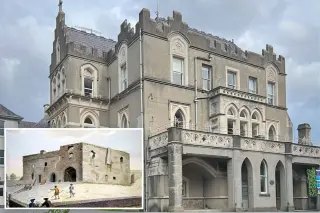
A medieval castle thought lost for centuries was discovered intact within a Victorian-era building at University College Dublin. Professor Tadhg O’Keeffe identified the structure by analyzing 18th-century watercolors and recognizing architectural clues like thick walls and splayed windows. The discovery, announced in September 2026, reveals that 70-80% of the original Roebuck Castle survives beneath modern plaster, offering a rare glimpse into Ireland’s Norman-era history.

Lincoln excavation seeks to rewrite the narrative of medieval leprosy care
history23 days ago

Lincoln excavation seeks to rewrite the narrative of medieval leprosy care

A new archaeological dig in Lincoln aims to uncover the remains of the Hospital of the Holy Innocents, a medieval leprosary founded around 1100. Researchers hope to challenge the Victorian-era myth that leprosy patients were universally ostracized, suggesting instead that such institutions were often wealthy, peaceful religious communities. The three-year project, funded by the National Lottery Heritage Fund, will expand on 2025 test pits that found wall traces and pottery, seeking to reveal the unique design of English leprosaria and connect locals with their hidden heritage.

Six pages of medieval 'bestseller' reunited with Henry VIII aide's manuscript
history1 month ago

Six pages of medieval 'bestseller' reunited with Henry VIII aide's manuscript

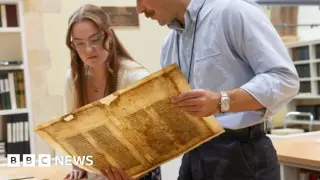
Researchers from the University of Sussex and Cambridge have identified six missing pages of a 15th-century religious text, Nicholas Love's 'Mirror of the Blessed Life of Jesus Christ,' held in a Brighton archive. The pages, which had been separated from the main manuscript for centuries, were matched to a copy now at Yale University. The discovery highlights how Sir John Gage, a key enforcer of Henry VIII's dissolution of monasteries, secretly preserved Catholic texts despite his official role in destroying them. The finding, published in 'Notes and Queries,' reveals a complex history of book preservation during the English Reformation, challenging the narrative that the period was defined solely by destruction. The pages, which detail the raising of Lazarus, were found in a box deposited in 1929 but omitted from its contents list, remaining 'hidden in plain sight' until recently.

Greengrass’s ‘The Uprising’ Reimagines 1381 Revolt as Modern Parable
arts-and-culture1 month ago

Greengrass’s ‘The Uprising’ Reimagines 1381 Revolt as Modern Parable

Paul Greengrass’s new film, 'The Uprising,' dramatizes the 1381 English Peasants' Revolt through the lens of a fictional, unnamed farmer. While critics debate its historical accuracy and stylistic coherence, the film uses the medieval uprising to draw sharp parallels with contemporary economic inequality and political power dynamics.

Bayeux Tapestry’s London Debut: A Diplomatic Triumph and Conservation Feat
culture1 month ago

Bayeux Tapestry’s London Debut: A Diplomatic Triumph and Conservation Feat

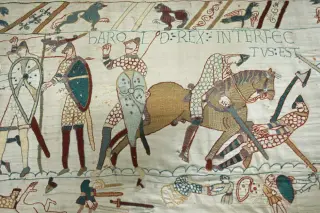
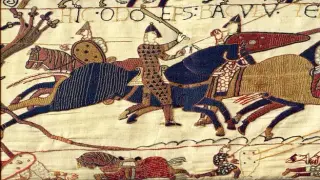
The Bayeux Tapestry, an 11th-century embroidery depicting the Norman conquest of England, is now on display at the British Museum. Insured for $1.1 billion, it is the most valuable traveling artwork in history. The exhibition, a symbol of Franco-British friendship, required complex engineering to transport the fragile 70-meter piece from France. While it offers unique insights into 1066, scholars debate its missing sections and 19th-century restorations.

Orderly Abandonment of Medieval German Village Raises New Questions
history1 month ago

Orderly Abandonment of Medieval German Village Raises New Questions

Archaeologists in Halberstadt, Germany, uncovered the remains of a medieval village that was abandoned in an unusually orderly fashion, leaving behind very few artifacts and no signs of destruction. The site, possibly linked to the historical village of Kühlingen, was discovered during excavations for a new industrial park. While the settlement shows evidence of two phases of development, the precise reason and timing of its abandonment remain unknown, prompting further radiocarbon analysis.

Lost Papal Letter Links 1066 Invasion to Rome's Internal Power Struggle
history1 month ago

Lost Papal Letter Links 1066 Invasion to Rome's Internal Power Struggle

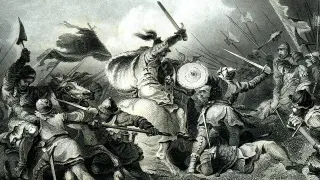
A previously overlooked excerpt from a papal letter in the Vatican archives suggests Pope Alexander II supported William the Conqueror’s 1066 invasion of England not just for dynastic claims, but to punish English alignment with his rival, the antipope Honorius II. Professor Tom Licence of the University of East Anglia argues this reframes the Battle of Hastings as part of a broader ecclesiastical power struggle, rather than solely a contest between King Harold II and William of Normandy. The findings, detailed in Licence’s new book 'Harold: Warrior King,' indicate that Alexander viewed England’s leadership as an 'evil head' leading the nation astray, potentially using the Norman invasion to enforce regime change and restore papal authority in the region.

Bayeux Tapestry’s ‘Aelfgyva’ Scene May Expose a Royal Scandal That Undermined William’s Claim
history1 month ago

Bayeux Tapestry’s ‘Aelfgyva’ Scene May Expose a Royal Scandal That Undermined William’s Claim

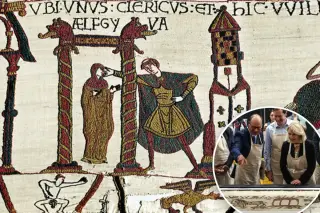
A controversial scene in the Bayeux Tapestry, recently returned to the UK for display at the British Museum, may depict a sexual scandal involving Emma of Normandy that could have challenged William the Conqueror’s legitimacy. The tapestry, which chronicles the 1066 Norman Conquest, includes 93-94 phallus motifs and a vignette showing a clergyman caressing a woman named Aelfgyva while a naked man looks on. British Museum curator Michael Lewis suggests this scene alludes to rumors that Emma, William’s great-aunt, had an affair with Bishop Alfwin of Winchester, thereby questioning the family ties William used to justify his claim to the English throne. The identity of the woman remains debated, with some historians proposing she could be Aelfgyva of York or Northampton. The tapestry’s return to the UK after nearly 1,000 years has sparked renewed interest in its subversive details and historical implications.

Digital reconstruction of 11th-century 'Conquest Man' reveals a Scandinavian identity that defies the Norman-Saxon binary
history1 month ago

Digital reconstruction of 11th-century 'Conquest Man' reveals a Scandinavian identity that defies the Norman-Saxon binary

A digital facial reconstruction of an 11th-century man buried in 1079 at St Peter's Church in Barton-upon-Humber has been completed by researchers from Liverpool John Moores University and English Heritage. Known as 'Conquest Man,' the individual was a stocky, muscular male in his 50s or 60s with multiple healed fractures. Analysis of his ancient DNA, isotopes, and skull shape indicates he was of Scandinavian origin, not Norman or Anglo-Saxon. This finding challenges the traditional binary narrative of the 1066 Battle of Hastings, suggesting a more complex demographic reality where people moved across the North Sea and lived through the transition between pre- and post-Conquest societies.

Bayeux Tapestry’s UK Return Highlights Medieval Masculinity and Hidden Female Labor
culture1 month ago

Bayeux Tapestry’s UK Return Highlights Medieval Masculinity and Hidden Female Labor

The 11th-century Bayeux Tapestry is returning to the UK for the first time in nearly a millennium, set to exhibit at the British Museum from September 10, 2026, to July 11, 2027. While the 70-meter artwork famously depicts the Norman conquest and the death of King Harold, recent analysis emphasizes its hypermasculine imagery, including prominent depictions of male and equine genitalia as symbols of power. Scholars also highlight the likely female creators of the piece, suggesting that the tapestry’s borders may contain subversive critiques of the male-dominated narrative. The exhibition is part of a broader national program, including a new textile trail in Scotland, celebrating the artifact’s return after a secret transport from France.

Skeleton 150: Medieval Man’s 160+ Fractures Point to First Trebuchet Death
science-and-history2 months ago

Skeleton 150: Medieval Man’s 160+ Fractures Point to First Trebuchet Death

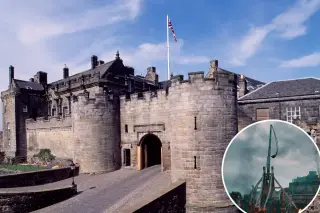
A skeleton found at Stirling Castle in 1997 may be the first confirmed victim of a trebuchet. Bioarchaeologist Jo Buckberry presented findings at the Paleopathology Association meeting in Berlin, noting the man suffered over 160 fractures consistent with high-velocity blunt force trauma. The injuries, concentrated on the skull and ribs, align with the 1304 English siege of the castle by Edward I, who deployed massive siege engines like the 'War Wolf.'