
Rediscovery of Sandy Irvine’s Remains Sparks Debate on Everest’s First Ascent
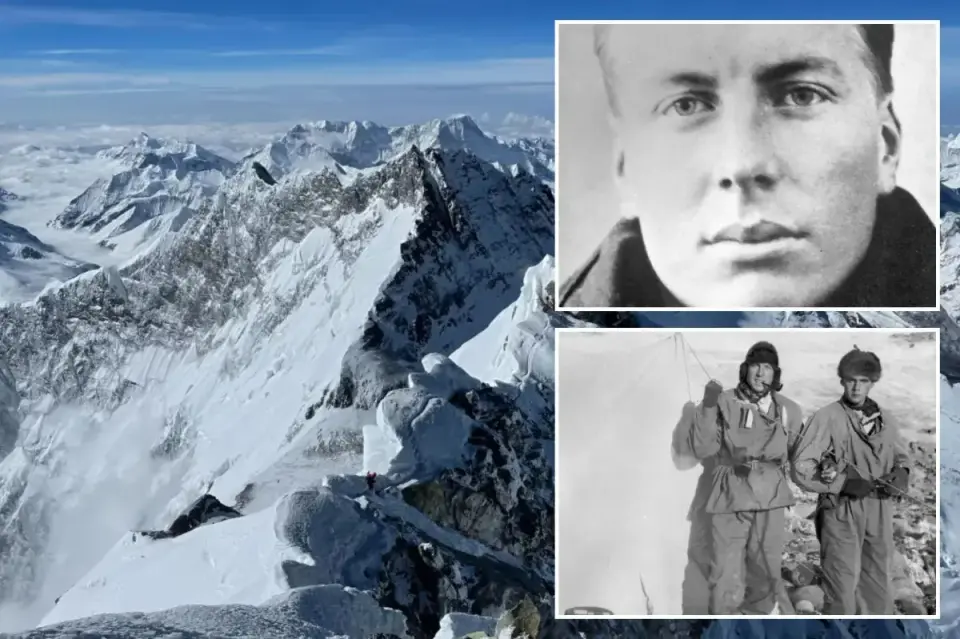
A boot containing the remains of climber Sandy Irvine was found on Everest’s north flank in October 2024, ending a century-long mystery. Julie Summers and Jochen Hemmleb detail this discovery in their new book, exploring whether Irvine and George Mallory reached the summit before their deaths in 1924.
Key points
- A boot with a woolen sock bearing the name tape 'A.C. IRVINE' was discovered on the north flank of Mount Everest in October 2024.
- Andrew Comyn 'Sandy' Irvine, a 22-year-old Oxford student, vanished with George Mallory on June 8, 1924, after being seen climbing the ridgeline by Noel Odell.
- Julie Summers, Irvine’s grandniece, and mountaineering historian Jochen Hemmleb co-authored 'The Everest Mystery,' released August 25, 2026, to analyze the 1924 expedition.
- Mallory’s body was found in 1999, but Irvine’s remains had not been located until the recent discovery on the Central Rongbuk Glacier.
- The book argues Irvine’s mechanical skills in improving oxygen apparatus made him a crucial partner for Mallory, despite his lack of climbing experience.
- Chinese expeditions in 1960 and 1975 reported seeing a Caucasian corpse, leading to rumors that China removed Irvine’s body to hide evidence of a prior summit.
Background
The 1924 British expedition to Everest remains one of mountaineering’s most enduring mysteries. George Mallory and Sandy Irvine disappeared after being seen near the summit, with Mallory’s body recovered in 1999 but Irvine’s missing for over a century. Recent discoveries of artifacts near 28,000 feet and conflicting reports from Chinese climbers have fueled debates about whether they achieved the first ascent before Edmund Hillary and Tenzing Norgay in 1953.
Why it matters
The rediscovery of Irvine’s remains provides physical evidence to investigate the fate of the 1924 climbers and challenges the historical narrative that the first ascent occurred in 1953. It also highlights the role of technical innovation in early high-altitude climbing and the geopolitical complexities surrounding Everest’s northern route.
What to watch
Researchers will continue to analyze the boot and other artifacts to determine if they offer definitive proof of a summit attempt. Summers and Hemmleb’s book aims to clarify Irvine’s contributions and the circumstances of his death, potentially reshaping the historical record of Everest’s early expeditions.
Want the full story? Read the original reporting
Read on New York Post