
China demands binding peace deal as UN reports 85% spike in Ukrainian civilian casualties
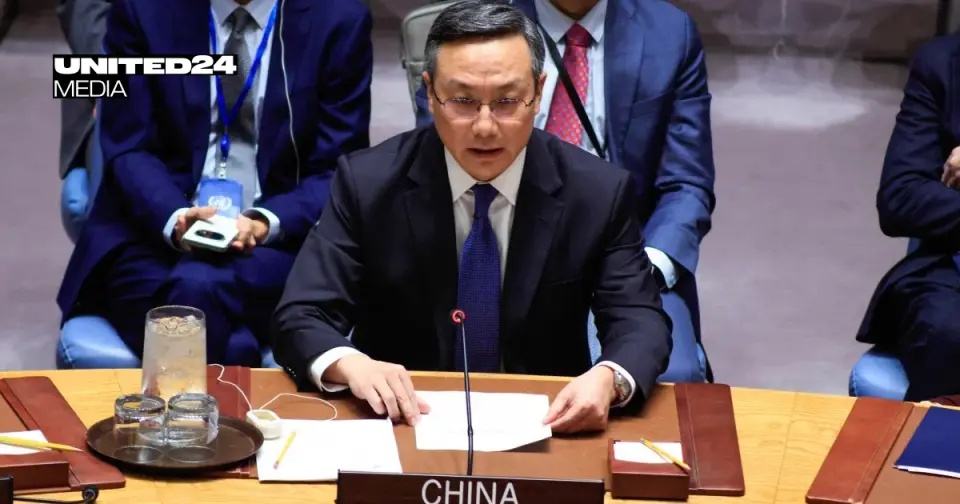
China’s UN representative urged the Security Council on November 9 to prioritize a binding peace agreement ahead of the November 10-11 talks in Abu Dhabi. While Beijing emphasized humanitarian standards and 'shuttle diplomacy,' UN officials reported that civilian deaths and injuries in Ukraine surged by 85% in September 2026 compared to the previous year. Pakistan warned that continued escalation threatens global food and energy security, particularly for developing nations, while Ukraine’s representative called for enforcement of International Court of Justice decisions against Russia.
Key points
- China’s Deputy Permanent Representative Sun Lei called for a binding peace agreement, citing President Xi Jinping’s 'four points' framework and emphasizing the protection of civilians and infrastructure.
- UN official Kayako Goto reported that at least 328 civilians were killed and 2,105 injured in September 2026, an 85% increase from the same month in 2025, with similar casualty rates persisting into October.
- Recent attacks included a strike on a school in Zaporizhzhia killing at least 55 people, a hospital hit in Kharkiv injuring 73, and a hospice destroyed in Dnipro, displacing dozens of patients.
- Pakistan’s UN envoy Syed Haider Shah warned that further escalation would deepen global food and energy insecurity, linking the conflict to disruptions in the Strait of Hormuz and Red Sea trade routes.
- Ukraine’s representative Andriy Melnyk appealed to the Security Council to address Russia’s non-compliance with International Court of Justice rulings, while China expressed readiness to facilitate a ceasefire and regional stability.
Background
These developments occur ahead of trilateral peace talks scheduled for November 10-11 in Abu Dhabi, involving US, Ukrainian, and Russian representatives. Recent days have seen intense Russian strikes on Ukrainian energy infrastructure, leaving hundreds of thousands without power, which Ukrainian President Volodymyr Zelenskyy accused Moscow of using to pressure Kyiv before negotiations. European leaders have debated their role in post-war security guarantees, with some questioning the sincerity of Russian peace intentions.
How outlets are covering it
China, via Sun Lei, focused on the necessity of a binding agreement and humanitarian de-escalation, framing its role as active 'shuttle diplomacy' between all parties. In contrast, Pakistan’s representative highlighted the macroeconomic consequences of the war, specifically the threat to global food and energy supplies for developing nations, linking it to broader Middle East instability. The UN’s Goto provided a stark humanitarian perspective, emphasizing the record-breaking rise in civilian casualties and specific attacks on schools and hospitals, while Ukraine’s Melnyk focused on legal accountability through the International Court of Justice. The outlets differ in emphasis: UNITED24 highlights China’s diplomatic stance, Arab News focuses on Pakistan’s economic warnings, and UA.NEWS details the humanitarian toll and specific attack sites.
Why it matters
The divergence in diplomatic priorities highlights the complexity of the upcoming Abu Dhabi talks. While China pushes for a formal binding agreement, the UN data suggests the humanitarian situation is deteriorating rapidly, with casualty rates reaching record levels. Pakistan’s warning connects the regional conflict to global supply chain vulnerabilities, suggesting that a failure to de-escalate could have far-reaching economic consequences beyond Europe. The timing of these statements, just before the Abu Dhabi talks, underscores the pressure on all parties to demonstrate political will amidst ongoing military escalation.
What to watch
The immediate focus is on the November 10-11 talks in Abu Dhabi, where the US, Ukraine, and Russia are expected to meet. Observers will watch whether China’s call for a 'binding' agreement influences the negotiation framework or if the talks remain conceptual. The UN may issue further reports on October casualty figures, and the international community will monitor whether the recent strikes on energy infrastructure cease as winter approaches. Ukraine’s appeal for enforcement of ICJ decisions may also gain traction in the General Assembly.
- China Calls for Binding Ukraine Peace Deal Ahead of Abu Dhabi Talks UNITED24 Media
- Mr. Mohamed Yahya, ASG for Humanitarian Affairs, on behalf of Mr. Tom Fletcher, USG for Humanitarian Affairs and Emergency Relief Coordinator – Briefing to the Security Council on the humanitarian situation in Ukraine, 9 November 2026 ReliefWeb
- Pakistan warns Ukraine war escalation threatens global food, energy security Arab News PK
- Civilian Toll Mounts in Ukraine as Russian Federation Intensifies Attacks, Senior UN Official Warns Security Council Big News Network.com
- The number of dead and wounded in Ukraine has risen by 85% — UN UA.NEWS
Want the full story? Read the original reporting
Read on UNITED24 Media