
BRICS Summit in Delhi Faces Cohesion Test Amid Middle East and Ukraine Conflicts
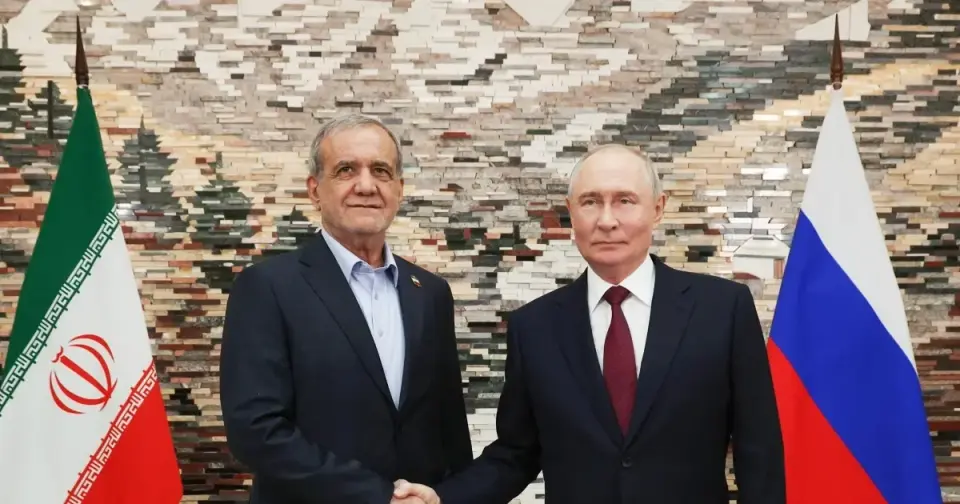
Vladimir Putin arrived in New Delhi for an 11-member BRICS summit, where discussions will center on the ongoing wars in Ukraine and the Middle East. The gathering includes Chinese President Xi Jinping and Iranian President Masoud Pezeshkian, marking significant diplomatic milestones for India. However, the expanded bloc faces internal divisions over the US-Israel war on Iran, testing its unity. India balances its relationships with Russia, Iran, and the US while navigating energy challenges and strategic rivalries.
Key points
- Putin arrived at Palam Air Force Station in New Delhi, greeted by Indian officials, ahead of the two-day BRICS summit.
- The summit includes 11 members, with Iran, Saudi Arabia, and the UAE joining the original five, creating internal divisions over the Middle East conflict.
- Chinese President Xi Jinping’s visit is his first since 2019, signaling a cautious thaw in India-China relations despite ongoing mistrust and trade deficits.
- Iranian President Masoud Pezeshkian’s visit is his first to India in eight years, placing the Middle East conflict at the forefront of the agenda.
- India has turned to Russia for energy supplies amid the crisis caused by the war in Iran, while maintaining a delicate balance with the US and Israel.
Background
Recent diplomatic efforts, including the SCO summit in Bishkek, have seen India and Russia strengthening ties, with Modi urging Putin to end the Ukraine war. The current BRICS summit follows these interactions, highlighting India’s strategic balancing act between Western and non-Western powers. The expanded BRICS bloc, which includes countries with differing positions on the Middle East conflict, faces challenges in maintaining cohesion, as seen in the failure to agree on a joint statement in May.
How outlets are covering it
Al Jazeera and The Guardian both emphasize the central role of the Middle East and Ukraine wars in the BRICS summit, highlighting the internal divisions within the expanded bloc. Al Jazeera notes the security measures and traffic restrictions in Delhi, while The Guardian focuses on the diplomatic significance of Xi’s visit and the cautious thaw in India-China relations. Both sources agree that the summit will test the cohesion of BRICS, with analysts pointing to the Gulf conflict as a major fault line. The Guardian additionally highlights the strategic rivalry and trade deficits between India and China, while Al Jazeera emphasizes India’s energy dependence on Russia.
Why it matters
The BRICS summit in Delhi is a critical moment for the bloc’s future, as it must navigate internal divisions over the Middle East conflict and external pressures from the US. The outcomes will influence global energy markets, diplomatic alignments, and the balance of power between Western and non-Western powers. India’s ability to balance its relationships with Russia, Iran, and the US will shape its strategic position in the evolving global order.
What to watch
The summit is expected to produce statements on the Middle East and Ukraine conflicts, with potential agreements on energy cooperation and trade. The outcomes will influence India’s diplomatic stance and its relationships with key global powers. Future interactions between BRICS members will be watched for signs of cohesion or further division, particularly regarding the Middle East conflict.
- Putin lands in India for BRICs summit, shadowed by Iran and Ukraine wars Al Jazeera
- Putin arrives in India for Brics summit set to be dominated by Iran and Ukraine wars The Guardian
- BRICS leaders gather in New Delhi as wars and rivalries strain the expanded bloc WRAL
- Wars, global crises may top agenda of 18th BRICS summit thehindu.com
- Putin Lands in India for BRICS Summit Shaped by Wars, Tariffs Bloomberg.com
Want the full story? Read the original reporting
Read on Al Jazeera