
UAE UN Candidate Faces Coordinated Digital Opposition Amid Power Politics
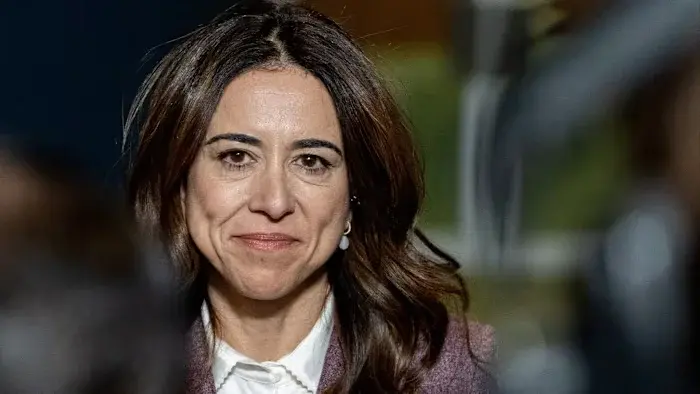
Lana Nusseibeh, a former UAE ambassador, has entered the race for UN Secretary-General, facing a coordinated digital campaign alleging her involvement in Sudan’s conflict. While critics accuse her of supporting the Rapid Support Forces, analysts note the opposition appears state-linked rather than grassroots. The broader selection process remains dominated by the five permanent Security Council members, with regional rotation and gender representation competing against great-power interests.
Key points
- Lana Nusseibeh announced her candidacy for UN Secretary-General on October 21, 2026.
- A website called notolana.com launched to oppose her bid, alleging she is responsible for genocide in Sudan due to her previous roles in the UAE government.
- The UAE denies arming the Rapid Support Forces (RSF), though the US and UN have designated some RSF abuses as genocide.
- Investigations suggest the anti-Nusseibeh campaign is linked to Turkish and Sudanese government figures, including a Sudanese military adviser and a Turkish state media contributor.
- The campaign uses automated tools to send thousands of emails to legislators, mimicking grassroots activism but lacking independent verification.
- The UN selection process requires nine Security Council votes without a veto from any of the five permanent members (P5).
Background
The UN Secretary-General position is appointed by the General Assembly based on a Security Council recommendation. Historically, the role has rotated among geographical regions, with Latin America next in line. Previous vetoes by the Soviet Union and the US have shaped the office’s history. The current race includes eight candidates, with five being women, potentially leading to the first female Secretary-General in the UN’s 81-year history. The UAE has faced repeated accusations of supporting the RSF in Sudan, a conflict involving the Sudanese Armed Forces (SAF), which has also been sanctioned for war crimes and chemical weapon use.
How outlets are covering it
The Financial Times highlights the candidacy of Lana Nusseibeh as a significant event in the UN leadership race, framing it within the context of great-power bargaining. The Foundation for Defense of Democracies (FDD) provides a detailed investigation into the 'No To Lana' campaign, arguing it is a state-aligned influence operation rather than a grassroots effort. FDD points to connections between the campaign’s founders and Turkish/Sudanese government entities, as well as the use of AI-generated content and automated email tools. StratNews Global offers a broader geopolitical perspective, emphasizing the structural imbalance of the UN Security Council and the P5’s decisive role in the selection process. While FDD focuses on the specific opposition to Nusseibeh, StratNews contextualizes the race within the larger dynamics of regional rotation and gender representation, noting that P5 interests often override these considerations. The outlets differ in focus: FDD scrutinizes the integrity of the opposition campaign, while StratNews analyzes the systemic constraints of the UN selection process.
Why it matters
The race for UN Secretary-General is not just a diplomatic contest but a reflection of global power dynamics. The coordinated opposition to Nusseibeh highlights the growing use of digital influence operations to shape international appointments. The P5’s veto power ensures that great-power interests will likely dominate the selection, potentially sidelining candidates who do not align with their geopolitical agendas. This process raises questions about the UN’s ability to represent the broader membership and address conflicts like Sudan effectively. The outcome will influence the UN’s capacity to mediate conflicts and push for reform, with implications for global governance and regional stability.
What to watch
The UN Security Council will continue to evaluate the eight candidates, with straw polls indicating the state of negotiations. The P5 will likely engage in behind-the-scenes bargaining to secure a candidate who aligns with their interests. The 'No To Lana' campaign may continue to use automated tools to pressure legislators, though its reach remains limited. The General Assembly will ultimately appoint the Secretary-General based on the Security Council’s recommendation, with the final decision expected to balance great-power interests, regional rotation, and gender representation. The outcome will shape the UN’s approach to conflicts like Sudan and its ability to push for Security Council reform.
- Can a veteran defender of the UAE’s record lead the UN? Financial Times
- Costa Rica's Grynspan extends lead in informal UN chief poll, sources say Reuters
- No To Lana: Turkey and Sudan-Aligned Campaign Targets UAE’s UN Candidate Foundation for Defense of Democracies
- UAE candidate hits roadblock in path to UN secretary-generalship Devex
- UN Chief’s Race Exposes Politics Of Power StratNews Global
Want the full story? Read the original reporting
Read on Financial Times