
EU Trade Chief Warns China Talks Stalled Ahead of Critical October Deadline
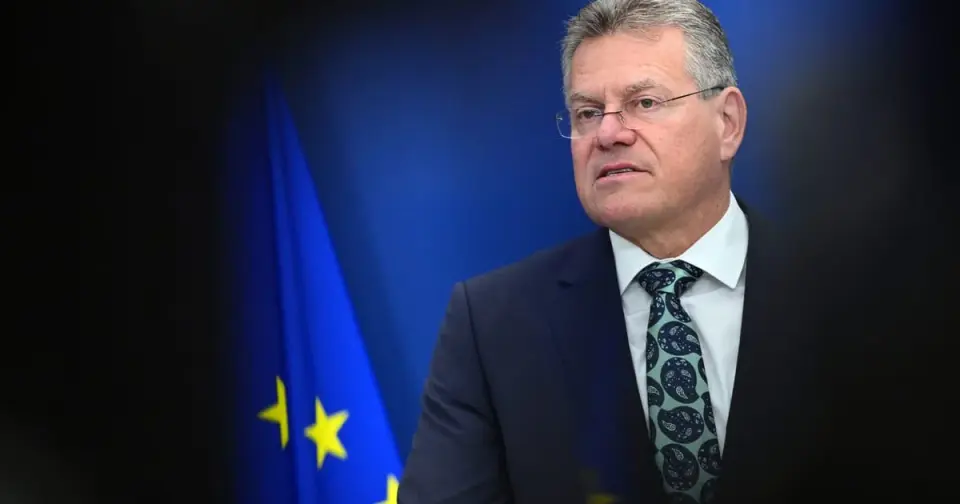
EU Trade Commissioner Maroš Šefčovič admitted that months of 'tough' negotiations with China have not yet yielded a deal, despite urgent pressure from European leaders. With a €1 billion daily trade deficit driving industrial closures in Europe, Šefčovič is traveling to Beijing on October 8 for a 'super crucial' meeting with Chinese Commerce Minister Wang Wentao. The EU seeks concrete results by October 15 to present to leaders in Brussels, threatening unilateral restrictions on Chinese imports if talks fail. Key issues include curbing Chinese export surges, boosting EU exports to China, and resolving rare earth supply curbs. While China has signaled willingness to discuss these topics, it has warned against punitive measures, creating a high-stakes diplomatic standoff.
Key points
- Šefčovič described EU-China trade talks as 'constructive, but tough,' stating the two sides are 'definitely not there yet' on a deal.
- The EU faces a ballooning trade deficit with China, reaching €1 billion per day, which is causing plant closures and job losses in European industrial sectors.
- Šefčovič will meet Chinese Commerce Minister Wang Wentao in Beijing on October 8, aiming to secure a 'proof of concept' before EU leaders meet in Brussels on October 15-16.
- The EU is seeking solutions for three main issues: sudden Chinese export surges, increased EU exports to China, and long-term clarity on Chinese rare earth export curbs.
- China has warned it will take 'firm action' against any EU moves to restrict goods, while EU leaders, including French President Emmanuel Macron, urge stronger safeguards against Chinese subsidies.
Background
The current standoff follows a period of escalating tensions, including China’s 2025 withholding of rare earth minerals in retaliation for US high-tech export limits. In September 2026, the EU explored a new trade defense tool mirroring US Section 301 authorities, which Beijing criticized as violating WTO rules. Earlier in 2026, the EU also pursued a diversification plan to reduce reliance on Chinese goods, acknowledging that while bilateral talks are preferred, stricter tariffs may be necessary if negotiations stall. The broader context includes China’s domestic economic challenges, such as a property downturn and sluggish consumption, which analysts suggest could influence Beijing’s negotiating stance.
How outlets are covering it
POLITICO emphasizes the political pressure on Šefčovič, noting that European leaders are 'politically impatient' and that the EU is prepared to restrict Chinese market access if talks fail. The outlet highlights the constructive nature of the dialogue, with China acknowledging the issues are 'on the table.' In contrast, Asia Times portrays the EU as a 'rickety' and weak actor, arguing that Beijing views Europe as divided and lacking the mandate for a trade war. Asia Times notes that China’s economic problems, such as high urban unemployment and subsidies on uneconomical industries, could be exploited by the EU, but predicts that China is committed to a zero-sum contest. The outlet also highlights Chinese state media’s rejection of 'voluntary export restraints' as coercive, contrasting with the EU’s framing of the talks as a necessary rebalancing of trade.
Why it matters
The outcome of these talks will determine whether the EU can protect its industrial base from Chinese import surges or if it will face further deindustrialization. A failure to reach a deal could lead to unilateral EU tariffs, potentially triggering a broader trade war. The resolution of rare earth supply issues is also critical for European high-tech and automotive sectors, which rely on these materials. The EU’s ability to assert its economic weight in global trade negotiations will influence its future strategic autonomy and its relationship with both China and the United States.
What to watch
Šefčovič will present the results of his Beijing meeting to EU leaders in Brussels on October 15-16. If the outcomes are deemed unsatisfactory, the EU may implement unilateral restrictions on Chinese imports, including tariffs on industrial goods and limits on electric vehicle sales. China may respond with retaliatory measures, potentially including further curbs on rare earth exports or other trade barriers. The EU’s new trade defense tool, if adopted, could allow for rapid restrictions on Chinese goods within 24 hours, mirroring US Section 301 authorities.
- ‘Tough’ talks with China have yet to deliver, EU trade chief says politico.eu
- China vows response if EU introduces moves targeting Chinese trade Reuters
- A rickety Europe tries to stand up to China Asia Times
- Beijing, Berlin hold video call amid reported plan to shut China out of EU South China Morning Post
- China Warns Broad EU Tariffs Could Disrupt Trade Negotiations Bloomberg.com
Want the full story? Read the original reporting
Read on politico.eu