
Serbia Buries Mladić with Military Honors, Defying EU and Igniting Balkan Tensions
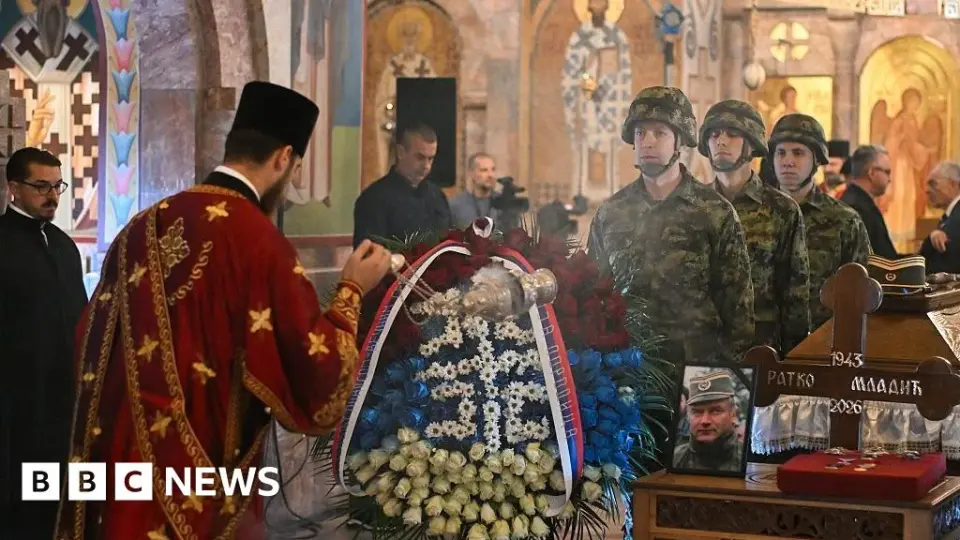
Ratko Mladić, the Bosnian Serb general convicted of genocide for the 1995 Srebrenica massacre, was buried in Belgrade on September 7, 2026, with military honors and thousands of mourners. Despite EU warnings that such 'glorification' violates European values, Serbian officials attended the service, and President Aleksandar Vučić framed the event as a reaction to Western pressure. The funeral deepened tensions between Serbia and the EU, with Brussels canceling visits and condemning the state’s role in transporting his remains. While many Serbs view Mladić as a national hero, victims’ families and neighboring countries condemned the ceremony as a denial of historical atrocities.
Key points
- Mladić died at 84 in The Hague on August 27, 2026, while serving a life sentence for genocide and war crimes.
- Thousands attended his funeral in Belgrade on September 7, 2026, including Serbian Defense Minister Bratislav Gašić and Justice Minister Nenad Vujić.
- The EU condemned the funeral as 'glorification' of a war criminal, with Enlargement Commissioner Marta Kos canceling a planned visit to Serbia.
- Serbian President Aleksandar Vučić described the gathering as an 'emotional outpouring' unrelated to government approval, despite state involvement in transporting his remains.
- Mladić remains a hero to many Serbs, particularly in Republika Srpska, while victims’ groups and neighboring countries condemned the ceremony as a denial of genocide.
Background
Mladić was convicted by the International Criminal Tribunal for the former Yugoslavia in 2017 for his role in the 1995 Srebrenica massacre, where approximately 8,000 Bosniak men and boys were killed. His conviction was upheld on appeal in 2021. Serbia has been an EU candidate since 2012, but accession talks have stalled due to concerns over rule of law and Serbia’s refusal to sanction Russia. The funeral occurred amid ongoing tensions between Serbia and the EU over democratic backsliding and nationalist rhetoric.
How outlets are covering it
The BBC and CNN reported on the large turnout and military honors at the funeral, noting the presence of senior Serbian officials and the role of the Serbian Orthodox Church. Politico emphasized the conflict between Serbia’s EU ambitions and its domestic nationalist politics, highlighting the EU’s condemnation and the cancellation of Marta Kos’s visit. The Jerusalem Post focused on the perspective of Serbs in Republika Srpska, who view Mladić as a defender of Serb rights, and noted the growing influence of nationalist sentiment among younger generations. All sources agreed on the factual details of the funeral and the EU’s response but differed in emphasis: Western outlets stressed the violation of European values, while the Jerusalem Post highlighted the enduring legacy of Mladić among Serbs.
Why it matters
The funeral exposed deep divisions in the Balkans and tested Serbia’s commitment to EU values. It highlighted the ongoing impact of the 1992–1995 Bosnian War on regional politics and memory. The event also raised questions about Serbia’s democratic trajectory and its relationship with the EU, potentially affecting future accession talks. Additionally, it underscored the challenge of reconciling historical narratives in post-conflict societies, where official judgments and public memory often diverge.
What to watch
The EU may further scrutinize Serbia’s progress toward membership, potentially freezing pre-accession payments or delaying negotiations. Serbia’s government may face increased pressure from both the EU and domestic opposition over its handling of the funeral. In the long term, the event could influence regional stability and the pace of reconciliation in the Balkans, particularly regarding the memory of the Bosnian War and the Srebrenica massacre.
- Thousands turn out in Serbia for funeral of 'Butcher of Bosnia' Ratko Mladić BBC
- Thousands of Serbs Gather to Mourn Ratko Mladic, the ‘Butcher of Bosnia’ The New York Times
- Ratko Mladić funeral exposes gap between Serbia’s EU ambitions and political reality politico.eu
- War criminal Ratko Mladić to receive full military honors in funeral as crowds gather CNN
- Reporter's Notebook: Bosnian Serbs reflect on life of Ratko Mladic jpost.com
Want the full story? Read the original reporting
Read on BBC