
Duterte ICC Trial Set to Open Monday as Families Await Justice
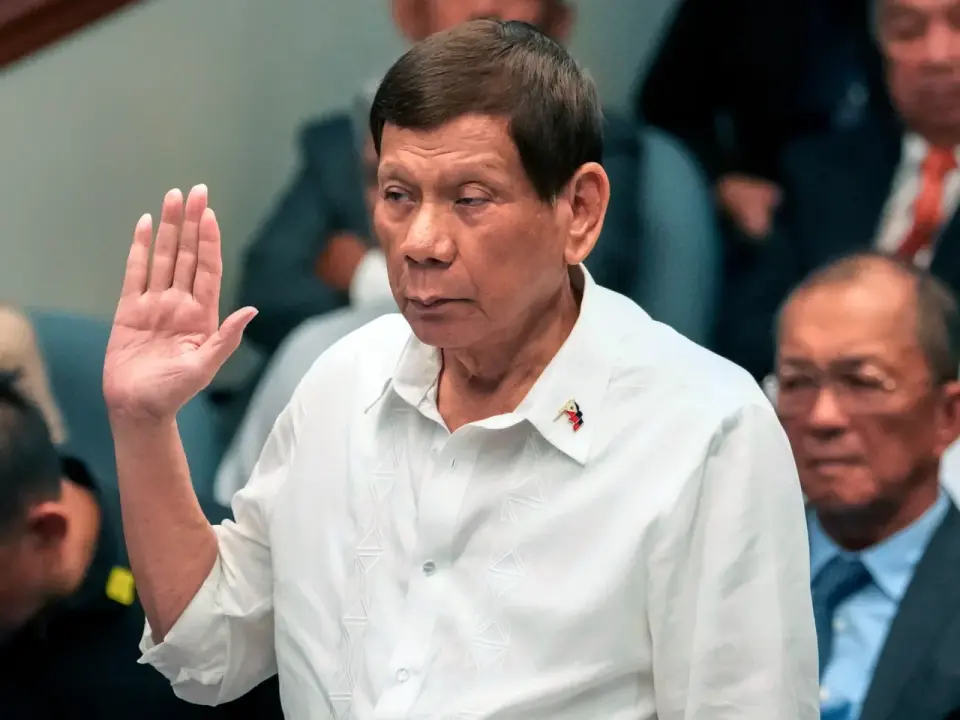
Former Philippine President Rodrigo Duterte is set to face trial at the International Criminal Court (ICC) in The Hague on Monday, November 30, 2026. The 81-year-old is accused of crimes against humanity related to his anti-drug campaign, which prosecutors allege resulted in thousands of extrajudicial killings. The proceedings will begin with a plea hearing and opening statements, marking the first time an Asian leader is tried at the ICC. While victims' families seek accountability, Duterte's defense argues his violent rhetoric was exaggeration and that his health prevents full participation. The trial opens amid significant pressure on the ICC from the US government and ongoing debates over national sovereignty in the Philippines.
Key points
- The trial is scheduled to begin on Monday, November 30, 2026, with four-hour daily sessions. Prosecutors plan to call approximately 100 witnesses, with the first five expected to testify before the winter judicial recess in December.
- Duterte faces three counts of crimes against humanity: murder during his mayoral period in Davao City (2013–2016), targeted killings as president (2016–2017), and 'clearance operations' (2016–2018). The charges list 84 murders and two attempted murders, though prosecutors state these are samples of a much higher death toll.
- Death toll estimates vary significantly: Philippine police reported about 6,200 deaths, while human rights groups estimate between 20,000 and 30,000. The Truth Commission has documented 8,320 killings between 2016 and 2022 but believes many more occurred.
- Duterte's defense argues his violent speeches were 'hyperbole' and that his cognitive impairment prevents him from fully participating in his defense. He denies the charges, claiming police acted in self-defense and that the killings were not an official policy.
- The trial occurs as the ICC faces unprecedented pressure from the US government, which has imposed sanctions on the court. In the Philippines, Duterte remains popular, with some supporters viewing the trial as a violation of national sovereignty.
Background
Duterte launched his anti-drug campaign in 2016, leading to widespread extrajudicial killings. The ICC opened a formal investigation in 2021, three years after a preliminary probe. Duterte withdrew the Philippines from the Rome Statute in 2019 to block the inquiry, but the ICC retains jurisdiction over crimes committed while the country was a member. He was arrested in Manila in March 2025 and transferred to The Hague. A civilian-led Truth Commission was launched in May 2026 to document abuses, finding at least 13 cases where death certificates falsely listed illnesses as causes of death.
How outlets are covering it
Al Jazeera and NBC News emphasize the personal toll on victims' families, highlighting their long wait for justice and the trauma of the killings. BBC and The Guardian focus on the political controversy, noting Duterte's continued popularity and the debate over national sovereignty. All sources agree on the trial's significance as a test of international justice, but differ on the death toll: police reported 6,200 deaths, while human rights groups estimate up to 30,000. Duterte's defense, cited by The Guardian and NBC News, argues his rhetoric was exaggeration and that his health prevents full participation, while prosecutors counter that his words were carried out in action.
Why it matters
The trial is a landmark moment for international justice, testing the ICC's ability to prosecute national leaders for alleged crimes committed while in office. It also highlights the ongoing debate over the effectiveness of domestic justice systems in the Philippines and the role of international courts in holding powerful figures accountable. The outcome could set a precedent for future cases involving political leaders and mass violence.
What to watch
The trial is expected to last several months or more, with verdicts potentially taking over a year. The first five prosecution witnesses are scheduled to testify before the winter judicial recess in December 2026. If convicted, Duterte faces a maximum sentence of life imprisonment and can appeal to the ICC Appeals Chamber. The trial will also monitor Duterte's health, with continuous medical checks ordered by the court.
- Philippine families seek justice as Duterte’s ICC trial set to open Al Jazeera
- 'They just kept killing': Ex-president Duterte's murder trial re-opens memories of his violent drug war BBC
- Rodrigo Duterte’s ICC trial to begin with former Philippine president facing crimes against humanity charges The Guardian
- Ex-Philippine President Duterte faces ICC trial over drug war killings as families seek justice NBC News
- Duterte's ICC trial: What is at stake for the Philippines? DW.com
Want the full story? Read the original reporting
Read on Al Jazeera