
South Africa Replants Five Confiscated Baobabs After Illegal Export Attempt
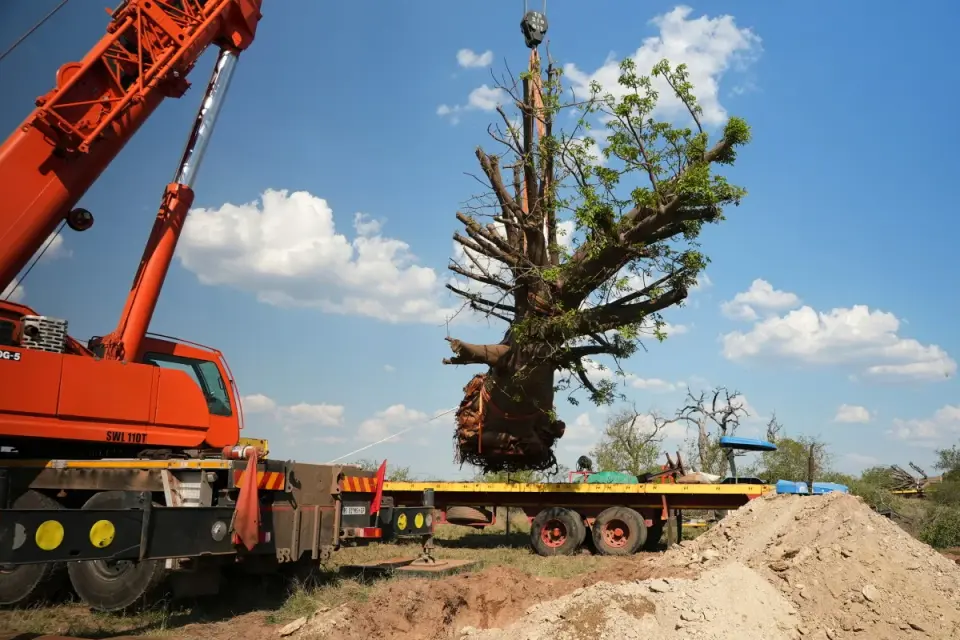
Five centuries-old baobab trees, illegally uprooted for export to Georgia, have been successfully replanted in northern South Africa. Environment Ministry officials discovered the protected trees in July at a Durban port, where they had been lying on their sides for months. A rescue operation involving oversized trucks and cranes transported the trees nearly 1,000 kilometers to the Timbavati Nature Reserve. Although the trees suffered root and branch damage, they began sprouting new leaves, offering hope for survival. A landscaper has been charged with wildlife offenses related to the unauthorized harvesting. The trees will be monitored for 10 years, with electric fences installed to protect them from elephants.
Key points
- Five baobab trees, estimated to be 200 to 300 years old, were found in July at a freight company parking lot in Durban, having been uprooted without authorization.
- The trees were destined for an unidentified private collector in Georgia but were intercepted before shipment.
- A rescue operation moved the trees, weighing 20 to 30 metric tons each, nearly 1,000 kilometers to the Timbavati Nature Reserve near Kruger National Park.
- Despite months on tarmac and cut roots, the trees began sprouting leaves, suggesting potential survival due to their water-storing trunks.
- A landscaper has been charged with wildlife offenses for the unauthorized harvesting of the protected species.
- The trees will be monitored twice a year for the next 10 years and protected by electric fences to prevent damage from elephants.
Background
Baobab trees are iconic African species known for their longevity and ability to store water in massive trunks. While often overshadowed by animal conservation efforts, plant poaching is a significant issue in South Africa, with an estimated 500,000 plants stolen annually. The Timbavati Nature Reserve, where these trees were replanted, is a private reserve near Kruger National Park. Recent archival coverage of South African legal and political matters, such as the Ramaphosa impeachment proceedings, highlights the country's complex regulatory environment, though unrelated to this specific environmental incident.
Why it matters
This incident highlights the ongoing threat of plant poaching in Africa, where rare species are trafficked for private collections despite having no ecological role in their new locations. The successful rescue of these ancient trees demonstrates the potential for recovery even after severe damage, but also underscores the vulnerability of iconic species to illegal harvesting. The case serves as a reminder of the need for stricter enforcement of wildlife protection laws to preserve Africa's natural heritage.
What to watch
The five baobab trees will be monitored twice a year for the next 10 years to assess their growth and survival. Electric fences will be maintained to protect them from elephants. The legal proceedings against the charged landscaper will continue, and conservation groups will likely continue to advocate for stronger protections against plant poaching in South Africa.
Want the full story? Read the original reporting
Read on AP News