
Netanyahu Offers Eisenkot First Term in Unity Government Amid Coalition Deadlock
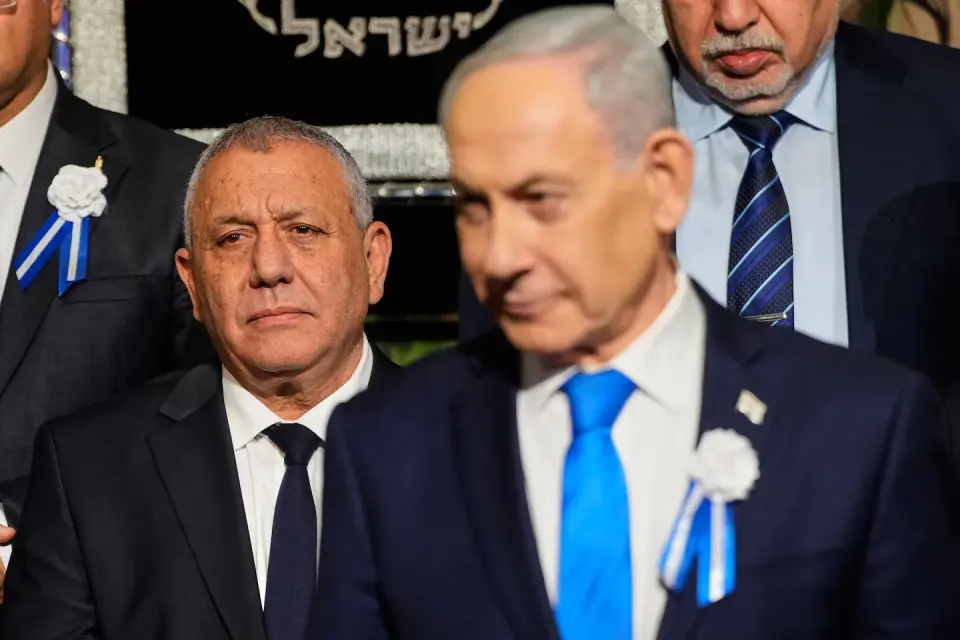
Israeli Prime Minister Benjamin Netanyahu has proposed a rotating premiership with opposition leader Gadi Eisenkot, offering to serve as deputy while Eisenkot leads initially. This move aims to prevent Netanyahu's ouster after the October 27 election left both blocs without a majority. Eisenkot, who has a deadline of December 6 to form a government, is evaluating the offer while facing internal opposition to partnering with Netanyahu. The two leaders met on November 29 to discuss bridging their differences, though significant gaps remain in their negotiations.
Key points
- Netanyahu offered Eisenkot the first term as prime minister in a unity government, with Netanyahu serving as alternate prime minister initially.
- Eisenkot's mandate to form a government expires on December 6, with a possible 14-day extension from President Isaac Herzog.
- Netanyahu's Likud bloc won 53 seats, while Eisenkot's bloc won 48 seats in the 120-seat Knesset, leaving both short of a majority.
- Eisenkot's coalition efforts have been hampered by opposition to working with Arab-led parties and difficulties reaching a deal with ultra-Orthodox parties.
- The two leaders met on November 29 to discuss forming a national unity government, with Eisenkot giving Netanyahu 24 hours to prove the sincerity of his offer.
Background
Following the October 27, 2026 election, Israeli President Isaac Herzog tasked Eisenkot with forming a government, bypassing Netanyahu. Eisenkot received 67 endorsements, including support from two Arab-led parties that won a record 19 seats, compared to 46 for Netanyahu. Netanyahu's bloc lost its majority, and the country has been in political limbo during coalition negotiations. Previous attempts to form a government have been complicated by internal divisions and the refusal of most Jewish parties to govern with Arab-led groups.
How outlets are covering it
The New York Times emphasizes Netanyahu's offer as a last-minute attempt to stave off being removed from power, while noting the uncertainty of Eisenkot keeping his fractious bloc together. The BBC highlights the 'substantial differences' between the two leaders and the serious gaps in their negotiations. The Washington Post focuses on the meeting between the rivals, noting Eisenkot's close proximity to a coalition deal to oust Netanyahu. Politico underscores the difficulty Netanyahu faces in holding on to power after losing his majority.
Why it matters
The outcome of these negotiations will determine whether Netanyahu remains in power or is ousted, potentially ending his nearly 19-year tenure. The formation of a unity government could stabilize Israel's political landscape, while a failure could lead to another election or further political instability. The involvement of Arab-led parties and ultra-Orthodox groups adds complexity to the coalition-building process.
What to watch
Eisenkot has until December 6 to form a government, with a possible 14-day extension. The two leaders are expected to continue discussions, with Eisenkot evaluating the sincerity of Netanyahu's offer. If Eisenkot fails to form a government, the mandate may pass to Netanyahu, or a new election could be called within 90 days.
- On cusp of forming new Israeli government, Eisenkot meets with Netanyahu The Washington Post
- Netanyahu, Under Pressure, Offers Rival Lead in Unity Government The New York Times
- Netanyahu, Eisenkot meet to discuss unity government The Hill
- Israeli leadership rivals hold talks to break election deadlock BBC
- Netanyahu proposes Eisenkot take first rotation as Israel’s prime minister Politico
Want the full story? Read the original reporting
Read on The Washington Post