
Europe Gains Seat at Ukraine Peace Table, but Putin Hardens Demands
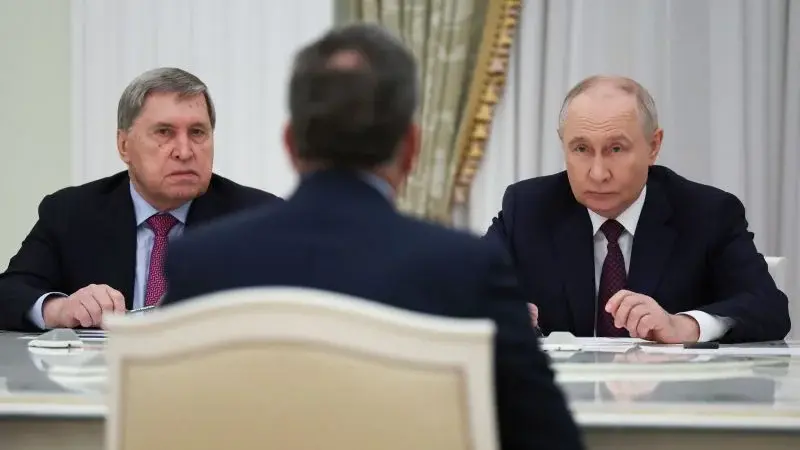
US envoys secured Russian agreement to include Europe in future Ukraine peace talks, but Vladimir Putin rejected compromises on territorial control and foreign troop deployments. While European leaders welcomed the inclusion, they remain divided on representation, and Ukraine reported new disruptions to its Starlink satellite network.
Key points
- Steve Witkoff and Jared Kushner met with Vladimir Putin in Moscow on November 12, securing a preliminary agreement for European participation in future negotiations.
- Putin rejected the deployment of foreign peacekeepers in Ukraine, labeling it a 'continuation of war,' and insisted on full control of four annexed Ukrainian regions.
- European leaders in Dublin are debating whether to appoint a single negotiator or use institutional representation, with EU foreign policy chief Kaja Kallas suggesting she should lead the talks.
- Ukrainian President Volodymyr Zelensky reported that Starshield, the military version of Starlink, faced speed restrictions that hindered drone defense, accusing the service of aiding Russian strikes.
- Putin framed the conflict as a choice between peace and war for Europe, demanding a new security architecture before any ceasefire could be considered.
Background
This development follows weeks of stalled US-Russia mediation, including a recent phone call between Nordic leaders and Putin that fractured European unity. Earlier archive coverage noted that US envoys had conceded to Russia’s 'all-or-nothing' strategy in Abu Dhabi, while Europe struggled to define its negotiating face. The current talks represent a shift from US-only mediation to a broader European involvement, though core disputes remain unresolved.
How outlets are covering it
CNN and The New York Times highlight the diplomatic progress of including Europe, with Witkoff calling it a major achievement. The Guardian, however, emphasizes Putin’s hardline stance, noting his refusal to soften territorial demands and his warning against foreign troops. While US envoys expressed optimism about European momentum, European leaders like Kaja Kallas and Emmanuel Macron remain skeptical, viewing the focus on European security as a distraction from the need for an immediate ceasefire. The sources also differ on the status of the Starlink issue, with Zelensky accusing the service of deliberate sabotage, while other outlets note ongoing confusion over the cause of the restrictions.
Why it matters
The inclusion of Europe in peace talks signals a shift in the diplomatic landscape, but Putin’s maximalist demands and continued military pressure suggest that a resolution remains distant. The dispute over Starlink highlights the fragility of Ukraine’s defense capabilities, while the internal European debate over representation could delay meaningful negotiations. This situation underscores the complexity of ending the war, as geopolitical interests and military realities continue to clash.
What to watch
European leaders are expected to finalize their negotiating strategy in the coming days, potentially appointing a single representative or confirming institutional representation. The next round of talks will likely test whether Europe can bridge the gap between its security concerns and Russia’s territorial demands. Meanwhile, Ukraine will seek to resolve the Starlink restrictions to maintain its defense capabilities against Russian drone attacks.
- Europe and Ukraine get a boost in peace talks, but Putin is playing for time CNN
- Russia, Ukraine reach deal on prisoner swap as US says lack of trust holds back talks Reuters
- Politics The Economist
- In Moscow, Witkoff and Kushner Ask Putin to Include Europe in Peace Talks The New York Times
- Putin takes hard line in US talks as Ukraine says Starlink disrupted again The Guardian
Want the full story? Read the original reporting
Read on CNN