
Europe rejects 'Yalta' peace format as Berlin summit secures Ukraine support
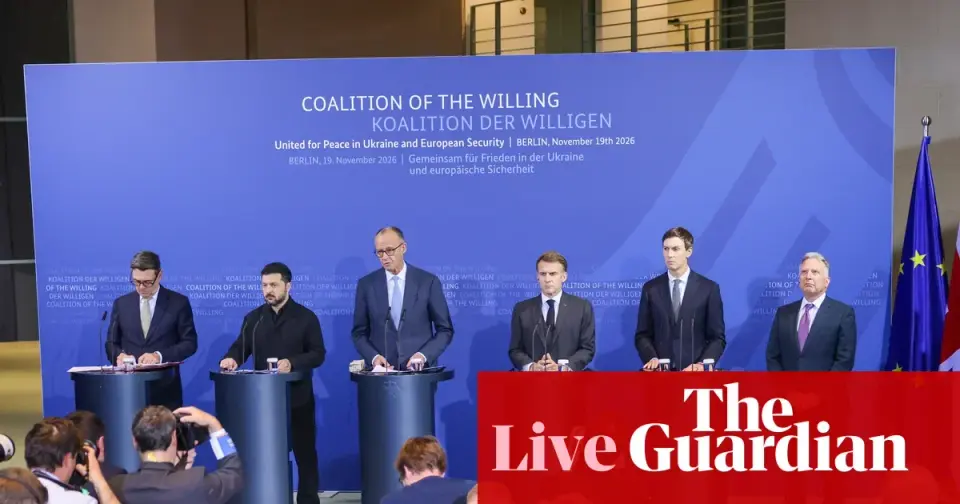
European leaders in Berlin rejected a 'Yalta-style' peace deal, demanding a seat at the table for Ukraine and Europe. While US envoys claimed Moscow is open to Article 5-like security guarantees, European leaders emphasized that Ukraine must remain central to any settlement. The EU proposed a 45 billion-euro loan for 2027, but a 25 billion-euro funding gap remains.
Key points
- German Chancellor Friedrich Merz warned that a 'Yalta format' will not bring about peace, rejecting any attempt to divide Europe into spheres of influence.
- US envoy Jared Kushner stated that Russia is 'comfortable' with Article 5-like security guarantees for Ukraine, a claim European leaders viewed with skepticism.
- The European Commission proposed an additional 45 billion-euro loan for 2027, with 25 billion euros for military aid, but a 25 billion-euro financing gap remains.
- Russian President Vladimir Putin vowed a 'painful' response to Ukrainian strikes on the Crimean Bridge, while also claiming Russia is interested in ending the war.
- Ukrainian President Volodymyr Zelensky prioritized air defense systems, urging allies to release Patriot and IRIS-T interceptors from their stocks.
Background
This summit follows a series of US-Russia-China talks in Shenzhen, where Trump, Putin, and Xi issued a 'peace declaration' that did not mention Ukraine or Europe. European leaders have been concerned about being excluded from peace negotiations, with Poland's Prime Minister Donald Tusk calling Trump's friendly gestures toward Putin 'God, protect us from such friends.' The EU has also been grappling with funding gaps for Ukraine's defense, with NATO members currently €7 billion short of their annual pledge.
How outlets are covering it
The Guardian and BBC highlighted the European rejection of a 'Yalta format' and the demand for a seat at the table, while Al Jazeera focused on the financial and security burdens Europe would bear. Kushner's upbeat tone about peace was contrasted with the skepticism of European leaders like Merz and Zelensky, who emphasized the need for serious discussions on European security. Putin's mixed messages on European participation and his vow of a 'painful' response to Ukrainian strikes were noted by all sources, but the BBC and Al Jazeera emphasized the lack of progress in Moscow's rhetoric or actions.
Why it matters
The Berlin summit is crucial for securing Ukraine's defense and ensuring European participation in peace talks. The funding gap and the potential for a 'Yalta-style' deal could have significant implications for the war's outcome and Europe's security. The summit also highlights the growing rift between the US and Europe on how to approach the conflict, with Europe insisting on a more active role in negotiations.
What to watch
The next steps include the EU's decision on the 45 billion-euro loan, the delivery of air defense systems to Ukraine, and the potential for further US-Russia-China talks. European leaders will continue to press for a seat at the table, while Ukraine will focus on securing immediate defense needs. The outcome of these talks will determine the future of the war and Europe's security.
- Ukraine’s allies meet in Berlin with air defence, energy and financial support on the agenda – Europe live The Guardian
- Europe ready for talks with Russia on ending war in Ukraine, leaders say BBC
- Ukraine's allies attend 'Coalition of the Willing' summit in Berlin DW.com
- Ukraine allies warn ‘Yalta format’ will not bring about peace – as it happened The Guardian
- Far from Trump-Putin meeting, Europe to count cost of Ukraine’s defence Al Jazeera
Want the full story? Read the original reporting
Read on The Guardian