
Jordan Convenes Emergency Arab Summit to Counter Israeli Threats to Al-Aqsa and Water Rights
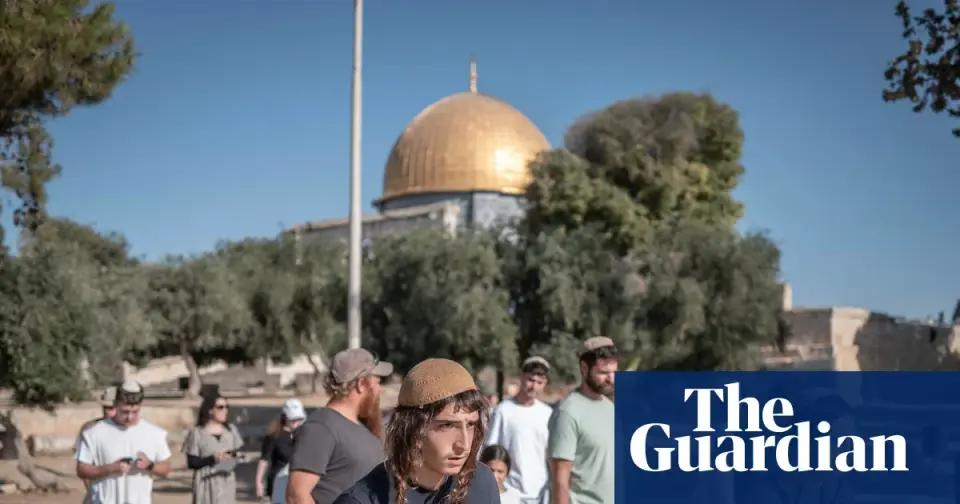
Jordan is hosting an emergency meeting of Arab and Islamic foreign ministers to address what it calls an imminent Israeli takeover of the Al-Aqsa compound in Jerusalem. The gathering follows a July 23 incursion by over 2,000 Israeli settlers, which Jordanian officials described as the worst violation of the site's status quo in modern history. Jordanian Foreign Minister Ayman Safadi warned that continued Israeli actions could trigger a religious conflict across the Muslim world. The diplomatic push coincides with Israel's refusal to renew a 2021 water agreement, halving Jordan's supply to 50 million cubic meters annually, and rising tensions over potential mass displacement of Palestinians from the West Bank ahead of Israeli elections in October.
Key points
- Jordan is convening an emergency meeting of foreign ministers from Arab League countries, Turkey, Indonesia, Malaysia, and Pakistan to address Israeli incursions at the Al-Aqsa compound.
- On July 23, more than 2,000 Israeli settlers, led by National Security Minister Itamar Ben Gvir, stormed the Al-Aqsa compound, which Jordan described as the worst violation of the status quo in modern history.
- Jordanian Foreign Minister Ayman Safadi warned that tampering with the status quo could trigger a religious conflict that reverberates beyond Palestine and Jordan into the entire Muslim world.
- Israel has refused to renew a 2021 water agreement, reverting to the 1994 treaty level of 50 million cubic meters annually, which Jordanian officials say is insufficient for its 11.5 million population.
- Jordan fears that Israeli actions ahead of October elections could lead to the mass deportation of Palestinians from the West Bank, which Jordan considers a red line that would destabilize its demographic balance.
- Pakistan and Egypt condemned Israeli military actions in Gaza and the West Bank, calling for an immediate cessation of hostilities and full respect for international law.
Background
This diplomatic escalation follows a series of incidents in 2026, including a July 23 storming of the Al-Aqsa compound by over 2,300 Israeli settlers, which was condemned by eight Arab and Muslim-majority states as unlawful and a threat to the two-state peace process. Earlier in July, reports highlighted rising anti-Christian hostility in Israel and the West Bank, including attacks on religious figures and harassment by ultra-Orthodox groups. Additionally, the region is under strain from the US-Iran conflict, with the US military presence in Jordan growing significantly since the start of the US war with Iran, leading to Iranian airstrikes on Jordanian bases and a domestic debate over the strategic cost of hosting US forces.
How outlets are covering it
The Guardian emphasizes the diplomatic and legal dimensions, highlighting Jordan's custodianship of Al-Aqsa under the 1878 Treaty of Berlin and the 1994 Israeli-Jordanian peace treaty, and framing the issue as a threat to regional stability and Jordan's demographic balance. Anadolu Ajansı focuses on the broader military and humanitarian context, citing Palestinian figures that 1,182 people have been killed and 24,000 arrested in the West Bank since the start of the Gaza war in October 2023, and stressing the need for immediate cessation of hostilities. The Facebook post from Hasht-e Subh highlights the bilateral diplomatic coordination between Pakistan and Jordan, noting that their foreign ministers discussed Jordan's proposal to convene the Arab and Islamic meeting to assess the evolving situation, underscoring the multilateral diplomatic effort to counter Israeli actions.
Why it matters
The emergency meeting signals a potential shift in Arab and Islamic diplomatic strategy, moving from condemnation to coordinated action against Israeli policies that Jordan views as existential threats to its sovereignty and stability. The issue of water rights and potential Palestinian displacement could trigger a humanitarian and political crisis in Jordan, which already hosts a large Palestinian population. The outcome of the meeting and Israel's response ahead of its October elections could determine whether the region moves toward further escalation or a temporary de-escalation.
What to watch
The emergency meeting of foreign ministers is expected to produce a joint statement or coordinated diplomatic action to pressure Israel to halt incursions at Al-Aqsa and restore the water agreement. Jordan may seek further international support, including from the US and Europe, to counter Israeli actions. The situation will likely be closely monitored in the lead-up to the Israeli elections in October, with potential for further escalations if the far-right coalition seeks to consolidate power through provocative actions.
- Jordan convenes emergency meeting over Israel’s potential to ‘trigger religious conflict’ The Guardian
- Jordan to host conference on countering Israeli policies in Jerusalem The Times of Israel
- Pakistan, Egypt condemn Israeli military actions in Gaza, occupied West Bank Anadolu Ajansı
- Pakistan’s Foreign Minister Mohammad Ishaq Dar and Jordan’s Foreign Minister Ayman Safadi held a phone conversation on regional developments, diplomatic efforts, and issues related to Gaza. Pakistan’s Ministry of Foreign Affairs said in a statement poste facebook.com
- Türkiye's Fidan to attend Jerusalem summit in Jordan Yeni Safak English
Want the full story? Read the original reporting
Read on The Guardian