
Slovenia Opens First Israeli Embassy Amid Mass Protests and Impeachment Push
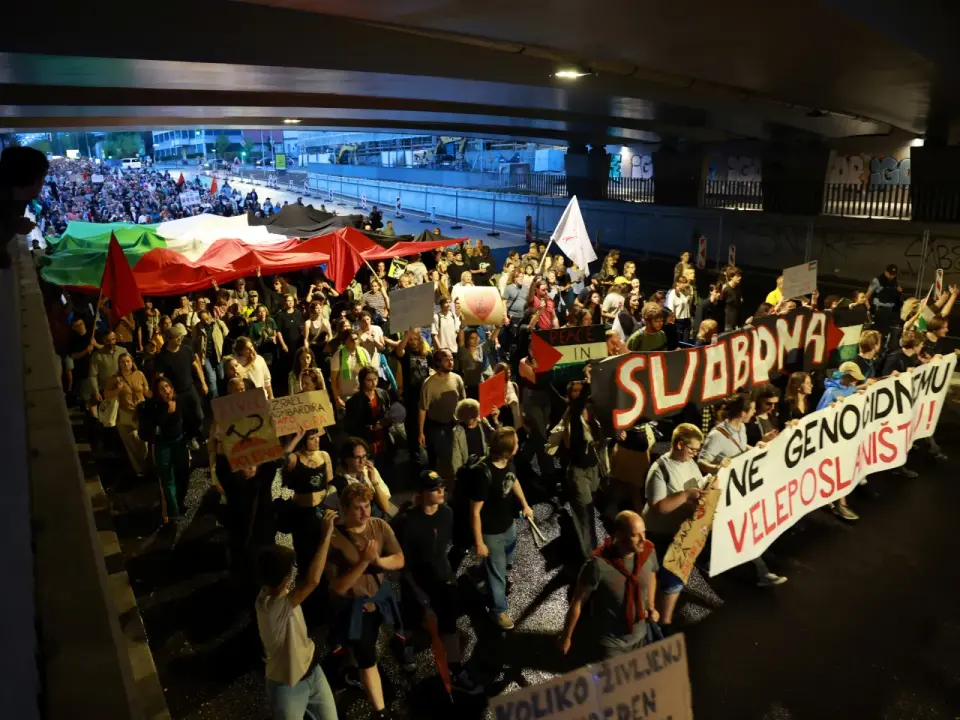
Slovenia inaugurated its first embassy in Israel on September 10, 2026, marking a sharp diplomatic reversal under Prime Minister Janez Jansa. The event triggered massive protests in Ljubljana and an impeachment bid by opposition parties, as Jansa scrapped previous sanctions and recognized Palestinian statehood to align with Israeli interests.
Key points
- Thousands of demonstrators marched in Ljubljana against the embassy opening, carrying banners denouncing the government's stance on Gaza.
- Prime Minister Janez Jansa reversed the previous administration's policies, including lifting arms embargoes and removing the Palestinian flag from government buildings.
- Opposition parties, led by former Prime Minister Robert Golob, submitted a proposal to impeach Jansa and Foreign Minister Tone Kajzer over the foreign policy shift.
- Israeli Foreign Minister Gideon Saar described the embassy opening as a 'historic day' and a sign of renewed friendship between the two nations.
- A June poll by the newspaper Delo indicated that 56 percent of Slovenians opposed closer ties with Israel, contradicting the government's new direction.
Background
Slovenia’s political landscape shifted significantly in July 2026 when Janez Jansa took office for a fourth term. His administration has pursued a pro-US, pro-business agenda, including reversing the previous government's recognition of Palestinian statehood and lifting sanctions on Israel. This pivot follows a period where the prior administration, led by Robert Golob, had imposed an arms embargo and banned imports from Israeli settlements. The current diplomatic move occurs amid broader regional tensions, including recent UK sanctions on West Bank settlement trade and heightened US-Iran instability.
How outlets are covering it
Al Jazeera emphasizes the domestic backlash, highlighting the large-scale protests in Ljubljana and the impeachment efforts by the Freedom Movement and Left party, framing the embassy opening as a betrayal of public opinion. AP News focuses on the diplomatic significance, noting that Israeli Foreign Minister Gideon Saar called the event a 'historic day' and a clear expression of commitment to the bilateral relationship. While Al Jazeera notes the timing coincides with UK, French, and Canadian sanctions against Israeli settlements, AP News does not detail the opposition's specific impeachment charges or the poll data regarding public sentiment.
Why it matters
The opening of the embassy signals a major realignment in Slovenian foreign policy, moving away from the EU's critical stance on Israel's actions in Gaza. This move risks isolating Slovenia from other European nations that are imposing sanctions on Israeli settlements, potentially straining its relationships with key allies like the UK and France. Domestically, the move has deepened political divisions, leading to impeachment attempts and mass protests, suggesting that the government's foreign policy may not reflect the prevailing public opinion in the country.
What to watch
The Slovenian parliament is expected to debate the impeachment proposal against Prime Minister Janez Jansa and Foreign Minister Tone Kajzer in the coming weeks. The government will likely face continued public pressure and potential diplomatic friction with other EU members that are tightening sanctions on Israel. The long-term impact on Slovenia's international standing and its relationship with Israel will depend on whether the new diplomatic ties yield tangible results or further alienate the country from its European partners.
- Thousands protest in Ljubljana as Slovenia opens Israel’s first embassy Al Jazeera
- Israel opens embassy in Slovenia as small EU nation shifts policies apnews.com
- Israel Boosts Ties With New European Ally Amid Gaza Tensions Bloomberg.com
- Israeli FM Invited Key Qatargate Suspect Srulik Einhorn to Slovenia Embassy Ceremony Haaretz
- Israel to open embassy in Slovenia as relations thaw Reuters
Want the full story? Read the original reporting
Read on Al Jazeera