
Merz pledges €1.3B in aid and joint drone production during surprise Kyiv visit amid Russian strikes
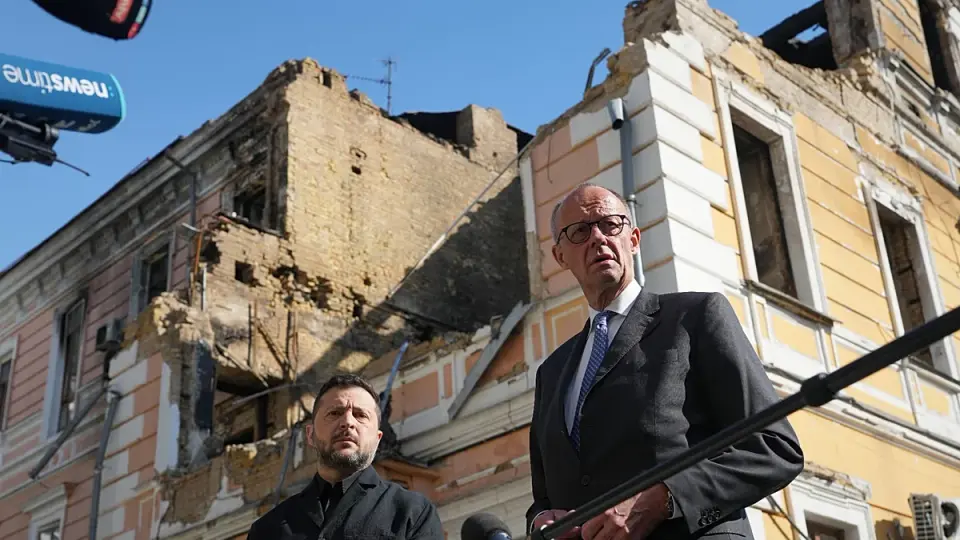
German Chancellor Friedrich Merz arrived in Kyiv on Sunday for an unannounced visit, pledging €1 billion in military aid and €350 million for energy repairs. The visit, marked by Russian drone strikes on a key bridge, focused on expanding joint production of long-range weapons and interceptor drones. Merz urged Russia to halt attacks while facing domestic political pressure over continued support for Ukraine.
Key points
- Merz arrived in Kyiv by special train on Sunday, accompanied by Economy Minister Katherina Reiche and executives from Siemens Energy, Diehl Defence, and Quantum Systems.
- Germany pledged €1 billion in military aid, including thousands of interceptor drones to counter Russian jet-powered drones, and €350 million for repairing damaged power plants.
- The two nations are finalizing a deal for joint production of long-range weapons with a range exceeding 600 miles, aimed at striking deeper into Russia.
- A Russian drone struck the Northern Bridge over the Dnipro River during the visit, injuring two people and damaging hot water supplies, as air raid sirens sounded across the capital.
- Merz visited the damaged National Academy of Sciences, where a previous drone strike killed at least two people, and urged President Putin to end the war.
Background
This visit marks Merz’s second trip to Ukraine since becoming chancellor, following a May 2025 visit alongside other European leaders. It occurs as Russia enters the fifth year of its war, intensifying attacks on civilian infrastructure and energy systems. Recent months have seen increased drone strikes on Kyiv’s bridges and data centers, prompting Ukraine to prepare for potential internet blackouts. Germany has positioned itself as a primary military donor, shifting focus from the US, while facing growing domestic skepticism about aid levels.
How outlets are covering it
Euronews emphasizes the immediate military support and Merz’s direct appeal to Putin, highlighting the political risk for his CDU/CSU alliance amid falling approval ratings and rising AfD support. Al Jazeera focuses on the security risks, noting the strike on the bridge and the broader context of Russian retaliation for Ukrainian attacks on oil refineries. NBC News details the specific industrial partnerships, including the Quantum WIY Industries joint venture for interceptor drones, and Merz’s push for Ukrainian reforms. All sources agree on the aid package amounts but differ in emphasis: Euronews links the visit to domestic political pressure, Al Jazeera frames it within the escalating cycle of retaliation, and NBC News highlights the technical aspects of the defense cooperation.
Why it matters
The visit signals Germany’s commitment to deepening military-industrial ties with Ukraine, moving beyond immediate aid to long-term joint production capabilities. It demonstrates Berlin’s willingness to support Ukraine despite domestic political opposition and security risks, potentially influencing the trajectory of the war and European defense cooperation. The focus on interceptor drones and long-range weapons addresses specific Russian tactics, aiming to shift the balance on the battlefield.
What to watch
Germany and Ukraine are expected to finalize the drone production deal in the coming weeks. The €1 billion military aid package is set to be announced, with interceptor drones to be delivered in the coming months. Merz is expected to press Ukraine for progress on EU-requested reforms, particularly in anti-corruption measures. Russia has warned it will continue strikes, and Ukraine has signaled it will intensify attacks on Russian oil refineries, potentially escalating the conflict.
- Merz makes surprise Kyiv visit as Germany pledges more aid to Ukraine Euronews.com
- Merz unveils fresh military aid in Kyiv, says Germany won't be intimidated Reuters
- Merz pledges military and financial aid on visit to Ukraine DW.com
- Russia hits Kyiv bridge as Germany’s Merz visits Ukraine’s capital aljazeera.com
- Germany’s Friedrich Merz arrives in Kyiv to the sound of sirens and explosions nbcnews.com
Want the full story? Read the original reporting
Read on Euronews.com