
UK Commits 1,000 Long-Range Drones to Ukraine Amid US Criticism of Deep Strikes
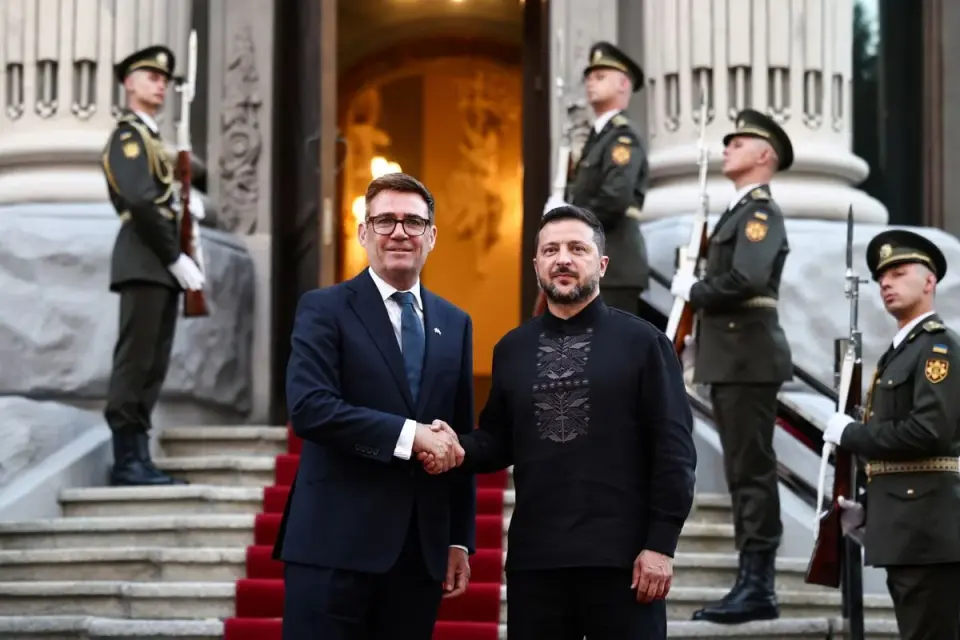
UK Prime Minister Andy Burnham announced a £260 million package for Ukraine, including 1,000 long-range strike drones capable of flying 1,000 km, at the Coalition of the Willing meeting in Berlin. This move directly contradicts US Under Secretary of Defense Elbridge Colby, who argued that deep strikes on Russian civilian infrastructure are ineffective and may harden Russian resolve. The announcement coincides with a broader European push for air defense as Russia intensifies attacks on Ukrainian energy infrastructure ahead of winter.
Key points
- UK Prime Minister Andy Burnham pledged 1,000 long-range cruise missiles and strike drones to Ukraine, part of a £260 million ($342 million) package announced in Berlin.
- The drones can travel up to 1,000 km (625 miles) and carry heavier warheads to target military production facilities, with 80% of the package spent in the UK.
- US Under Secretary of Defense Elbridge Colby criticized deep strikes, stating they do not contribute to ending the war and may harden Russian public resolve, particularly targeting civilian infrastructure.
- Ukrainian President Volodymyr Zelenskyy urged allies to release air defense missiles from warehouses immediately, warning that successful Russian strikes make Moscow more aggressive.
- Germany, Denmark, and Norway announced significant new support packages, with Germany committing $1.1 billion for air defense and Norway pledging $800 million, including funds for Ukrainian-made drones.
- The UK has provided £35.5 billion in total support to Ukraine since the 2022 invasion, with the new package focusing on winter defense and long-range capabilities.
Background
This development follows a two-week Ukrainian campaign targeting five of Russia's largest oil refineries, which accounted for 36% of the country's refining output. It also comes after a deadly Russian glide bomb strike in Kramatorsk in October, which killed 30 people and prompted Ukrainian retaliation against Russian infrastructure. Earlier in November, the UK pledged 1,000 short-range air defense missiles, and France accelerated missile transfers, reflecting a broader European effort to reduce dependency on US aid amid diplomatic friction.
How outlets are covering it
Bloomberg and BBC emphasize the UK's proactive stance, framing the drone pledge as a signal of British support for strikes deep inside Russia, despite US criticism. The Guardian highlights Zelenskyy's urgent plea for immediate air defense deliveries, contrasting it with Colby's argument that deep strikes are ineffective. UNITED24 Media focuses on the collective European response, detailing specific financial commitments from Germany, Denmark, and Norway, while noting Ukraine's priority for air defense and drone supplies. The sources collectively portray a divergence between European allies, who prioritize immediate military support and deep strikes, and the US, which advocates for a focus on frontline defense and mid-range strikes.
Why it matters
The UK's decision to provide long-range strike drones signals a shift in Western support strategy, prioritizing offensive capabilities against Russian military infrastructure over defensive measures. This move challenges the US position that deep strikes are counterproductive, potentially escalating the conflict and influencing the trajectory of peace negotiations. The broader European commitment to air defense and drone technology underscores the urgency of preparing for a difficult winter, as Russia intensifies attacks on Ukrainian energy infrastructure.
What to watch
The UK is expected to deliver the long-range drones and air defense systems in mid-December, as part of the £260 million package. The Coalition of the Willing will continue to coordinate support, with Germany and Norway leading additional contributions. The US may further distance itself from deep strikes, focusing on frontline defense, while Europe continues to push for immediate military aid. Peace negotiations may be influenced by the outcome of these military developments and the effectiveness of Ukrainian strikes on Russian infrastructure.
- UK Pledges Long-Range Missiles to Ukraine Despite US Criticism Bloomberg.com
- Zelenskyy urges allies to send air defence deliveries without delay as Russia intensifies attacks – as it happened The Guardian
- UK to provide Ukraine with long-range drones as part of £260m package BBC
- Ramstein Partners Announce Major Air Defence, Drone and F-16 Support for Ukraine UNITED24 Media
- Ukraine to receive over 1,000 long-range strike drones from UK Українська правда
Want the full story? Read the original reporting
Read on Bloomberg.com