
Ukraine Targets Russia's Sole Ammonium Perchlorate Producer in Long-Range Strike
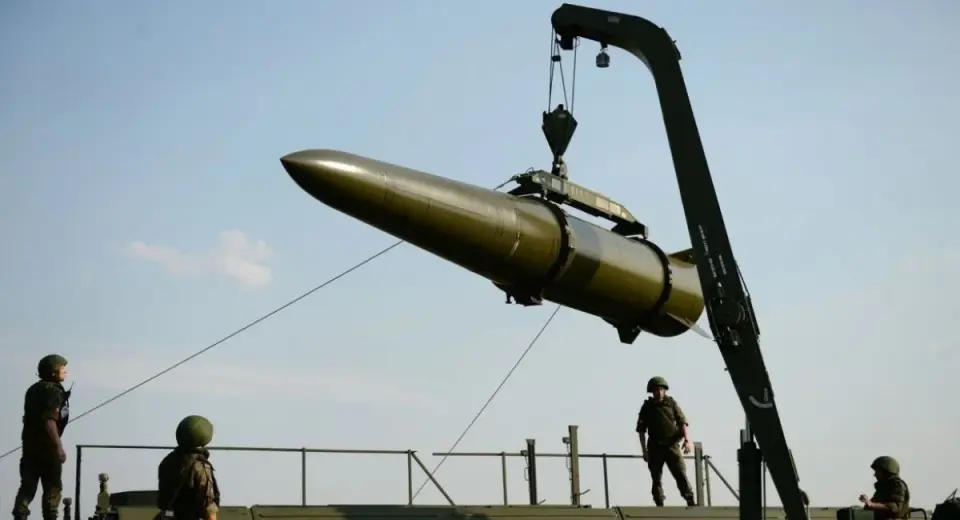
Ukraine’s Unmanned Systems Forces confirmed strikes on JSC ANOZIT and the Altai Federal Research and Production Center, facilities critical to Russian solid rocket propellant supply chains. The ANOZIT plant is identified as Russia’s only producer of ammonium perchlorate, a key component for Iskander-M, Zircon, and Kinzhal missiles. These attacks, part of a broader 50-day campaign, aim to degrade Moscow’s ability to sustain its ballistic missile arsenal amid ongoing civilian casualties and diplomatic negotiations.
Key points
- Commander Robert Madyar Brovdi listed 40 targets struck over 50 days, including three at record distances: Vityno oil terminal (1,950 km), JSC ANOZIT (2,900 km), and Altai Center (3,550 km).
- JSC ANOZIT manufactures ammonium perchlorate, a solid propellant component used in Iskander-M, 3M22 Zircon, Kh-47M2 Kinzhal, and RM-48U missiles, as well as warheads for Kh-59M2 precision-guided missiles.
- The Altai Federal Research and Production Center develops solid rocket motor charges, including those for the 9Kh820 missile, which is linked to the Iskander-M supply chain.
- Ukraine’s General Staff reported separate strikes on the Ilsky and Afipsky refineries in Krasnodar region, which together process 95 million barrels of oil annually and supply fuel to Russian forces.
- President Volodymyr Zelenskyy praised domestic weapon development, citing a large-scale attack on the Kerch Bridge that disrupted supplies to Russian troops in occupied Crimea.
Background
This development follows a series of Ukrainian strikes on Russian missile infrastructure in late 2026. In October, Ukrainian forces targeted the Proton-Elektroteks plant in Oryol and a chemical complex in Samara region, both linked to Iskander and Kinzhal production. Earlier in November, Ukraine struck a Russian missile ship in the Baltic Sea during peace talks. These actions coincide with Russia’s recent upgrades to Iskander missiles with homing sensors to target Ukrainian bridges and its intensified bombardment of Ukrainian energy infrastructure ahead of winter.
How outlets are covering it
Defense Express emphasizes the strategic significance of the ANOZIT strike, highlighting it as the only source of ammonium perchlorate in Russia and linking it to multiple missile types. AP News focuses on the broader context of Ukrainian strikes on oil refineries and the Kerch Bridge, framing them as responses to Russian civilian bombardment and highlighting Zelenskyy’s claims of technological superiority. While Defense Express details the specific military-industrial targets, AP News notes the Pentagon’s argument that such deep strikes are counterproductive, contrasting with European backers’ support for Ukraine’s approach. Both sources acknowledge the ongoing diplomatic efforts, including U.S.-mediated talks and Trump’s planned discussions with Putin and Xi.
Why it matters
Disrupting Russia’s sole ammonium perchlorate producer could significantly impact its ability to sustain production of advanced ballistic and cruise missiles, potentially reducing the frequency of strikes on Ukrainian infrastructure. However, the long-term consequences of these strikes remain uncertain, and the conflict continues to escalate with high civilian casualties, as reported by the U.N. Human Rights Monitoring Mission in Ukraine.
What to watch
Ukraine is expected to continue targeting Russian military-industrial and energy infrastructure to degrade Moscow’s war capacity. Diplomatic efforts, including U.S.-mediated talks and high-level discussions involving Trump, Putin, and Xi, will likely focus on de-escalation, though no immediate breakthrough is anticipated. Russia may respond with intensified attacks on Ukrainian energy and civilian infrastructure, particularly as winter approaches.
- Ukraine's Special Operations Forces Reveal They Hit russia's Only Producer of Key Iskander-M Missile Fuel Component, What Else Is Known Defense Express
- Ukraine says it hit 2 Russian oil refineries as Zelenskyy hails domestically made weapons AP News
- Novoshakhtinsk oil refinery reportedly burning after Ukrainian drone attack The Kyiv Independent
- More Russian regions limit fuel sales as Ukrainian drone strikes hit refinery output Reuters
- Russia imports record volumes of petrol as Ukraine strikes refineries Financial Times
Want the full story? Read the original reporting
Read on Defense Express