
Vanuatu Files ICJ Case Against France Over Matthew and Hunter Islands
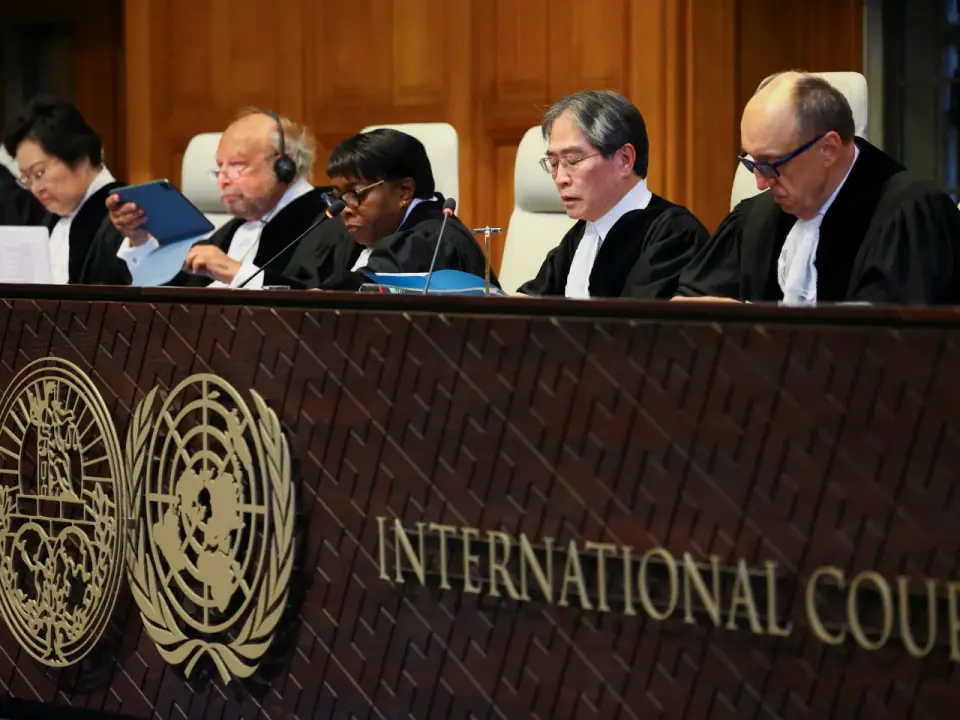
Vanuatu has formally requested the International Court of Justice (ICJ) to rule on sovereignty over the uninhabited volcanic islands of Matthew and Hunter, currently controlled by France. The dispute, rooted in colonial-era agreements, has stalled in bilateral negotiations, prompting Vanuatu to seek international legal resolution. France has not yet consented to the court's jurisdiction, meaning proceedings cannot begin until Paris agrees. The case has become a political flashpoint in France, with far-right figures accusing the government of ceding territory, while Paris maintains it will not surrender sovereignty.
Key points
- Vanuatu filed an application with the ICJ on September 1, 2026, seeking sovereignty over Matthew and Hunter islands, which are under French control.
- The ICJ stated that no proceedings will occur unless France consents to the court's jurisdiction, as France has not accepted compulsory jurisdiction for this dispute.
- Vanuatu argues that its decolonization is incomplete until the islands are returned, citing colonial-era arrangements made without Indigenous consultation.
- France's far-right party has used the case to accuse President Macron of surrendering French territory, a claim Paris has repeatedly rejected.
- Bilateral negotiations between France and Vanuatu, which resumed in 2025, reached an impasse earlier in 2026, leading to the ICJ filing.
Background
The dispute over Matthew and Hunter islands has persisted since Vanuatu gained independence from joint British and French rule in 1980. The islands, located approximately 300 kilometers east of New Caledonia, are uninhabited but hold strategic value due to surrounding waters, fishing rights, and seabed resources. Vanuatu has long argued that the colonial-era arrangement placing the islands under French control was illegitimate. In 2025, both nations agreed to resume bilateral negotiations after earlier talks in 2018 and 2019 failed to resolve the issue. This case follows Vanuatu's successful 2025 ICJ submission regarding climate change obligations, marking the nation's second major international legal challenge.
How outlets are covering it
Al Jazeera emphasizes the colonial legacy aspect, noting that Vanuatu views the dispute as a relic of the past and that France's far-right is weaponizing the case politically. Le Monde highlights the procedural hurdle, stressing that the ICJ cannot proceed without France's consent, and notes the strategic importance of the islands for France's overseas territories. Both outlets agree that the dispute is politically sensitive in France, with Le Monde specifically mentioning Marine Le Pen's accusations against Macron, while Al Jazeera notes Paris's repeated rejection of such claims. Neither outlet provides new details on the legal arguments, but both confirm the impasse in bilateral negotiations.
Why it matters
The case could set a precedent for resolving colonial-era territorial disputes in the Pacific and may influence France's approach to its overseas territories. If France consents to the ICJ's jurisdiction, the ruling could have significant implications for maritime boundaries, fishing rights, and seabed resources in the region. The dispute also reflects broader tensions between former colonial powers and their former colonies, as well as the political dynamics within France regarding its global footprint.
What to watch
France must decide whether to consent to the ICJ's jurisdiction for this case. If it does, the court will proceed with hearings; if not, the dispute may remain unresolved or be addressed through other diplomatic channels. Vanuatu may continue to press for international legal resolution if France refuses to consent. Bilateral negotiations could resume if the ICJ process stalls, but the current impasse suggests limited progress in the near term.
Want the full story? Read the original reporting
Read on Al Jazeera