
Xi’s Cairo Visit Anchors China’s Middle East Strategy Amid US Tensions
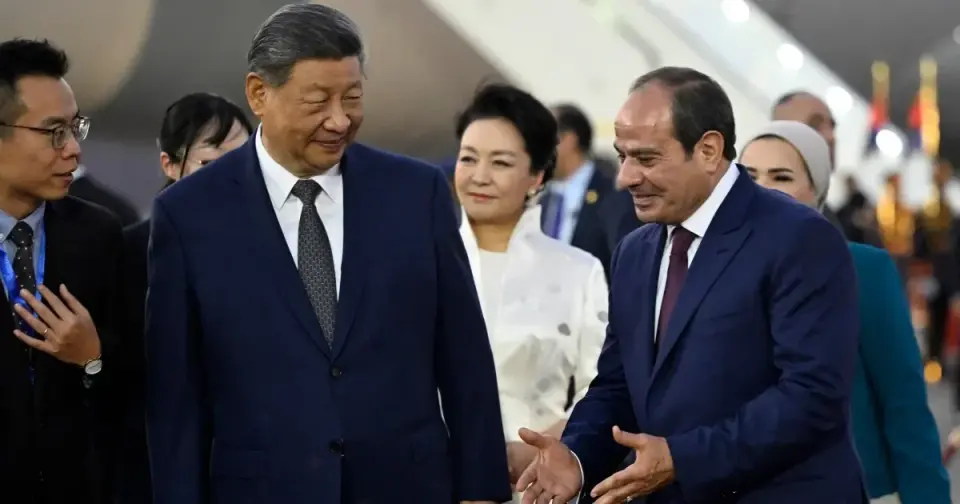
Chinese President Xi Jinping’s three-day state visit to Egypt marks the first such trip in a decade, signaling a strategic pivot to deepen economic and military ties with Cairo. The visit aims to expand cooperation in artificial intelligence, manufacturing, and transport, while addressing regional security challenges. Beijing seeks to leverage Egypt’s control of the Suez Canal and its diplomatic influence in the Arab world and Africa, positioning itself as a counterweight to US dominance in the region.
Key points
- Xi Jinping’s visit to Egypt is his first in ten years, coinciding with the 70th anniversary of diplomatic relations between the two nations.
- The agenda includes signing agreements on AI, transport, and manufacturing, alongside discussions on maritime trade security and the regional conflict involving Iran and Israel.
- China is Egypt’s largest non-petroleum trading partner, with bilateral trade reaching nearly $20.7 billion by the end of 2025, and Chinese investments in Egypt exceeding $10 billion.
- Military cooperation has intensified, including joint air exercises in August involving Chinese J-16 fighter jets and Egyptian Rafale aircraft.
- Egypt’s strategy is described as 'diversification' rather than a full pivot away from the US, aiming to maintain its status as the second-largest recipient of US military aid while expanding ties with Beijing.
Background
Previous coverage in September 2026 highlighted Xi’s visit as part of Beijing’s broader effort to expand its Middle East footprint, leveraging Egypt as a hub for Arab and African ties. Earlier reports noted the deepening of economic ties, with trade figures around $20 billion and significant Chinese investment in the Suez Canal Zone under the Belt and Road Initiative. The current visit reinforces these trends amid ongoing regional instability, including the US-Israel war on Iran and disruptions to global trade routes.
How outlets are covering it
Al Jazeera emphasizes the geopolitical significance of the visit, framing it as China’s attempt to position itself as a 'responsible and hands-off' regional actor and a counterweight to the US. It highlights the 'independent foreign policy' of President Abdel Fattah el-Sisi, who is diversifying alliances without alienating Washington. The AP News source, while largely obscured by technical code in the provided text, aligns with the theme of China deepening ties across the Middle East, suggesting a broader regional strategy. Both sources agree on the economic and military dimensions of the partnership but differ in emphasis: Al Jazeera focuses on the strategic autonomy and hedging behavior of Egypt, while the AP framing suggests a more expansive Chinese regional influence.
Why it matters
The visit underscores a shifting balance of power in the Middle East, where traditional US dominance is being challenged by Chinese economic and diplomatic engagement. For Egypt, it offers opportunities to diversify its strategic partnerships and secure investment in critical infrastructure, particularly around the Suez Canal, which has become more vital due to disruptions in the Strait of Hormuz. For China, it provides a crucial foothold in a region central to global energy and trade routes, enhancing its ability to influence regional stability and counter US influence.
What to watch
The outcome of the visit will likely be defined by the signing of new economic agreements and the formalization of deeper military cooperation. Egypt may continue to balance its relationships with both Washington and Beijing, using its strategic autonomy to maximize benefits from both powers. China may further expand its investments in Egypt’s infrastructure and technology sectors, while monitoring the impact of regional conflicts on maritime trade security. The long-term trajectory will depend on how Egypt navigates its dual alliances and how China leverages its growing presence in the Middle East.
- China’s Xi visits Egypt’s el-Sisi: Why it matters Al Jazeera
- China's Xi urges new Middle East security framework during Egypt visit Reuters
- Xi visits Egypt as China seeks deeper influence across the Mideast AP News
- China’s Xi arrives in Egypt amid US sanctions threat over Iran links The Times of Israel
- People from all walks of life in Egypt look forward to President Xi's visit news.cgtn.com
Want the full story? Read the original reporting
Read on Al Jazeera