Tag

Middle East Geopolitics

All articles tagged with #middle east geopolitics

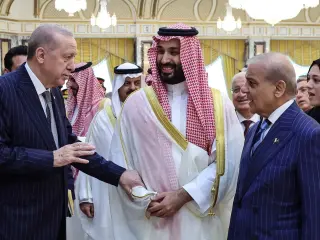
Mecca defense pact among Saudi, Pakistan and Turkiye reframes Middle East security
politics2 hours ago

Mecca defense pact among Saudi, Pakistan and Turkiye reframes Middle East security

Israel has not officially responded to the Mecca Joint Defence Pact signed by Pakistan, Saudi Arabia, and Turkiye, a mutual‑defense pledge analysts say could shift regional power dynamics and reduce reliance on the US, complicating Israel’s security calculus ahead of elections. Turkey is viewed as a growing threat, Saudi Arabia remains cautious about normalization, and Pakistan does not recognize Israel; Netanyahu may frame the pact for electoral purposes while weighing implications for actions in Lebanon and Syria.

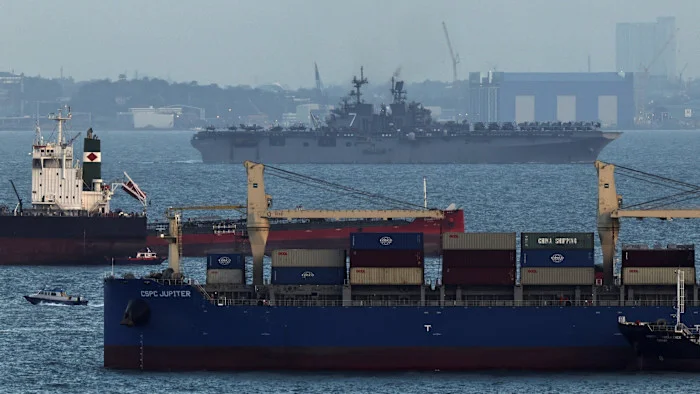
Rubio’s Hormuz rethink: is a world beyond the chokepoint even possible?
world6 days ago

Rubio’s Hormuz rethink: is a world beyond the chokepoint even possible?

Rubio floated a permanent shift away from the Strait of Hormuz, arguing regional actors see Iran as a threat, but experts say a Hormuz-free energy map would take decades and trillions, and current pipelines can move only a fraction of the traffic (roughly 9 million bpd vs the strait’s ~20 million bpd). Even with Red Sea routes like Petroline and the UAE’s Abu Dhabi Crude Pipeline, replacing Hormuz would push vulnerability to land and other chokepoints such as Bab al-Mandeb, making a near-term, full bypass unlikely.

Dallas Fed Energy Survey Q1 2026: Strait of Hormuz Disruptions Persist, Shipping Costs to Rise
business3 months ago

Dallas Fed Energy Survey Q1 2026: Strait of Hormuz Disruptions Persist, Shipping Costs to Rise

The Dallas Fed’s Q1 2026 energy survey of 120 oil and gas firms (78 E&P, 42 services) finds that executives expect Strait of Hormuz traffic to normalize slowly, with 20% by May 2026, 39% by August, 26% by November, and 14% later. A majority view future disruptions as likely within five years. Shipping costs from the Persian Gulf are expected to rise by more than $2 but up to $4 per barrel after the Iran war, while U.S. oil production is forecast to rise in 2026–27. About two-thirds expect 90% of shut-in Persian Gulf production to return. Employment at respondent firms is expected to be largely flat, though services firms lean toward increases. Overall, the comments highlight price volatility, geopolitical uncertainty, and longer lead times and higher transport costs impacting planning and capital allocation.