
Houthis Demand Oil Revenue and Mecca Custody as They Outmaneuver Saudi Defenses
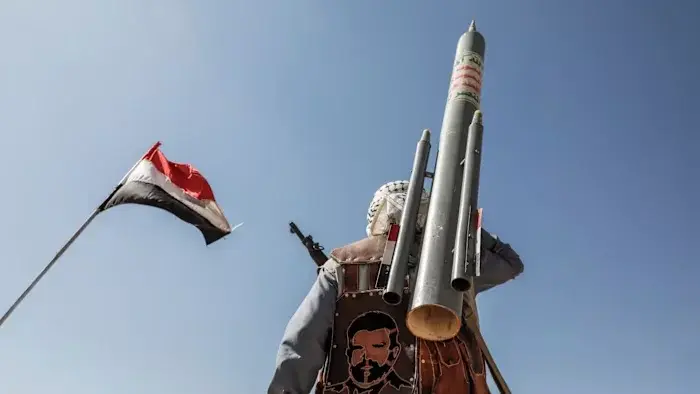
Houthi leader Abdulmalik al-Houthi has demanded access to Yemen’s oil revenues, compensation for war damages, and free movement through Saudi-controlled ports. He also claimed Yemenis are better suited to guard Mecca than Saudi Arabia. The group’s recent attacks on Riyadh’s airport and Saudi Aramco have killed at least 20 people and disrupted economic plans. Analysts note the Houthis are now producing their own weapons using dual-use components and AI, reducing reliance on Iranian shipments while maintaining strategic alignment with Tehran.
Key points
- Al-Houthi’s demands include financial compensation, control of oil revenues, and free transit through Houthi-held ports.
- Houthi attacks on Riyadh’s airport and Saudi Aramco have killed at least 20 people and injured hundreds.
- The group is using AI to develop missile guidance software and assembling weapons from Chinese and Iranian components.
- Saudi Arabia’s air defenses are strained by depleted interceptor stocks from the US-Iran conflict.
- The UN warns that aid to 800,000 people in Ta’iz has been cut off due to Houthi encirclement.
Background
The Houthi conflict began in 2014 when the group seized Sana’a, leading to a Saudi-led coalition intervention in 2015. A 2022 truce held until July 2026, when Riyadh bombed a Sana’a airport runway, allegedly to prevent an Iranian plane from landing. This triggered the current escalation, which follows the 2023 Gaza war and the subsequent US-Iran conflict that began in February 2026.
How outlets are covering it
The Financial Times emphasizes the Houthis’ ideological ambition to replace Saudi Arabia as custodians of Mecca, while CBS News highlights their status as Iran’s most potent proxy. The Times of India focuses on the technical shift toward indigenous weapon manufacturing, noting that Iran has taught the Houthis to build missiles using dual-use parts. Firstpost frames the conflict as a warning for India regarding the changing economics of asymmetric warfare, arguing that cheap drones and AI can force powerful states into costly defensive postures. While all sources agree on the Houthis’ growing capability, they differ on the degree of Iranian control, with some analysts describing the group as an independent power and others as a cost-effective proxy for Tehran.
Why it matters
The escalation threatens Saudi Arabia’s economic diversification goals and global energy stability. The Houthis’ ability to produce advanced weapons locally makes them harder to neutralize through supply chain disruption. Furthermore, the conflict exposes vulnerabilities in Gulf air defenses and raises concerns about the proliferation of AI-assisted military technology to non-state actors.
What to watch
Saudi Arabia is considering a military counteroffensive, while President Trump is weighing US involvement. The Houthis may continue escalating attacks to force negotiations or achieve military dominance. Analysts suggest that unless the Houthis are set back militarily, they have little incentive to return to the negotiating table. The UN is monitoring the humanitarian crisis in Ta’iz, where aid supplies have been cut off.
- What do the Houthis want? Financial Times
- How the Houthis are helping Iran turn Saudi Arabia into a pressure point Reuters
- The Houthi model of warfare should worry India Firstpost
- From Tehran's pupils to missile makers: Why Houthis are a bigger threat now The Times of India
- How Iran made the Houthis into such a problem for the U.S. and its allies CBS News
Want the full story? Read the original reporting
Read on Financial Times