
Citizen Footage Exposes Iran’s January Crackdown in New Documentary
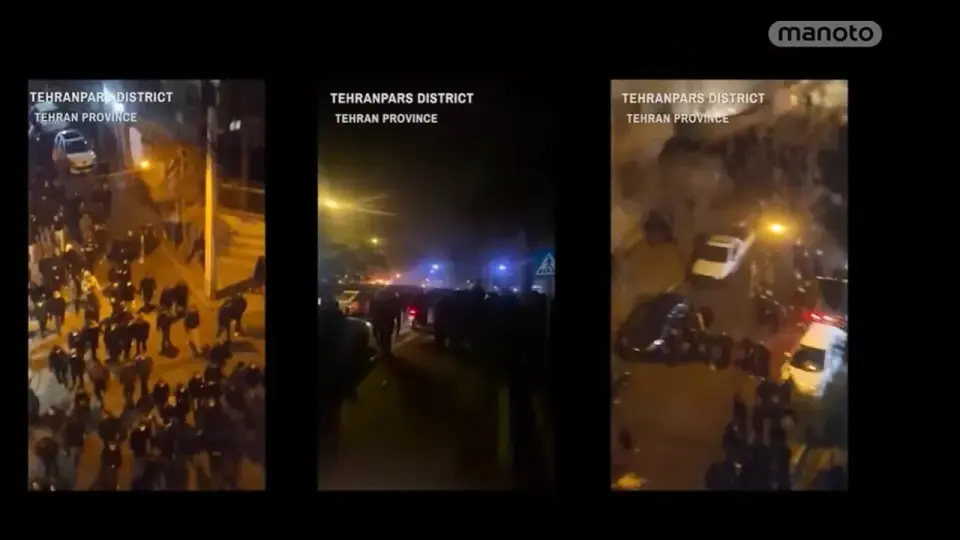
A new four-part documentary by Manato TV, titled 'This Is Our Story,' compiles over 10,000 citizen-recorded videos to document the January 2026 uprising in Iran. The footage captures the transition from economic protests to violent state repression, including security forces firing on crowds and families searching for the dead. While President Pezeshkian claims 3,000 deaths, human rights groups and opposition figures cite much higher numbers. The UN has recently classified the crackdown as crimes against humanity.
Key points
- Manato TV released a seven-hour documentary using over 10,000 videos filmed by ordinary Iranians during the January 2026 protests.
- The footage documents the collapse of internet connectivity on January 8 and the subsequent violent suppression by security forces.
- President Pezeshkian stated that 3,000 people were killed, including 500 security personnel, while opposition figures cite 40,000 to 65,000 deaths.
- The UN Independent International Fact-Finding Mission concluded that the crackdown constituted crimes against humanity, including murder and torture.
- Witnesses describe the use of live fire, pellet guns, and laser targeting by security forces in cities like Gorgan and Tehran.
Background
The January 2026 uprising followed months of economic instability, including a sharp decline in the rial and rising inflation, which had previously sparked smaller protests and 'price videos' as a form of dissent. The unrest occurred amid broader regional tensions, including US-Iran hostilities and diplomatic efforts regarding Iran's nuclear program. Prior to the January crackdown, Iran had experienced significant economic pressure and international sanctions, which fueled public anger and contributed to the scale of the demonstrations.
How outlets are covering it
The Jerusalem Post and UA.NEWS emphasize the documentary's role as a primary source for international accountability, highlighting the UN's findings of crimes against humanity. Iran International provides a personal account from Hamid Kouhsari, detailing specific tactics like laser targeting and the eight months of hiding he endured after being shot. Jurist offers a philosophical analysis of the event through the lens of 12th-century Persian allegory, focusing on the embodiment of the dead and the search for identity amidst mass casualties. While Pezeshkian minimizes the death toll to 3,000, human rights organizations and opposition figures argue for much higher numbers, citing the communications blackout as a tool to obscure the scale of the violence.
Why it matters
The documentary provides irrefutable visual evidence of state violence that contradicts official government narratives. It serves as a critical resource for international legal proceedings and human rights investigations, potentially influencing future diplomatic and military decisions regarding Iran. The citizen-recorded footage ensures that the experiences of the victims are preserved and recognized globally, challenging the regime's control over information and historical memory.
What to watch
The UN's classification of the crackdown as crimes against humanity may lead to further international legal actions or sanctions against Iranian officials. The documentary is expected to be used by US Congress and other global parliamentarians to pressure the Islamic Republic. Ongoing investigations into the exact casualty figures and the identities of the dead will continue, with families still searching for missing relatives. The footage may also influence future diplomatic negotiations and the potential for regime change or reform in Iran.
- In their own voice: How Iran’s citizens documented January's massacres in Manoto documentary The Jerusalem Post
- What a 12th-Century Persian Allegory Tells Us About Iran’s Slain Protesters Jurist.org
- Shot in leg, forced into hiding: Iran protester recounts January crackdown Iran International
- Manoto releases documentary series on January protests in Iran — Jerusalem Post UA.NEWS
- Eyewitness to Isfahan's Alikhani Square Details Mass Killings and Interrogator Torture IranWire
Want the full story? Read the original reporting
Read on The Jerusalem Post