
Netanyahu’s Rejection of Trump’s Gaza Plan Sparks Diplomatic Rift and Deepens Palestinian Despair
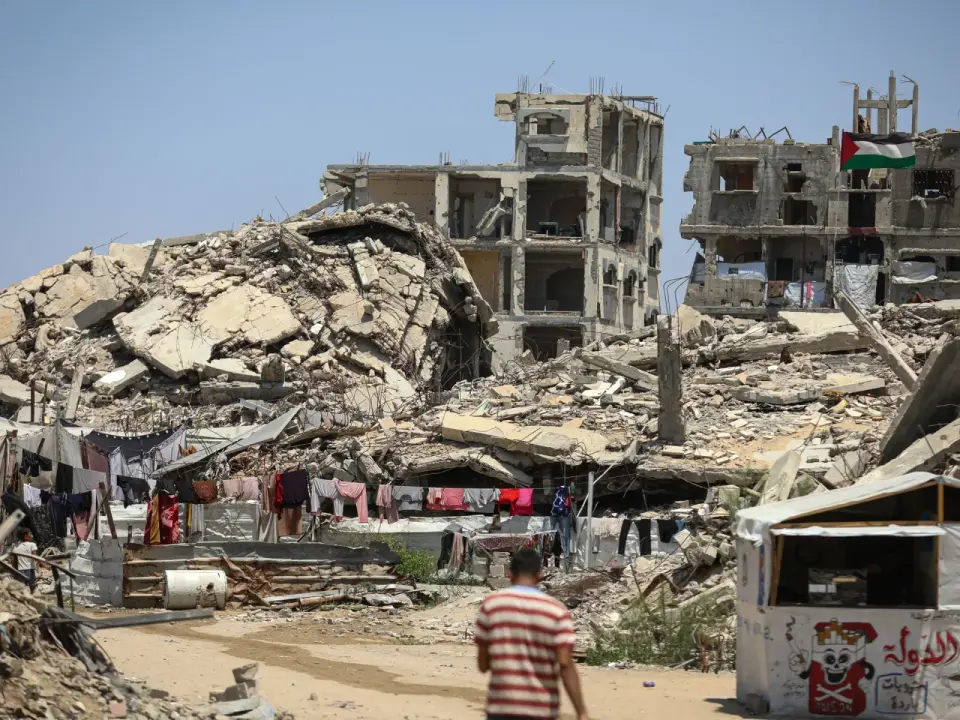
Israeli Prime Minister Benjamin Netanyahu has explicitly rejected the US-backed 15-point plan for Gaza, stating that Israeli forces will not withdraw until Hamas is fully disarmed. While the US Board of Peace and Hamas remain committed to the agreement, Netanyahu’s stance risks straining relations with Washington. In Gaza, residents express deep skepticism about the plan’s viability, citing ongoing Israeli strikes and a lack of international support, with over 1,250 people killed since the previous ceasefire.
Key points
- Netanyahu stated at a cabinet meeting that Israel does not accept the 15-point document, insisting on 'genuine disarmament' of Hamas before any troop withdrawal.
- The US-backed plan, negotiated by the Board of Peace, calls for phased Israeli withdrawal, gradual Hamas disarmament, and a Palestinian-led civilian administration.
- Hamas reaffirmed its commitment to the plan, urging mediator nations to enforce it, while the Gaza government condemned Netanyahu’s rejection as a reversal of negotiations.
- Since the October 2025 ceasefire, Israeli attacks have killed at least 1,258 people, bringing the total death toll since 2023 to over 73,000.
- Netanyahu’s rejection is seen as a move to appease his right-wing base ahead of the October 2026 Israeli general election, where he is trailing in polls.
Background
This development follows a series of diplomatic efforts in 2026, including Israel’s approval of an International Stabilization Force for Gaza in July and the appointment of Khalil al-Hayya as Hamas’s new political chief. The current dispute occurs against the backdrop of a fragile ceasefire that has not prevented continued Israeli military operations, leading to widespread destruction and displacement in Gaza.
How outlets are covering it
CNN and The New York Times emphasize Netanyahu’s domestic political calculations, noting that his rejection of the plan is a strategy to satisfy his right-wing coalition and voters ahead of the October election, despite the risk of alienating President Trump. Al Jazeera focuses on the human impact, highlighting the skepticism and frustration of Gazans who view the plan as a temporary measure that fails to address the underlying occupation and ongoing violence. While CNN suggests Netanyahu is attempting a 'tightrope' balance between US demands and domestic pressure, Al Jazeera portrays the rejection as a continuation of a pattern of Israeli non-compliance with ceasefire agreements.
Why it matters
The rejection of the 15-point plan threatens to derail the US-led peace process and could lead to further escalation in Gaza. It highlights the deepening rift between Israel and the US administration, as well as the growing disconnect between diplomatic frameworks and the reality on the ground for Palestinians. The outcome of the October Israeli election will likely determine whether Netanyahu can maintain this stance or is forced to reconsider his position.
What to watch
The US administration is expected to respond to Netanyahu’s rejection, potentially through diplomatic pressure or sanctions. Hamas and mediator nations are likely to push for enforcement of the plan, while Israel may continue limited military operations. The October 2026 Israeli general election will be a critical factor in determining the future of the peace process.
- ‘We have no one’: Palestinians react to Israel’s rejection of Gaza plan Al Jazeera
- Netanyahu calculates upsetting Trump is his least-bad option CNN
- Netanyahu rejects Trump's Gaza Peace Plan, demands Hamas disarm first NPR
- Netanyahu Walks Tightrope on Trump’s Gaza Disarmament Deal The New York Times
- Trump's Gaza plan hinges on Hamas disarmament, Israeli withdrawals Reuters
Want the full story? Read the original reporting
Read on Al Jazeera