
Settler Arson in West Bank Sparks 'Jewish Terrorism' Debate
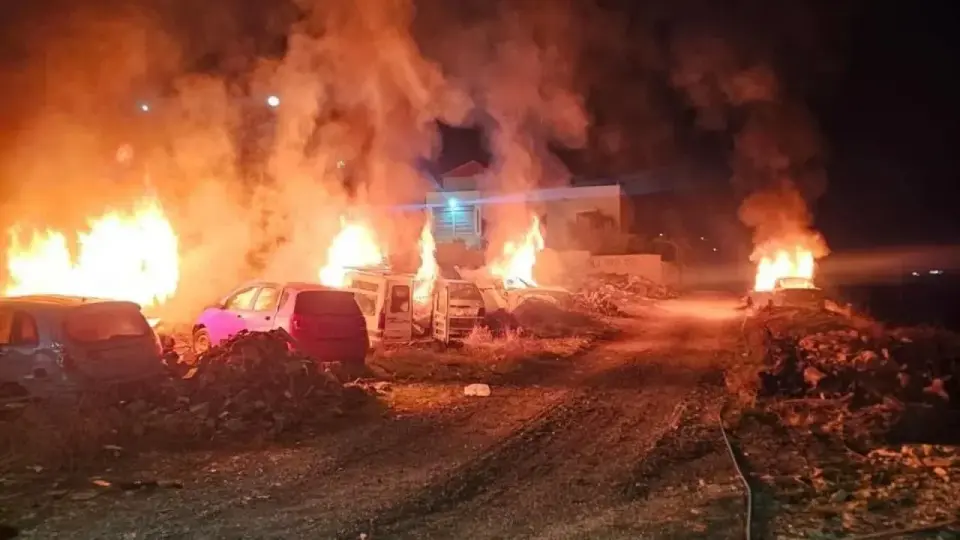
Israeli settlers launched coordinated arson attacks on Palestinian villages in the West Bank overnight on Sunday, igniting a political crisis in Israel. Gadi Eisenkot, the opposition leader tasked with forming a new government, condemned the acts as 'Jewish terrorism,' blaming far-right ministers Itamar Ben-Gvir and Bezalel Smotrich for enabling anarchy. While Israeli security forces opened investigations, no arrests were made, prompting criticism from former officials and opposition leaders who warned of a potential third intifada. Prime Minister Benjamin Netanyahu has not commented on the incidents.
Key points
- At least four Palestinian villages in the Ramallah and South Hebron Hills areas were targeted by settler arson and vandalism overnight on Sunday.
- Gadi Eisenkot, leader of the Yashar party, labeled the attacks 'Jewish terrorism' and accused National Security Minister Itamar Ben-Gvir and Finance Minister Bezalel Smotrich of bringing the West Bank to the brink of anarchy.
- Israeli police and the IDF confirmed investigations were opened, but no arrests were made, a pattern that has persisted for months despite pressure from security agencies.
- Opposition figures, including Yair Golan and Yair Lapid, warned that the government's inaction risks a third intifada and international isolation, while Ben-Gvir accused Eisenkot of political opportunism.
- The attacks occurred amid a broader surge in settler violence, with 410 incidents linked to the olive harvest since September, according to the UN.
Background
This incident follows a recent escalation in West Bank tensions, including the shooting death of a 72-year-old Palestinian woman by settlers near Jericho on November 18 and a surge in olive harvest violence in October. The current political landscape is marked by an inconclusive election in late October, which stripped Prime Minister Netanyahu of his majority and led to President Isaac Herzog tasking Gadi Eisenkot with forming a new government. Previous attempts to address settler violence, such as the detention of 10 settlers in October, have been viewed as insufficient by critics, while Defense Minister Katz has blocked administrative detention for Jewish extremists since January 2025.
How outlets are covering it
Outlets differ in their framing of the political fallout. The Jerusalem Post and CNN emphasize the direct confrontation between Eisenkot and Ben-Gvir, highlighting Ben-Gvir's accusation that Eisenkot is seeking support from Arab parties. The Guardian and Al Jazeera focus more on the broader security implications, with the Guardian noting warnings from multiple opposition leaders about a 'third intifada' and Al Jazeera providing data on the 112% increase in settler attacks in October. All sources agree on the core facts: the attacks occurred overnight, targeted Palestinian property, and resulted in no immediate arrests. The Jerusalem Post uniquely details the internal friction within the security establishment, noting that Shin Bet Director David Zini previously urged Katz to restore administrative detention for Jews, a request that was ignored.
Why it matters
The failure to arrest suspects in a series of high-profile arson attacks underscores the perceived impunity of settler violence, which critics argue is enabling a cycle of escalation. The political clash between Eisenkot and Ben-Gvir highlights the deep divisions within Israel's government regarding the handling of the West Bank, with potential consequences for international relations and regional stability. The lack of action despite warnings from former security chiefs suggests a structural failure in the enforcement of law against settler extremism, which could further destabilize the region and provoke international sanctions.
What to watch
Gadi Eisenkot has 28 days, with a possible 14-day extension, to form a government. He has called for the use of administrative detention and targeted operations by the Shin Bet to stop the violence. The Israeli police and military are expected to continue their investigation, though the lack of arrests so far suggests a continued pattern of inaction. International observers, including the US and EU, are monitoring the situation, with potential sanctions being discussed in response to the escalating violence and settlement expansion.
- Suspected Jewish settler extremist attack Palestinian towns across West Bank The Jerusalem Post
- Israeli settlers launch attacks across West Bank as Netanyahu rival decries ‘Jewish terrorism’ CNN
- Netanyahu rival condemns ‘Jewish terrorism’ after settler attacks on Palestinian villages The Guardian
- Israel's Eisenkot condemns arson attacks by Jewish settlers in West Bank Reuters
- Israeli settlers attack several Palestinian villages in occupied West Bank Al Jazeera
Want the full story? Read the original reporting
Read on The Jerusalem Post