
Settler Justifies Mass Violence as Divine Revenge in Rare BBC Interview
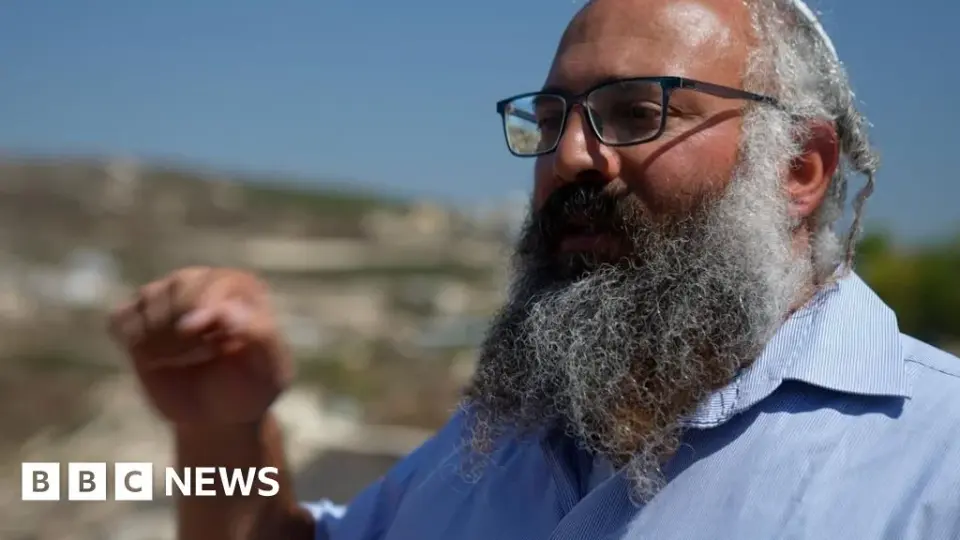
A BBC correspondent gained rare access to the unauthorised Israeli outpost of Havat Gilad in the West Bank, where settler Yehuda Shimon justified recent attacks on Palestinian villages as justified revenge for the killing of an Israeli security guard. Shimon stated that one Jewish life is equivalent to ten million Palestinian lives, citing divine choice. He criticized the Israeli army for failing to use lethal force against Palestinians and dismissed international law, arguing that biblical claims supersede legal restrictions. The interview highlights the extreme views held by some settlers in unauthorised outposts, which are expanding despite being illegal under international law. Meanwhile, Palestinian communities report feeling abandoned by the international community and unprotected by Israeli forces, which they perceive as prioritising settler security.
Key points
- Yehuda Shimon, a resident of the unauthorised outpost Havat Gilad, told the BBC that attacks on Palestinian villages are justified as revenge for the killing of an Israeli security guard.
- Shimon stated that one Jewish life is equivalent to ten million Palestinian lives, attributing this disparity to divine choice and Palestinian jealousy.
- The outpost of Havat Gilad, established over 20 years ago, is built on land recognised by Israel as privately owned by Palestinians, complicating its legalisation.
- Shimon criticized the Israeli army for not using lethal force against Palestinians during confrontations, claiming this failure leads to settler deaths.
- UN data shows 64 Palestinians were killed in the West Bank from the start of 2026 until July 20, with 18 killed during settler attacks, compared to one Israeli killed in the same period.
- Palestinian residents near Havat Gilad report feeling unprotected and abandoned by the international community, with some describing the situation as a daily siege.
Background
This incident follows a surge in West Bank violence in 2026, including settler attacks on mosques and farmland, and clashes near the village of Tal. Previous coverage highlighted disputes over the cause of the Tal incident, with some videos suggesting unarmed Palestinians were killed. The current escalation includes the expansion of unauthorised outposts and increased settler violence, which has drawn international condemnation. The BBC's access to Havat Gilad is rare, as international media organisations are often denied entry to such outposts.
How outlets are covering it
The BBC report presents the views of Yehuda Shimon, a settler who justifies violence against Palestinians as divine retribution and criticises the Israeli army for not using lethal force. This perspective is contrasted with the views of Palestinian residents, who feel unprotected and abandoned by the international community. The UN Office for the Co-ordination of Humanitarian Affairs (OCHA) provides data showing a significant disparity in casualties, with 64 Palestinians killed compared to one Israeli in the same period. The Jewish Currents article focuses on the village of Umm al-Khair, highlighting the expansion of settler outposts and the impact on Palestinian communities, including the murder of activist Awdah Hathaleen. This perspective emphasises the ongoing siege and the failure of Israeli authorities to protect Palestinians. The two sources differ in their focus, with the BBC highlighting the ideological justifications of settlers, while Jewish Currents focuses on the physical expansion of outposts and the impact on Palestinian communities.
Why it matters
The interview with Yehuda Shimon reveals the extreme views held by some Israeli settlers in unauthorised outposts, which are expanding despite being illegal under international law. These views, which justify mass violence against Palestinians as divine retribution, highlight the deepening conflict in the West Bank. The disparity in casualties, with 64 Palestinians killed compared to one Israeli, underscores the unequal power dynamics in the region. The failure of the Israeli army to protect Palestinians, as perceived by both settlers and Palestinians, raises questions about the role of the Israeli state in the conflict. The international community's perceived abandonment of Palestinians, as reported by residents, highlights the lack of effective international intervention. These factors contribute to the ongoing escalation of violence in the West Bank, with significant implications for the future of the Israeli-Palestinian conflict.
What to watch
The Israeli government has previously stated it would legalise Havat Gilad, but the Peace Now organisation says this is impossible due to the land being recognised as privately owned by Palestinians. The government has instead designated a patch of land to the south of the outpost as state land to enable settler construction. The expansion of unauthorised outposts and the increase in settler violence are likely to continue, with potential further escalation in the West Bank. The international community may face pressure to intervene, but the current lack of effective action suggests limited immediate impact. The situation in Umm al-Khair, with the expansion of settler outposts and the failure to prosecute the killer of Awdah Hathaleen, highlights the ongoing challenges for Palestinian communities. The future of the West Bank conflict will depend on the actions of the Israeli government, the international community, and the willingness of settlers to engage in dialogue or continue their expansion.
- Israeli West Bank settler tells BBC attacks on Palestinians are justified as revenge BBC
- What Was Once a West Bank Town's Summer Refuge Is Now Ruled by Armed Settlers Haaretz
- A Year After a Killing, the Siege Worsens in Umm al-Khair Jewish Currents
- Figs and olives once meant life. Now Israeli occupiers turn harvest deadly for Palestine's village TRT World
- PHOTO ESSAY: Palestinian shepherds endure life alongside Israeli settler outposts The Daily Item
Want the full story? Read the original reporting
Read on BBC