
Spain deploys military to Ceuta after thousands breach border from Morocco
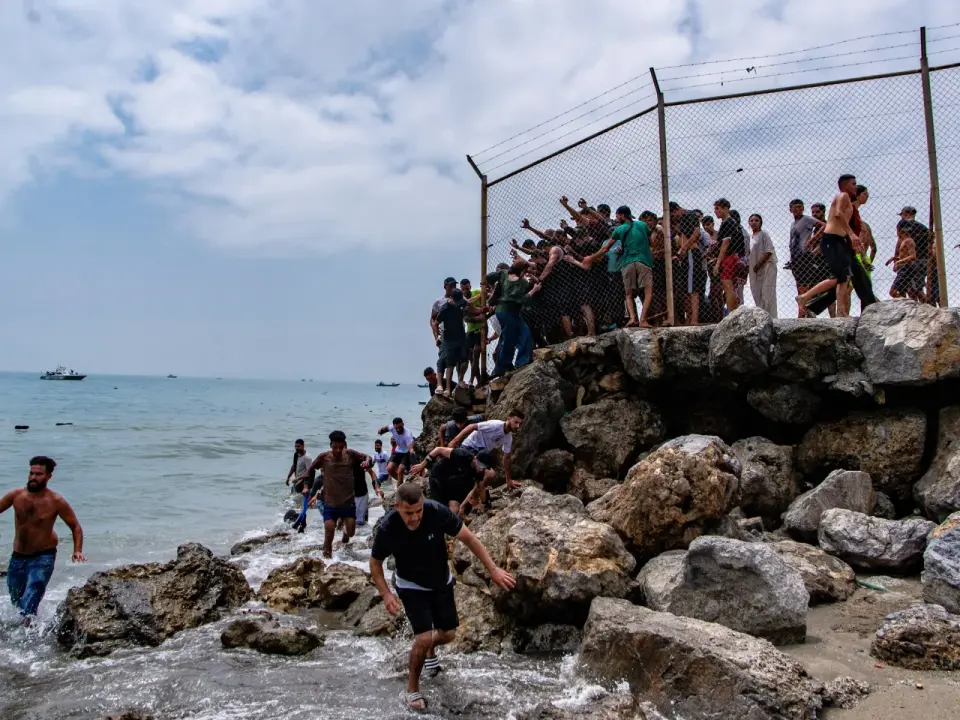
Thousands of migrants have crossed from Morocco into Spain’s North African enclave of Ceuta in recent days, prompting the Spanish government to deploy the military to restore order. While Ceuta’s regional leader declared a humanitarian emergency and requested a national emergency declaration, Madrid rejected the request, citing legal limitations on migration-related emergencies. At least nine people died during the chaotic crossings, which involved swimming, inflatable boats, and scaling fences.
Key points
- Spain’s government announced it would deploy the Armed Forces to assist the Civil Guard in Ceuta to maintain security after thousands of migrants breached the border from Morocco.
- Ceuta’s regional president, Juan Jesús Vivas, declared an 'absolute humanitarian and social emergency' and requested a national emergency declaration, which Madrid’s Interior Ministry rejected, stating migration flows do not qualify under national civil protection regulations.
- At least nine people died during the crossings, with bodies found in the water, while Ceuta authorities reported that 60 people had died at sea in recent months.
- The surge follows a Spanish Supreme Court ruling earlier this month that migrants intercepted at sea cannot be immediately returned to Morocco without due process, which some officials linked to the increase in arrivals.
- Spain’s Interior Minister Fernando Grande-Marlaska and Prime Minister Pedro Sánchez are expected to visit Ceuta to evaluate the situation and coordinate with Moroccan authorities.
Background
Ceuta, a Spanish enclave on North Africa’s coast, has a long history of migration pressure, with a major surge in May 2021 when over 8,000 migrants entered in two days. The enclave, along with Melilla, represents the EU’s only land border with Africa. Recent months have seen increased attempts, with nearly 3,000 migrants entering Ceuta by land or sea as of July 15, 2026, according to Spanish ministry figures.
How outlets are covering it
Outlets differ on the scale and causes of the surge. Al Jazeera and CNN report 1,500–2,000 migrants entered in 10 days, with CNN noting at least nine deaths. BBC cites conflicting figures, with Spanish media estimating 2,000–3,000 on Thursday but the Guardia Civil not confirming. Fox News emphasizes the political fallout, including U.S. criticism of Spain’s migration policies, while CNN and Al Jazeera link the surge to a recent Spanish Supreme Court ruling on sea interceptions. Activists like Zakaria Zarroqui compare the current situation to the 2021 crisis, while some Moroccan activists doubt the ruling is the primary driver.
Why it matters
The crisis highlights tensions between local and central Spanish authorities over migration management, strains EU border security, and underscores the human cost of irregular migration routes. It also reflects broader political debates in Europe and the U.S. over migration policies and their impact on national security and demographics.
What to watch
Spain’s military deployment aims to restore order, while Madrid and Morocco coordinate on returns and border control. The Interior Ministry will publish its next migration report on August 3, 2026. Political debates over migration policy and emergency declarations are likely to continue, with potential impacts on EU-Schengen cooperation, as Italy’s Premier Giorgia Meloni threatened to suspend Schengen agreements with Spain.
- Spain’s enclave Ceuta raises alarm as thousands cross border from Morocco Al Jazeera
- Migrants break through border into Spain's Ceuta, military called in Reuters
- White House blasts Spanish government as thousands of migrants surge from Morocco, emergency request denied Fox News
- Thousands cross from Morocco into the tiny Spanish territory of Ceuta CNN
- Hundreds of migrants swim from Morocco to Spanish enclave of Ceuta BBC
Want the full story? Read the original reporting
Read on Al Jazeera