
Russia's Geran-4 and -5 Drones Overwhelm Ukrainian Air Defenses
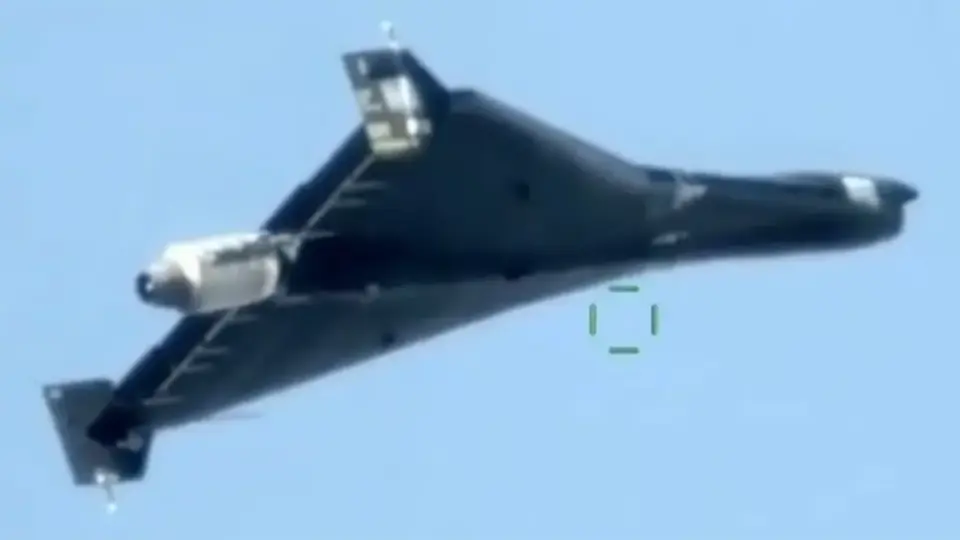
Russia has rapidly scaled up production of jet-powered Geran-4 and Geran-5 drones, which fly faster and higher than previous propeller models, significantly reducing Ukraine's interception rates. These drones, assembled in Russia with Chinese and US components, now strike deep into Ukrainian cities, forcing Kyiv to develop new high-speed interceptors and jet engines to counter the escalating threat.
Key points
- Russia launched 165 drones in a single overnight attack, with 79 being jet-powered, according to the Ukrainian Air Force.
- The Geran-4 features a purpose-built airframe and turbojet engine, allowing speeds of 450-500 km/h and altitudes up to 8 km.
- Ukraine's interception rate for jet-powered drones is approximately 60%, compared to over 90% for propeller-driven models.
- Russia produces around 3,000 Geran-4 and -5 drones monthly at the Alabuga facility, according to Ukrainian intelligence.
- Ukraine is testing new jet-powered interceptor drones, including the Sting S, to match the speed of Russian attacks.
Background
In late August 2026, Russia launched a four-day wave of 1,500 drones, roughly 800 of which were jet-powered, causing significant civilian casualties and prompting Ukraine to accelerate the development of high-speed interceptors. By September, the interception rate for jet-powered drones had dropped to around 60%, highlighting the growing challenge posed by these advanced weapons.
How outlets are covering it
TWZ and IEEE Spectrum emphasize the technical advancements in the Geran-4 and -5, noting their improved airframes and turbojet engines that make them harder to intercept. RFE/RL highlights the use of foreign components, including Chinese engines and US-made circuit boards, despite international sanctions. The Washington Post focuses on the impact on Ukrainian cities, describing Kyiv as a 'daytime war zone' due to constant drone strikes. Analysts like Marc C. Lange warn that Ukraine's current interceptor technology is insufficient, requiring a shift to AI-powered guidance and jet-powered interceptors to maintain a viable defense.
Why it matters
The rapid evolution of Russian jet-powered drones is shifting the balance of the air war, forcing Ukraine to rethink its defense strategies and invest in new technologies. The reliance on foreign components also highlights gaps in global export controls, potentially undermining sanctions aimed at limiting Russia's military capabilities.
What to watch
Ukraine is expected to scale up production of new jet-powered interceptor drones and develop AI-powered guidance systems to counter the Geran-4 and -5. Russia is likely to continue increasing production and deployment of these drones, potentially integrating more advanced navigation systems like DSMAC for autonomous targeting.
- Russia's Jet-Powered Shahed Drones Are Quickly Evolving As Ukraine Scrambles To Blunt Their Damage twz.com
- Jet-powered drones outpace Ukrainian defenses as manufacturers race to build new interceptors AP News
- Ukraine’s Air Defenses Have No Answer for Russia’s New Jet Drones IEEE Spectrum
- Russia’s jet-powered drones are turning Kyiv into a daytime war zone The Washington Post
- Video shows Skyfall interceptor destroying Russian Geran-5 drone Українська правда
Want the full story? Read the original reporting
Read on twz.com