
Ukraine's AI Drone Arms Race: From Pet Cameras to Battlefield Autonomy
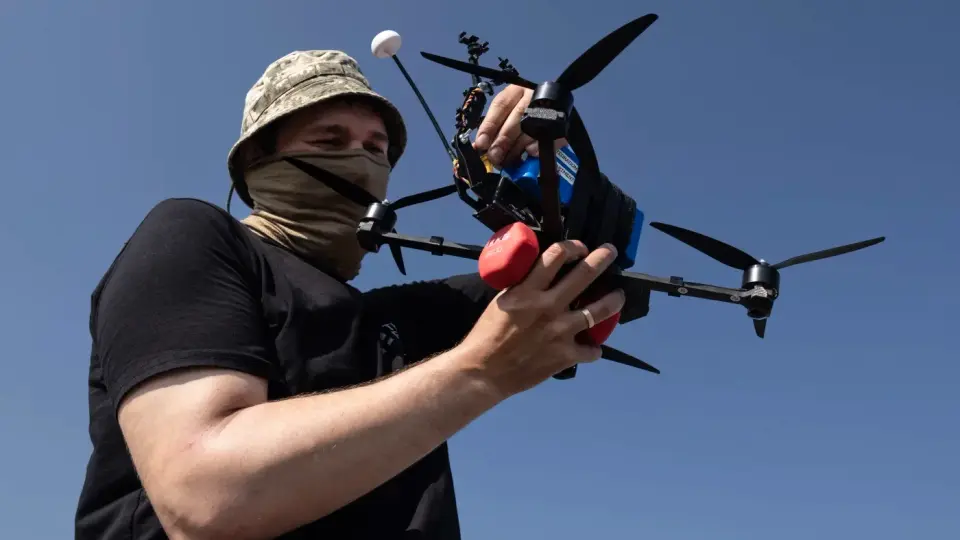
Ukrainian defense firms are rapidly deploying AI-powered drones to counter Russian advances, with companies like The Fourth Law pivoting from consumer tech to autonomous warfare. While these systems currently require human target selection, experts warn that full autonomy is approaching, raising ethical and tactical concerns.
Key points
- Yaroslav Azhnyuk, founder of The Fourth Law, transitioned from Silicon Valley consumer tech to AI drone development after Russia's 2022 invasion.
- The Lupynis-10-TFL-1 drone uses onboard AI to navigate the final 500 meters of a flight autonomously after a human selects the target.
- Ukrainian President Volodymyr Zelenskyy has warned that AI could make battlefield decisions as early as next year.
- Russia is also deploying AI-enabled drones, including a July incident in Zaporizhzhia where an AI-guided drone killed three civilians.
- Global defense firms like Anduril and Helsing are raising billions to develop autonomous systems, with the Pentagon adopting Palantir's Maven AI.
Background
Recent archive entries highlight the escalating drone warfare in Ukraine, including strikes on Russian industrial infrastructure and civilian targets like the Dnipro train station. These events underscore the critical role drones play in the current conflict, providing background for the shift toward AI integration.
How outlets are covering it
NPR emphasizes the human-in-the-loop aspect, with Azhnyuk arguing that current AI drones are not 'Terminator' systems but rather tools that require human decision-making. The New European, however, highlights the risks of 'lazy' AI use, noting that imperfect systems can lead to civilian casualties, as seen in the Zaporizhzhia incident. It also points to the global arms race, citing significant funding for firms like Anduril and Helsing. United24 Media focuses on specific Ukrainian drone models like the Kolibri Advance, while The Australian source was inaccessible due to a bot challenge.
Why it matters
The integration of AI into drones is reshaping modern warfare, offering asymmetric advantages but also raising serious ethical concerns. As both Ukraine and Russia deploy these technologies, the potential for autonomous decision-making on the battlefield could lead to unintended civilian casualties and a new era of high-tech conflict.
What to watch
Expect continued development and deployment of AI-powered drones by both Ukraine and Russia. International discussions, including UN talks in Geneva, may lead to new regulations on autonomous weapons, though no binding treaty currently exists. The global defense industry will likely see increased investment in AI systems as nations seek to maintain competitive advantages.
- How AI drones are influencing the course of the Ukraine war NPR
- Opinion | The New Age of Mutually Assured Disruption WSJ
- Meet Kolibri Advance—Ukraine’s FPV Drone That Uses AI to Find and Follow Targets UNITED24 Media
- AI transforming wartime technology The Australian
- Forget the Terminator – the age of AI weaponry is already here The New European
Want the full story? Read the original reporting
Read on NPR