
Montreal Summit: EU Ditches 'Associate Member' Label for Canada Amid Internal Disputes
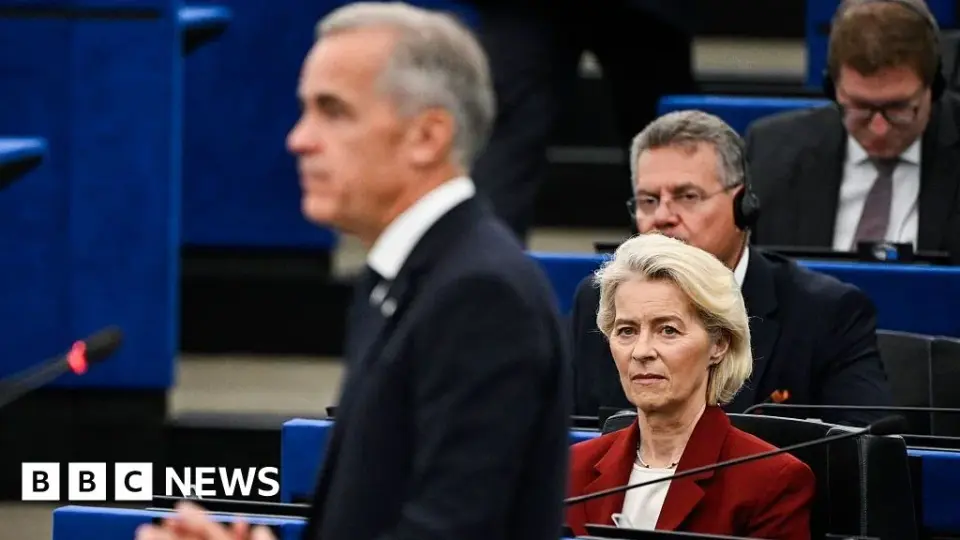
The two-day Canada-EU summit in Montreal is set to launch formal negotiations on deepening ties, but the European Union has retreated from its earlier proposal to grant Canada 'associate member' status. Internal disagreements among EU member states, particularly Germany, forced a shift to the vaguer term 'ever closer association.' While Canada and the EU agree on strengthening cooperation in trade, defense, and energy, the exact legal framework remains undefined until 2027. This pivot occurs against the backdrop of a trade war with the United States, where President Trump has threatened tariffs if the move is seen as hostile.
Key points
- The draft joint statement for the Montreal summit now uses the phrase 'ever closer association' instead of 'associate member,' a change driven by objections from Germany and other EU nations.
- German Chancellor Friedrich Merz and other leaders argued that 'associate membership' lacks a clear legal basis in EU treaties and could imply preferential treatment over other candidate nations like Ukraine.
- Prime Minister Mark Carney stated that the specific nomenclature is less important than the tangible benefits for Canadians, emphasizing that the summit will launch formal negotiations to be completed by 2027.
- The revised agreement includes concrete steps such as a joint feasibility study on liquefied natural gas exports, new subsea cable infrastructure, and expanded student and worker mobility across the Atlantic.
- Canadian officials confirmed that Canada will not pay a membership fee but will participate in specific EU programs, while US President Donald Trump has warned of 'very serious tariffs' if the alliance is interpreted as a hostile act.
Background
This summit follows a period of strained relations between Canada and the United States, prompting Prime Minister Mark Carney to pivot toward Europe to diversify trade and security partnerships. In September, European Commission President Ursula von der Leyen surprised EU capitals by proposing 'associate membership' for Canada without prior consultation, leading to diplomatic friction. Previous archive coverage highlights that while the 'associate member' label has collapsed due to internal EU disagreements, the fundamental goal of reducing reliance on the US remains intact. The current summit aims to solidify structural gains in defense and critical minerals while navigating the risk of US retaliation.
How outlets are covering it
BBC and Al Jazeera report that the EU has officially backtracked on the 'associate member' title, replacing it with 'ever closer association' to appease skeptical member states. The Guardian provides a more critical view, noting that the original proposal by von der Leyen caught many EU capitals by surprise and lacked legal grounding, leading to a diplomatic scramble to 'fix the plane while it is flying.' While BBC and Al Jazeera focus on the final outcome and the consensus on deepening ties, The Guardian emphasizes the internal EU discord and the lack of consultation that led to the initial proposal. All sources agree that despite the change in wording, the strategic intent to strengthen Canada-EU relations remains unchanged, with Carney downplaying the importance of the label in favor of substantive economic and security benefits.
Why it matters
The outcome of the Montreal summit signals a significant shift in transatlantic geopolitics, as Canada and the EU move to formalize a closer partnership independent of the United States. The retreat from the 'associate member' label highlights the complexity of EU decision-making and the sensitivity of creating new precedents for non-member states. This development could reshape global trade dynamics, potentially triggering retaliatory measures from the US while offering Canada new avenues for economic security and strategic autonomy in a fragmented global landscape.
What to watch
Formal negotiations between Canada and the EU will continue through 2027, with the goal of defining the 'ever closer association' framework by the next summit. The two sides are expected to finalize agreements on defense procurement, critical minerals, and energy, including long-term liquefied natural gas shipments from Canada to Europe. The US response to the deepening Canada-EU ties will be closely monitored, particularly regarding potential tariff threats from President Trump. Additionally, the EU and Canada plan to launch joint initiatives on subsea cable infrastructure and student mobility in the coming months.
- Carney to push for closer ties at Canada-EU summit in Montreal BBC
- EU backs away from offer to Canada to start ‘associate member’ talks The Guardian
- Carney hosts EU leaders as Trump pushes Canada toward Europe TribLIVE.com
- European Union backtracks on Canada becoming ‘associate member’ Al Jazeera
- Germany and other EU countries block von der Leyen's plan to give Canada 'associate membership' DW.com
Want the full story? Read the original reporting
Read on BBC