
German Navy Tests Israeli LORA Ballistic Missiles from F125 Frigate
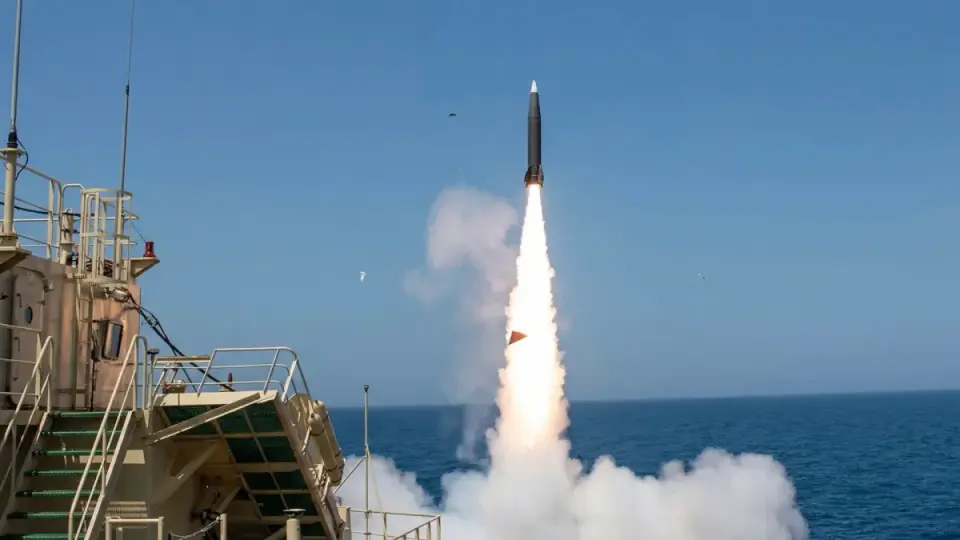
The German Navy successfully launched two Israeli-made LORA ballistic missiles from the F125 frigate Sachsen-Anhalt in the North Atlantic. The test, part of the Bundeswehr’s operational experimentation program, marks a potential shift in German naval strike capabilities. While the missiles hit their targets with high precision, the experiment does not guarantee formal adoption, as the launchers currently occupy the frigate’s flight deck, hindering other operations.
Key points
- German Navy launched two LORA ballistic missiles from the F125 frigate Sachsen-Anhalt in the North Atlantic.
- The test was part of the Bundeswehr’s operational experimentation (OPEX) program in cooperation with the Bundeswehr Innovation Center.
- IAI confirmed both missiles followed planned trajectories and struck targets with high precision.
- LORA missiles have a range of 60 to 270 miles and use a quasi-ballistic trajectory.
- The launchers occupied the frigate’s flight deck, limiting its operational capabilities during the test.
- It is unclear if this experiment will lead to a formal acquisition program for the German Navy.
Background
Germany has been expanding its long-range strike capabilities in response to the security situation in Europe. The Bundeswehr is planning to procure land-based Tomahawk cruise missiles and has evaluated other Israeli systems like the Blue Whale autonomous underwater vehicle. The F125 frigates were originally designed for maritime security and stabilization operations, lacking significant firepower. This test follows a 2017 trial where IAI fired LORA from a cargo ship and a 2020 test involving floating targets. Germany has also acquired Arrow 3 anti-ballistic missiles and PULS multiple rocket launchers from Israel.
Why it matters
This test demonstrates a potential new long-range strike capability for Germany’s surface fleet, which could enhance deterrence and defense readiness at sea. A naval LORA capability would allow Germany to distribute long-range fires across surface combatants, complicating an adversary’s targeting problem. The quasi-ballistic trajectory of LORA presents a different air-defense challenge compared to low-flying cruise missiles and delivers greater kinetic energy, making it useful for hardened targets. However, the lack of a terminal seeker limits its effectiveness against maneuvering warships, though it remains viable for land attacks.
What to watch
The Bundeswehr will evaluate the results of the OPEX test to determine if LORA should be formally adopted. Potential integration could occur on future F127 multi-purpose frigates or Large Remote Missile Vessels (LRMV). Germany may also consider acquiring the land-based version of LORA. The outcome of this experiment could influence broader European efforts to develop longer-range precision fires within NATO structures.
- Israeli LORA Ballistic Missiles Fired From German Frigate TWZ
- Germany tests Israeli missile after attempted Russian drone attack dailysabah.com
- German Navy Tests the Israeli Ballistic Missile LORA Defense Update
- Bundeswehr tested ballistic missile for the first time Наша Ніва
- German Navy Tests Ballistic Missile for the First Time at Sea Bloomberg.com
Want the full story? Read the original reporting
Read on TWZ