
Ukraine’s Operation Vivaldi Reclaims Donetsk Territory as Russian Drone Strikes Escalate
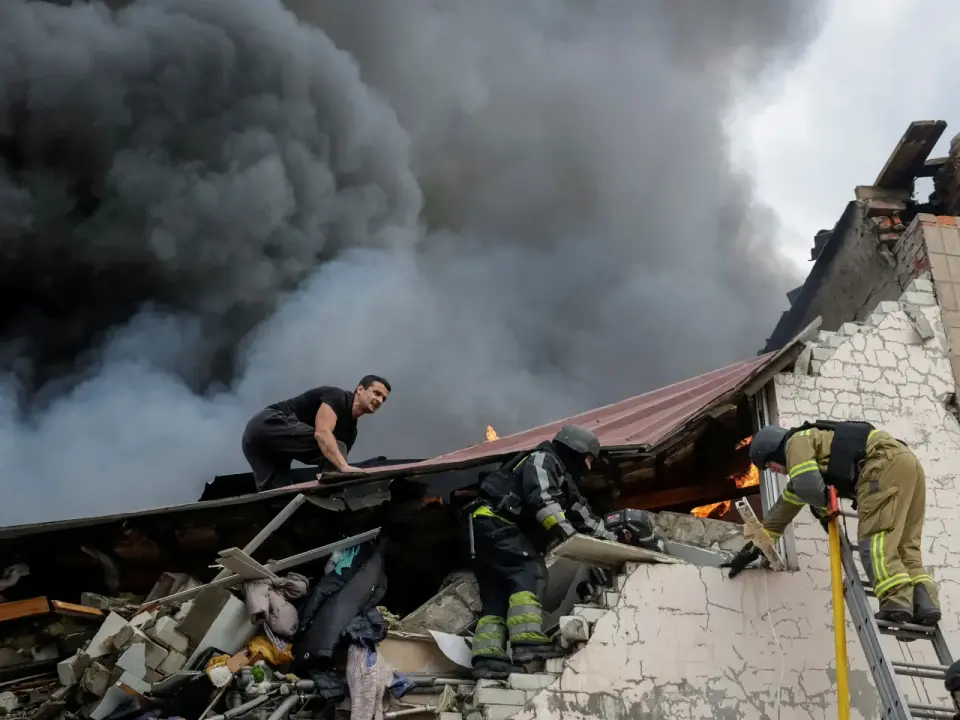
Ukraine’s 3rd Army Corps has successfully executed Operation Vivaldi, recapturing approximately 175 square kilometers of territory in the Donetsk region since May. This advance, which utilized extensive robotic and drone capabilities, has forced Russian forces to retreat from key positions near Lyman and slowed their progress toward the fortress cities of Sloviansk and Kramatorsk. In response to these tactical setbacks, Moscow has intensified aerial bombardment on Ukrainian civilian infrastructure, resulting in significant casualties in Pryluky and Kramatorsk. While Ukraine continues to disrupt Russian fuel supplies through long-range strikes, the conflict remains characterized by high attrition rates and evolving defensive technologies.
Key points
- Ukraine’s 3rd Army Corps, led by Brig. Gen. Andriy Biletsky, launched Operation Vivaldi in May, officially announced in September, reclaiming 175 to 200 square kilometers of land in northern Donetsk Oblast.
- The offensive utilized strict operational secrecy and a high volume of ground and aerial robots, including mine-clearing units and explosive drones, to overcome Russian numerical superiority and force a retreat from the 20th and 25th Combined Arms Armies.
- Russian forces have retreated from villages south of Lyman, with Kremlin-aligned sources acknowledging that the prospect of capturing Sloviansk has receded into the distant future due to Ukrainian counterattacks.
- On October 7, a Russian cruise missile strike on a residential building in Pryluky killed 22 people, including five children, coinciding with Vladimir Putin’s birthday; this was followed by a deadly strike on buses in Kramatorsk on October 8.
- Ukraine’s military reports that F-16 fighters are now intercepting 50 to 60 percent of incoming jet-powered drones, while long-range strikes have disabled over 51 percent of Russian oil refining capacity.
- Ukrainian military intelligence attributes the precision of recent Russian attacks to advanced satellite and inertial navigation systems, indicating that strikes on non-military targets are deliberate rather than accidental.
Background
This development follows a period of strategic stalemate in the Donbas region, where Russian forces had previously advanced toward the 'fortress belt' cities of Sloviansk and Kramatorsk. Recent months saw a shift in Russian tactics toward daytime jet-powered drone strikes aimed at civilian infrastructure, as noted in earlier coverage. The current escalation in civilian casualties, including the deadly strikes in Pryluky and Kramatorsk, marks a significant intensification of these tactics amidst the Ukrainian counteroffensive.
How outlets are covering it
Al Jazeera emphasizes the human cost of the conflict, highlighting the record casualty rates and the specific tragedies in Pryluky and Kramatorsk, while noting the effectiveness of Ukrainian air defenses. The Center for European Policy Analysis (CEPA) focuses on the tactical innovation of Operation Vivaldi, detailing how the 3rd Army Corps used operational secrecy and robotic warfare to exploit Russian overextension. The Modern War Institute (MWI) frames the operation as a return to maneuver warfare in a previously static conflict, highlighting the integration of drones into combined arms tactics. While all sources agree on the territorial gains, Al Jazeera and CEPA differ in emphasis, with the former focusing on the humanitarian impact and the latter on the specific military mechanics of the advance.
Why it matters
The success of Operation Vivaldi demonstrates Ukraine’s ability to achieve decisive tactical victories through technological adaptation and operational secrecy, potentially altering the strategic balance in the Donbas. Conversely, the escalation in Russian attacks on civilian infrastructure signals a shift toward a more brutal attritional strategy, raising concerns about international humanitarian law and the potential for further escalation. The effectiveness of Ukrainian air defenses against advanced drones also indicates a shifting technological dynamic in the conflict.
What to watch
Ukraine is expected to continue Operation Vivaldi, with the next key objective being the village of Kryva Luka, which could serve as a base for further counterattacks. Russia is likely to continue intensifying aerial bombardment on civilian targets in an attempt to offset its territorial losses. Western allies, including Germany, are expected to increase military aid, particularly in drone defense and F-16 fighter support, to bolster Ukraine’s defensive capabilities.
- Ukraine pushes Russia back in Donetsk as military, civilian casualties soar Al Jazeera
- Ukraine Claws Back Land in the Donbas, Thwarting a Russian Push The New York Times
- Silence, Delusion and Robots: Ukraine’s Eastern Advances Center for European Policy Analysis (CEPA)
- Map Reveals Four New Ukrainian Front Line Breakthroughs Newsweek
- MWI Podcast: Operation Vivaldi Modern War Institute -
Want the full story? Read the original reporting
Read on Al Jazeera