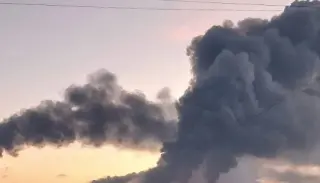
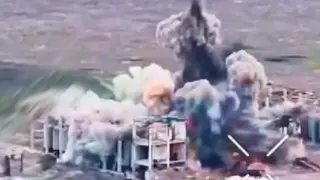
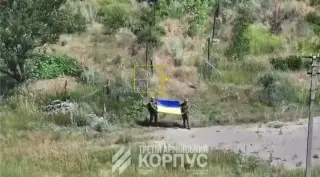
Ukrainian military units struck a drone launch site near Donetsk and a river crossing in the Donetsk region, alongside a command post and warehouse in Russia's Belgorod region, according to the General Staff of the Armed Forces.
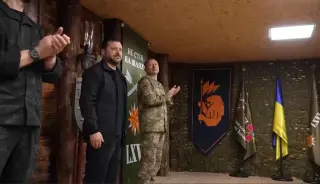
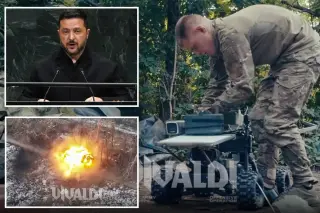
President Volodymyr Zelensky visited the Lyman sector on September 30 to announce the launch of a fourth phase of Operation Vivaldi. Ukrainian forces have reclaimed 176 square kilometers of territory in Donetsk Oblast, inflicting over 5,000 casualties on Russian troops. The offensive, led by the Third Army Corps, utilized advanced drone and ground robot tactics to halt Russian advances toward the fortress belt.
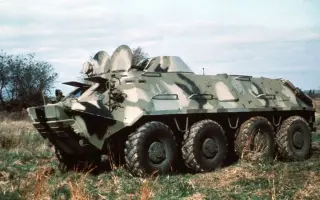
Ukraine's Third Army Corps has completed the third phase of Operation Vivaldi, reclaiming 51 square kilometers of territory in the Donetsk region and capturing over 250 Russian soldiers. The offensive, which began in May 2026, has now recovered a total of 176 square kilometers. Ukrainian forces utilized deceptive tactics to misdirect Russian reserves and employed unmanned ground vehicles, including modified armored vehicles, to breach fortified positions near the key settlement of Nove. Russian forces suffered approximately 2,000 casualties in this phase alone, with total losses exceeding 5,000 across the three phases. The operation aims to disrupt Russian advances toward Lyman and demonstrate that Russian gains in the Donbas are not inevitable.
Ukraine's Third Army Corps completed the third phase of Operation Vivaldi, reclaiming 176 square kilometers of territory in the Donetsk region and capturing over 250 Russian prisoners. The offensive, which utilized advanced drone tactics and deception, halted Russian advances toward the fortress city of Lyman. While Kyiv views this as a strategic shift to counter Russian momentum, Moscow dismisses the gains as minor tactical failures. Analysts argue the operation proves Ukraine can disrupt Russian logistics, though achieving a decisive operational breakthrough remains a long-term challenge.
Ukraine's Third Army Corps announced the conclusion of 'Operation Vivaldi,' a secret military campaign that utilized air-dropped ground robots to kill 3,000 Russian soldiers and reclaim 48 square miles of territory in Donetsk. The operation, which began in May 2026, involved dropping unmanned ground vehicles up to 9 miles behind enemy lines to target command posts and logistics hubs. This tactical shift, described by officials as a 'historic moment,' helped break a Russian pincer movement and reclaimed five villages and three settlements, marking a significant operational breakthrough in the eastern front.
Ukraine's Third Army Corps has reclaimed approximately 125 square kilometers of territory near Lyman in Donetsk region through Operation Vivaldi, a counteroffensive launched in May 2026. The success relies on a shift from attritional warfare to operational-level maneuver, enabled by drone dominance and the use of ground robots for demining and logistics. While Ukrainian forces have stabilized the front and defeated Russian infiltration tactics, the operation remains ongoing as Russia attempts to reorganize defenses along the Zherebets River. The campaign highlights a new model of war where unmanned systems and flexible command structures replace rigid Soviet-era hierarchies, though achieving a decisive breakthrough requires further mobilization and technological integration.
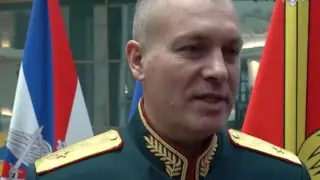
Ukraine says drone forces killed Major General Anton Grunis, a Russian commander decorated by Putin after boasting of capturing Kostiantynivka; Kyiv disputes that the city fell. The killing was announced by Major Robert Brovdi of Ukraine’s unmanned forces, who says Grunis died Sept. 12 in occupied Donetsk, and that he is the seventh brigade/army‑level Russian commander killed by drones, with some bloggers alleging his location was leaked by informers.
Russian Major General Anton Grunis, who reportedly briefed Putin on the capture of Kostiantynivka, was killed in a Ukrainian drone strike in the Donetsk region on September 12, 2026. Russia’s Apti Alaudinov confirmed his death, praising him as a hero, and Ukrainian sources say Grunis is the seventh senior Russian officer killed by Ukraine’s drone forces. The incident underscores ongoing high-level casualties in the Russia-Ukraine war.
Ukraine’s 3rd Army Corps says it has begun a Donetsk counteroffensive codenamed ‘Vivaldi’ to disrupt Russian infiltration near Lyman and seize the initiative in the Donetsk sector, claiming territorial gains, supply-line disruption, and heavy Russian losses in the first phase, while stressing information silence; independent reporting and OSINT attach varying figures to gains and the scope of the operation.
Ukrainian forces have eliminated the Russian salient north of Lyman, disrupting Moscow’s plan to encircle the Fortress Belt in Donetsk and prompting a strategic reassessment while Kyiv presses counteroffensives elsewhere; Russia reportedly seeks up to 800,000 new troops, but faces mobilization and integration challenges. Zelensky pursues further peace talks, and long‑range strikes plus Western sanctions continue to hobble Russia’s oil sector. Amid ongoing Russian missile and drone campaigns, Ukrainian defenses downed many incoming threats, with casualties and damage reported across multiple oblasts as frontlines remain fluid.
Russia's Putin has dispatched bone fragments of the medieval Grand Prince Dmitry Donskoy to the Donetsk front to boost morale among troops, presenting the relics as a sacred aid endorsed by the Russian Orthodox Church; the relics will be shown to front-line units along the roughly 1,000-km front, in what critics call a propaganda move ahead of parliamentary elections.
President Vladimir Putin says peace must be on Russia’s terms and claims Moscow can capture the entire Donbas by the end of 2026, with no frontline concessions until Donetsk is fully seized; Western analysts are skeptical of the timeline, while Kyiv rejects territorial concessions. In Moscow, U.S. envoys Witkoff and Kushner met with Putin and sanctions chief Gene Lange to discuss diplomacy, sanctions, and potential economic cooperation, with Moscow pausing strikes on Kyiv but opposing a wider ceasefire.
Russia is pressing along Ukraine’s Donbas fortress belt, with the frontline town of Druzhkivka in Donetsk the latest to come under attack as Moscow seeks to breach a string of settlements. The route linking strategic towns remains a focal point, leaving destroyed buildings, displaced civilians, and drones and artillery shaping the front line across the east and south.
Ukraine’s 3rd Army Corps mounted a limited, drone‑assisted operation in northern Donetsk, penetrating up to about three kilometres with four infantry fighting vehicles and deploying troops before pulling back. While small in scale, analysts say the move demonstrates manoeuvre warfare enabled by drones and artillery and could blunt a Russian pocket that threatens Sloviansk and Kramatorsk if replicated. Fighting remains concentrated around the Lyman axis and nearby targets like Kolodiazi and Shandryholove, as broader front lines across the Sloviansk–Kramatorsk area and toward Kharkiv continue to see activity.
Ukrainian President Volodymyr Zelensky says Moscow is likely to mobilize at least 300,000 more troops later this year to press its campaign in eastern Ukraine, including Donetsk, where Ukraine holds about 20% of the territory. He cited Russia’s heavy losses — roughly 267,000 personnel this year with about 155,000 killed — and suggested Russia may attempt incursions into Kharkiv and Sumy as it aims to finish Donetsk occupation by year’s end. Zelensky also touched on air-defense challenges, Western missile supplies (Patriot and Aster), Starlink imagery, and ongoing diplomacy with the United States on ending the war.