
DIA Report Details Russian Nuclear Space Threat and Chinese Orbital Weapons
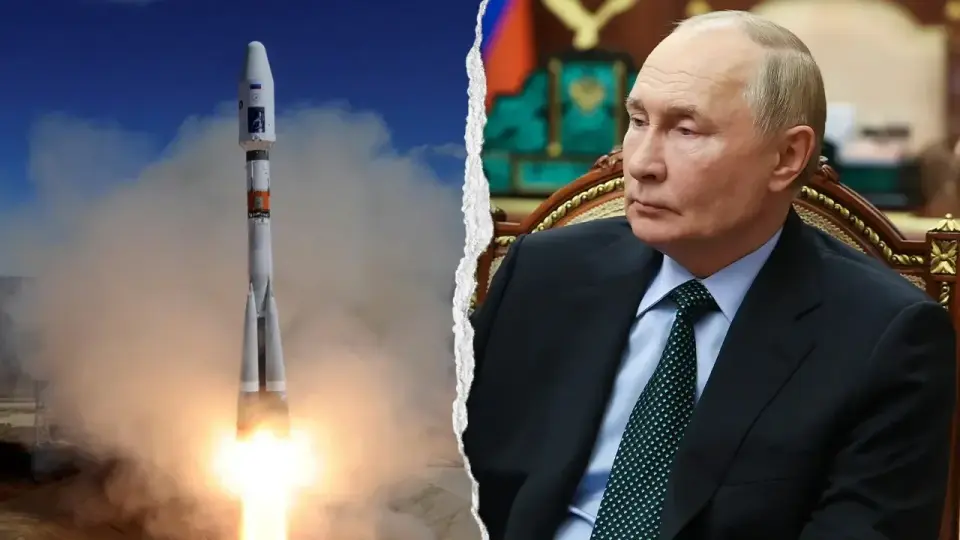
The Defense Intelligence Agency (DIA) released its 2026 'Challenges to Security in Space' report on October 26, detailing escalating threats from China and Russia. Key findings include Russia’s development of a satellite capable of carrying a nuclear weapon into orbit, which could disable thousands of satellites and create long-lasting radiation belts. China is assessed to potentially deploy space-based directed energy weapons by the late 2020s. The report also notes that Iran and North Korea are expanding their jamming capabilities, with recent conflicts like Operation Epic Fury involving offensive actions against space assets.
Key points
- Russia is developing a satellite designed to carry a nuclear weapon, which could cause rapid degradation of thousands of satellites and leave radiation belts persisting for years.
- China may field space-based directed energy systems by the late 2020s, adding to its existing ground-based laser and jamming capabilities.
- The report confirms China has on-orbit electronic warfare jammers, a capability previously only suspected, and notes its ISR satellite fleet has tripled since 2018 to over 510 systems.
- Iran and North Korea are identified as emerging threats, with Iran using jammers near the Strait of Hormuz and both nations taking offensive actions against space capabilities during Operation Epic Fury.
- The U.S. has recently acknowledged the existence of its own on-orbit weapons for 'space control,' though specific details remain classified.
Background
This report is the third iteration of DIA’s unclassified assessments on space security, following editions in 2019 and 2022. Recent coverage has highlighted the first clear image of China’s Shenlong spaceplane and growing concerns over orbital debris and attribution challenges in space. The current report builds on previous warnings about China’s rapid expansion of satellite infrastructure and dual-use capabilities.
How outlets are covering it
Fox News emphasizes the existential threat posed by Russia’s nuclear anti-satellite weapon, highlighting the potential for widespread disruption to global systems. The DIA press release provides the official framework, focusing on the breadth of adversary threats including Iran and North Korea. The War Zone (TWZ) and Air & Space Forces Magazine focus on the technical specifics of China’s directed energy weapons and the U.S. response, noting the recent admission of U.S. orbital weapons. While all sources agree on the severity of the threat, Fox News prioritizes the nuclear dimension, whereas technical outlets focus on the evolution of directed energy and jamming technologies.
Why it matters
A nuclear detonation in space could cripple global communications, navigation, and financial systems, with effects lasting for years. The expansion of adversarial capabilities in space raises the risk of miscalculation and conflict, as attribution of attacks in orbit remains difficult. The U.S. reliance on satellites for military and civilian infrastructure makes it vulnerable to these emerging threats, necessitating a shift in defense strategy to include space-based deterrence and protection.
What to watch
The U.S. is expected to continue developing and deploying its own space-based weapons and countermeasures. China and Russia are likely to advance their directed energy and jamming technologies, potentially leading to more close encounters and tests in orbit. International discussions on space security and arms control may intensify as the threat landscape evolves. The report’s findings will likely influence U.S. defense budget allocations and strategic planning for the coming decade.
- America's enemies prepare to take the next major war into outer space Fox News
- DIA Releases Challenges to Security in Space DIA.mil
- US Defence Intelligence warns of expanding Chinese and Russian counterspace threats space & defense
- U.S. Intel Warns China's Space-Based Directed Energy Weapons Could Soon Threaten Satellites TWZ
- China Developing More On-Orbit Space Weapons: New Report Air & Space Forces Magazine
Want the full story? Read the original reporting
Read on Fox News