Tag

Space Warfare

All articles tagged with #space warfare

Western Intelligence Warns Russia May Launch Nuclear-Armed Satellite Within Weeks
geopolitics4 days ago

Western Intelligence Warns Russia May Launch Nuclear-Armed Satellite Within Weeks

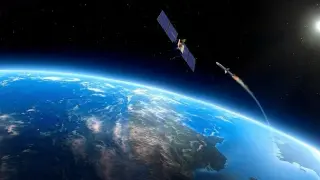
Western intelligence agencies warn that Russia could launch a nuclear-armed satellite, identified as Sputnik-S, into orbit within 60 days. The satellite, reportedly stored near Moscow, would violate the 1967 Outer Space Treaty. A detonation in orbit could disable thousands of satellites, disrupting global communications, navigation, and military operations. US and German officials assess that countering such a weapon once deployed is currently impossible.


Ukraine Establishes Space Forces to Counter Russian Satellite Networks and Starlink Dependence
geopolitics18 days ago

Ukraine Establishes Space Forces to Counter Russian Satellite Networks and Starlink Dependence

Ukraine has formally moved to establish a dedicated Space Forces branch and develop an independent satellite network to reduce reliance on foreign providers. This strategic shift follows recent disruptions to Starlink services and escalating Russian attacks on Ukrainian infrastructure, including strikes on Russian rocket facilities in Samara. Kyiv aims to secure sovereign command-and-control capabilities by 2028-2029, countering Moscow’s expanding Rassvet satellite constellation and near-space missile threats.

DIA Report Details Russian Nuclear Space Threat and Chinese Orbital Weapons
national-security28 days ago

DIA Report Details Russian Nuclear Space Threat and Chinese Orbital Weapons

The Defense Intelligence Agency (DIA) released its 2026 'Challenges to Security in Space' report on October 26, detailing escalating threats from China and Russia. Key findings include Russia’s development of a satellite capable of carrying a nuclear weapon into orbit, which could disable thousands of satellites and create long-lasting radiation belts. China is assessed to potentially deploy space-based directed energy weapons by the late 2020s. The report also notes that Iran and North Korea are expanding their jamming capabilities, with recent conflicts like Operation Epic Fury involving offensive actions against space assets.

DIA Report Warns China May Deploy Orbital Directed Energy Weapons by Late 2020s
defense-and-space1 month ago

DIA Report Warns China May Deploy Orbital Directed Energy Weapons by Late 2020s

The Defense Intelligence Agency (DIA) released its 2026 'Challenges to Security in Space' report on October 26, warning that China could deploy space-based directed energy weapons (DEWs) by the end of the decade. The assessment highlights Beijing’s rapid expansion of its intelligence, surveillance, and reconnaissance (ISR) satellite fleet, which has tripled since 2018 to over 510 systems. While the report details potential reversible and non-reversible attacks on satellites, it notes that attribution of such strikes remains difficult. The findings coincide with recent U.S. admissions of its own orbital weapons capabilities and growing concerns over space congestion and adversarial cooperation.

DIA Report Confirms China’s X-37B-Like Spaceplane and Warns of Orbital Laser Weapons
defense-and-space1 month ago

DIA Report Confirms China’s X-37B-Like Spaceplane and Warns of Orbital Laser Weapons

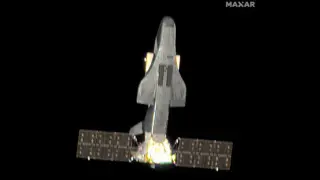
The U.S. Defense Intelligence Agency (DIA) released a new report confirming that a 2024 satellite image depicts a Chinese reusable spaceplane, closely resembling the U.S. X-37B. The report highlights China’s growing space capabilities, including four orbital missions since 2020, and warns that Beijing may deploy space-based directed-energy weapons by the late 2020s.

UK Reveals Active Satellite Defense Unit Amid Rising Space Threats
defense2 months ago

UK Reveals Active Satellite Defense Unit Amid Rising Space Threats

The UK has established a new Royal Air Force unit, No III Space Effects Squadron, to actively defend British satellites using electronic warfare. This move follows reports that the UK has already jammed foreign satellites to protect its own assets, including nuclear submarine tracking. Defence Secretary Wes Streeting warned that losing satellite access could cost the UK economy £1.4bn daily, while Air Chief Marshal Sir Harv Smyth described space as a domain of direct military competition. The announcement coincides with US confirmation of deploying space weapons and ongoing concerns about Russian jamming activities.

UK Establishes First Active Space Effects Squadron to Counter Satellite Jamming
defense2 months ago

UK Establishes First Active Space Effects Squadron to Counter Satellite Jamming

The UK Ministry of Defence has announced the creation of No III Space Effects Squadron, a new Royal Air Force unit dedicated to actively defending British satellites. While previous units focused on monitoring threats, this new squadron will use electronic warfare to disrupt, degrade, and deny hostile activities in space. The move responds to increasing concerns over Russian jamming of UK military satellites and follows the US confirmation of deploying weapons in orbit.

US Admits to First Public Deployment of Space Weapons, Igniting Global Arms Race Fears
geopolitics2 months ago

US Admits to First Public Deployment of Space Weapons, Igniting Global Arms Race Fears

The United States has officially confirmed the deployment of 'on-orbit space control weapons' for the first time, a move announced by Air Force Secretary Troy Meink at a conference in Maryland. While officials refused to disclose specific technical details or the timeline of deployment, the admission signals a shift toward offensive capabilities in space. This disclosure has prompted immediate condemnation from China and Russia, who warn of a dangerous arms race, while experts fear it will accelerate the militarization of Earth's orbit.

U.S. Space Command Prioritizes Offensive Counter-Space Weapons for 2029-2033
defense3 months ago

U.S. Space Command Prioritizes Offensive Counter-Space Weapons for 2029-2033

U.S. Space Command has officially designated 'integrated space fires' and counter-proliferated low Earth orbit (pLEO) capabilities as its top two priorities for fiscal years 2029 to 2033. Gen. Stephen Whiting stated that survivability is as critical as performance, arguing that current U.S. satellites are vulnerable to kinetic and non-kinetic attacks. The command seeks to develop acknowledged offensive capabilities to deter adversaries, particularly China, which has expanded its orbital assets and anti-satellite weapons. While the U.S. maintains a moratorium on debris-producing direct-ascent tests, officials emphasize the need for credible deterrents to protect space infrastructure and joint force operations.

US Space Command Prioritizes Offensive Capabilities and Counter-Constellation Tools for 2029-2033
defense3 months ago

US Space Command Prioritizes Offensive Capabilities and Counter-Constellation Tools for 2029-2033

Gen. Stephen Whiting of U.S. Space Command has identified 'integrated space fires' and 'counter-pLEO' capabilities as the top two priorities for fiscal years 2029 through 2033. Unveiled at the Space and Missile Defense Symposium in Huntsville, Alabama, on Aug. 12, this Integrated Priorities List signals critical gaps in preparing for future conflicts. Whiting emphasized that these are not mere wish lists but demand signals to industry and government labs. The list also highlights needs for joint command and control, precise space domain awareness, and sustained maneuverability. Whiting stressed the importance of acknowledged capabilities for deterrence while maintaining existing policies against debris-producing anti-satellite tests.

Orbital Tensions: Russian Satellites Probe European Networks as Space Warfare Escalates
global-security3 months ago

Orbital Tensions: Russian Satellites Probe European Networks as Space Warfare Escalates

Russian satellites have likely intercepted communications from at least a dozen European geostationary satellites since 2022, marking a new phase of hybrid warfare in orbit. Experts warn that the space economy, valued at $626 billion, is increasingly vulnerable to cyberattacks, jamming, and kinetic strikes. While Russia denied developing space-based nuclear weapons, US officials suspect satellite Cosmos 2553 could be part of such a program. Western nations are now funding 'guardian' satellites to protect critical infrastructure, as the risk of accidental collisions or deliberate sabotage in orbit grows.

Space Guardians prove decisive in Iran war, Space Force chief says
military7 months ago

Space Guardians prove decisive in Iran war, Space Force chief says

Space Force Chief Gen. Chance Saltzman says the Iran war proved the service is combat-credible, with space-based effects and electronic warfare enabling mission success; Guardians led high-tempo space EW during Operation Epic Fury, relocated combat EW systems under fire, and tracked personnel—demonstrating space power as critical to the conflict’s outcomes.

world8 months ago

IDF asserts rare strike cripples Iran’s anti-satellite program to secure space edge

An IDF Unit 9900 officer issued a rare public statement claiming Israel destroyed an Iranian base focused on developing anti-satellite technologies, aiming to preserve Israel’s space supremacy and support surveillance and defense operations. The briefing highlighted collaboration with the Defense Ministry and Israel Aerospace Industries, and tied Iran’s space programs (including Chamran-1) to broader regional security concerns and potential dual-use technologies for long-range weapons.