
EU unveils Climate Resilience Law mandating 3°C adaptation plans and clear liability
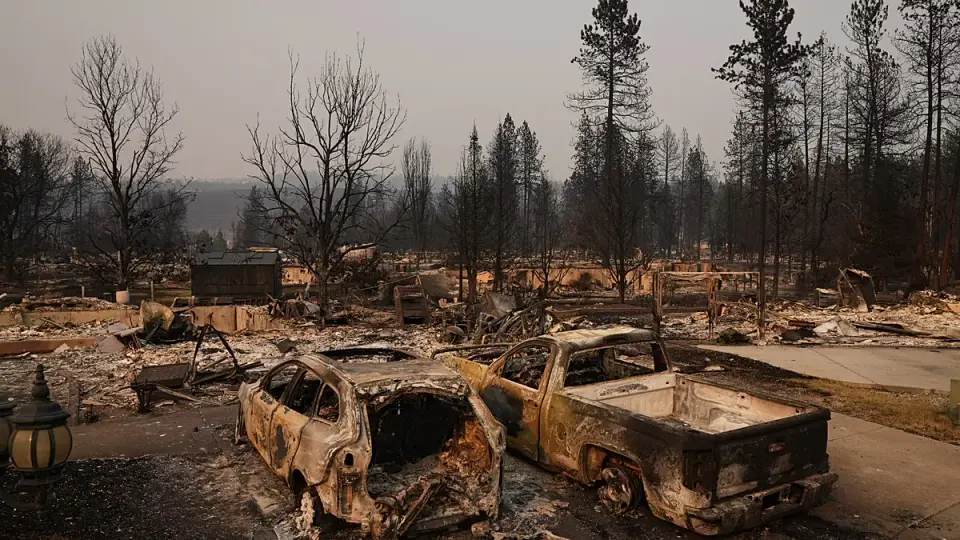
The European Commission has introduced a new Climate Resilience Law requiring member states to plan for a world 3°C warmer by 2100. The legislation mandates that governments designate specific authorities responsible for climate disaster management to prevent bureaucratic inaction. While the EU continues to pursue emissions cuts, it acknowledges that adaptation is now essential due to the high likelihood of exceeding the 1.5°C Paris limit. The package includes new digital tools and risk assessments but lacks dedicated funding, relying on existing budget negotiations and private insurance sectors to cover the estimated €70 billion annual adaptation cost.
Key points
- The new law requires EU member states to conduct national climate risk assessments every five years starting in 2029 and submit climate-proofing plans by the end of 2030.
- Governments must explicitly assign responsibility for climate risk management to national, regional, or local authorities to avoid finger-pointing during disasters.
- The Commission projects Europe will warm to 2°C by 2050 and 3°C by 2100, roughly twice the global average, necessitating infrastructure updates for extreme heat and flooding.
- No new financial commitments are included in the package; adaptation costs will compete with defense and agriculture in upcoming EU budget negotiations.
- The European Environment Agency launched a 'Navigator of Climate Resilience Tools' to help policymakers access data and adaptation strategies.
Background
This move follows a record-breaking summer in Europe, which saw over 50,000 heat-related deaths and extreme weather damages estimated at over €100 billion. It also comes amid growing concerns about the Atlantic Meridional Overturning Circulation (AMOC) weakening, which could further disrupt European climate patterns. The legislation is part of a broader shift in EU policy from pure mitigation to adaptation, reflecting the reality that current global emissions trajectories make the 1.5°C target unattainable.
How outlets are covering it
Euronews and the Financial Times emphasize the urgency of the new rules, noting that emissions cuts alone are insufficient to protect citizens from immediate climate impacts. The Financial Times highlights that this is the first legal proposal to prepare member states for a 2.8°C to 3°C warming scenario. POLITICO frames the legislation as a 'light-touch' approach that aligns with the EU's current deregulation mood, noting that while it mandates planning, it lacks binding targets and funding. Critics, including Greens-affiliated lawmakers, argue the law is too weak, while center-right members question the necessity of the plans. The European Environment Agency supports the framework, focusing on the practical tools and data it provides for local and national adaptation efforts.
Why it matters
The Climate Resilience Law marks a significant shift in EU policy, acknowledging that climate adaptation is as critical as emissions reduction. It aims to prevent political disputes over disaster response by clarifying accountability. However, the lack of dedicated funding and the reliance on existing budget negotiations raise concerns about the law's effectiveness, especially for lower-income households and underinsured regions. The move also signals to the global community that Europe is preparing for a warmer world, potentially influencing other nations' climate strategies ahead of the COP31 summit.
What to watch
Member states must begin national climate risk assessments by 2029 and submit adaptation plans by 2030. The European Environment Agency will publish its next European Climate Risk Assessment in June 2028. The Commission will present an EU 'strategic plan on climate resilience' by September 2028. Further steps, including a heat wave action plan and a climate insurance alliance, are planned for 2027. The effectiveness of the law will depend on the outcome of EU budget negotiations and the ability to secure private and public funding for adaptation measures.
- EU wants capitals to adjust to warming of 3°C Euronews.com
- EU tells countries to make plans to cope with 3C of global warming Financial Times
- EU prepares for a grim future with new climate-proofing law POLITICO.eu
- EU Wants Countries to Draw Up Plans to Deal With Warming of 3C Bloomberg.com
- EEA welcomes the Climate Resilience Framework and launches new tools to help Europe prepare European Environment Agency (EEA)
Want the full story? Read the original reporting
Read on Euronews.com