
Daily Kos Cartoon Satirizes Wealth Inequality and Socialist Rhetoric
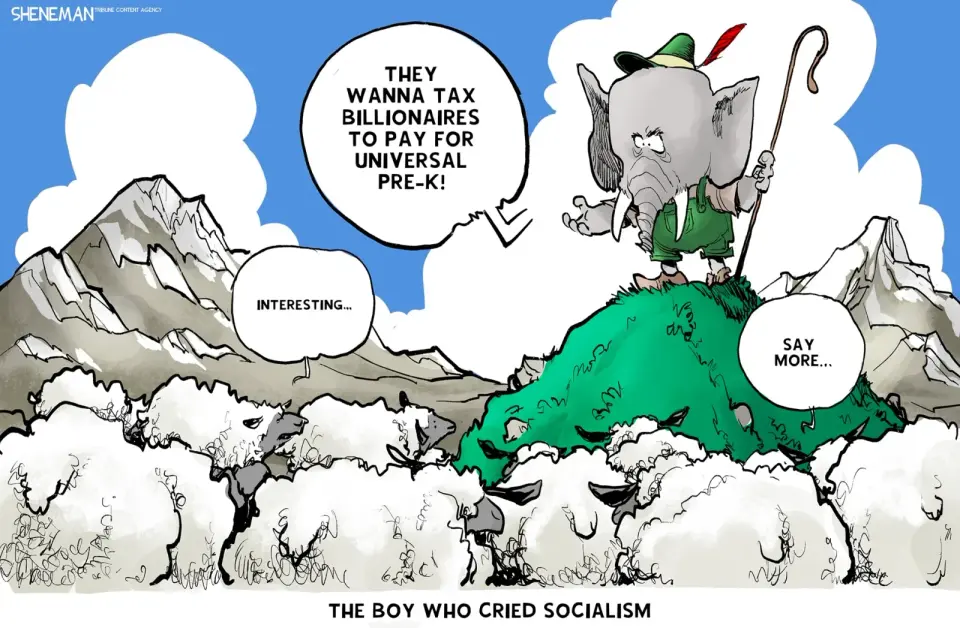
Daily Kos published a political cartoon by Drew Sheneman on October 2, 2026, titled 'The boy who cried socialism.' The piece uses the fable of the boy who cried wolf to critique current political discourse regarding wealth inequality and socialist policies. The publication also highlighted its ongoing financial challenges, urging readers to support its independent, paywall-free model through donations.
Key points
- Drew Sheneman released a new cartoon for Daily Kos on October 2, 2026, titled 'The boy who cried socialism.'
- The artwork is tagged with topics including billionaires, education, socialism, and taxing the rich, indicating a focus on economic policy and class dynamics.
- Daily Kos emphasized its financial hardships in the accompanying text, noting that it remains paywall-free and relies on reader support rather than corporate or billionaire funding.
- The publication requested financial contributions from its community to sustain its operations, offering donation tiers of $5, $15, and $25.
- The story was categorized under 'Cartoon' and received 155 recommendations from users, suggesting significant engagement within the Daily Kos community.
Background
This release follows a broader trend in 2026 where media outlets have faced financial pressures, often pivoting to reader-supported models to maintain editorial independence. While previous archive entries focused on entertainment and technology, such as the Netflix prequel 'Jonny Boy' or the FPGB Mini handheld, this piece reflects the ongoing struggle of independent political media to sustain operations without corporate backing. The focus on 'taxing the rich' and 'socialism' aligns with the platform's historical editorial stance on wealth inequality.
Why it matters
The cartoon serves as a visual commentary on the polarization surrounding socialist economic policies in the United States. By using the 'boy who cried wolf' metaphor, it critiques the credibility of political claims regarding wealth redistribution. Additionally, the explicit appeal for donations underscores the fragility of independent, non-corporate media in the current landscape, highlighting the reliance on grassroots support to maintain paywall-free access to political commentary.
What to watch
Daily Kos will likely continue to emphasize its financial needs through similar appeals to its reader base. The cartoon may spark further debate within the platform's community regarding the efficacy of current political rhetoric on wealth inequality. No immediate follow-up actions or policy changes are indicated by this single source.
Want the full story? Read the original reporting
Read on Daily Kos