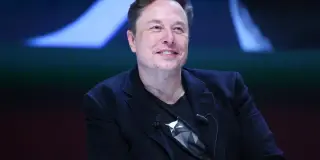
Sun Valley’s annual Allen & Co. gathering includes a knitting class on the schedule, joining panel interviews with media and tech leaders and underscoring industry consolidation and anxiety about the traditional media model amid cord-cutting and streaming shifts.
Allen & Co.’s invite-only Sun Valley Conference turns Friedman Memorial Airport into a busy private-jet hub, with an estimated 300–350 jets daily as tech and media titans converge for off-the-record talks. Attendees such as Bezos, Cook, Zuckerberg and others are expected, and AI topics and media deals are likely on the agenda, continuing Sun Valley’s history as a discreet, deal-making gathering.
California Gov. Gavin Newsom is pushing a national wealth tax as part of a broader populist economic agenda, even as he fights California’s own wealth tax on the ballot. The strategy aims to frame Democrats as fighters for a fairer economy and could influence his national profile ahead of a potential 2028 run; it also includes a proposal for a national public equity fund tied to AI profits and has drawn both sharp opposition and cautious support within the party.
California’s proposed 5% tax on billionaires to fund health care is headed for the November ballot, but it faces mounting opposition from top Democrats and liberal groups, with Gov. Gavin Newsom saying the measure would hurt the state as Silicon Valley billionaires prepare heavy spending to defeat it.
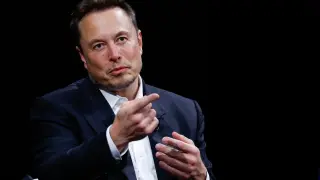
Elon Musk’s net worth slipped below $1 trillion after SpaceX’s stock pulled back from its IPO highs, with Forbes Real-Time Billionaires estimating around $956.5B (Bloomberg about $957B). The drop comes as SpaceX’s shares retreat from their peak following a report of a planned $20B bond sale, raising questions about cash flow for the capital-intensive company; Musk still owns roughly 40% of SpaceX and about 12% of Tesla.
The piece argues Elon Musk’s $1.3 trillion fortune embodies a widening global concentration of wealth that challenges democratic norms, as the mega‑rich wield outsized political influence through donations, media power, and clustering in political and social networks. Citing experts and RAND data, it contends that unaccountable wealth can buy political outcomes, fuel anti‑democratic movements, and erode the principle of one person, one vote, urging greater accountability and tax reforms to rebalance power.
Secretary of State Shirley Weber certified the California Billionaire Tax Act, sending it to the November ballot. The measure would impose a one-time 5% wealth tax on assets such as art, stocks and bonds to raise about $100 billion to backfill federal funding cuts to K-12 education, Medi-Cal, and CalFresh. Critics warn it could worsen the state’s budget gap and drive billionaires to relocate, while supporters say it would address inequality and ensure the wealthy pay their fair share; the debate is underscored by high-profile relocations of billionaires like Zuckerberg and Page/Brin.
Backers say the California Billionaire Tax Act would impose a one-time 5% wealth tax on residents with net worth over $1 billion (assets include equity, securities and collectibles) payable in five installments starting in 2027, with a 7.5% fee on the unpaid balance, to fund hospitals, healthcare jobs, K-14 education and food assistance. California election officials say there are enough signatures to place the measure on the November ballot, but it faces strong opposition from Gov. Gavin Newsom and others and may still be blocked. The measure would affect an estimated 255 taxpayers, though some ultra‑wealthy residents have relocated; critics warn of wealth flight and economic harm, while supporters argue it would address wealth inequities and sustain essential public services. Federal wealth tax proposals exist but have not advanced.
A proposed one-time 5% wealth tax on Californians with more than $1 billion in assets would funnel roughly $100 billion mainly to healthcare programs (with some for food assistance and education) and could be paid over five years. The initiative cleared the signature threshold and is on track for the November ballot, though opponents including Gov. Gavin Newsom warn it could drive billionaires out and destabilize California’s economy amid volatile tax revenues. Revenue is uncertain due to stock market fluctuations, and wealthy donors have heavily funded groups on both sides as the measure advances to the ballot.
Jen Sorensen’s Daily Kos cartoon uses satire to critique Trump alongside the billionaire-driven political spectacle, highlighting taxpayer costs for Trump’s ballroom and the broader grift of MAGA-era politics.
Elon Musk reportedly added about $165 billion to his net worth in a 6.5-hour trading session as SpaceX shares surged, a gain Forbes tracked as the largest one-day wealth jump in history and far eclipsing Warren Buffett's lifetime fortune; the move came primarily from SpaceX rather than Tesla, aided by Musk's control of SpaceX through a dual-class share structure; SpaceX's performance-based grants could unlock even larger awards if milestones such as a $7.5 trillion market cap and a Mars colony are achieved, tying Musk's upside to futuristic targets while signaling SpaceX's growing role in his wealth. Investors should watch Starship cadence and Starlink growth as SpaceX's public float drives his fortune.
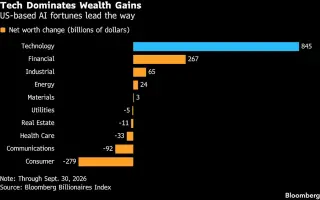
A century of wealth creation is traced as financiers and entrepreneurs chase the milestone of a $1 trillion net worth, showing how industrial ages, the tech boom, and stock-market dynamics have propelled contenders toward—but not past—this threshold, and exploring how such a trillionaire would reshape markets and policy, with current frontrunners approaching the line but none yet crossing it.
The Variety piece maps Sun Valley 2026's guest list, highlighting a who’s-who of media and tech leaders—including David Ellison, Bari Weiss, Josh D’Amaro, Jeff Bezos, Sam Altman, and Dario Amodei—positioning the Idaho retreat as a premier forum for high-stakes dealmaking and industry signaling.
Ultra-wealthy individuals are increasingly pursuing second citizenships and residency programs as contingency planning against geopolitical upheaval and travel disruptions. Peter Thiel has relocated temporarily to Argentina, while Europe remains a popular hub for US investors; options include Malta’s merit-based path, St. Kitts and Nevis, Antigua and Barbuda, New Zealand, and Austria, reflecting a trend toward diversification and future-generation optionality.
Ultra-wealthy fans are turning Knicks Finals at Madison Square Garden into a luxury show, booking private jets and helicopters, securing floor seats that can fetch hundreds of thousands, and gathering in exclusive suites like Suite 200 with celebrities. Wealth managers and luxury travel brokers say demand is at a peak as billionaires, Wall Street families, and influencers chase “Knicks Couture” experiences, transforming the finals into a conspicuous display of wealth beyond the game itself.